


Gifting Made Simple
Give the Gift of ChoiceClick below to purchase a Prairie Mall eGift Card that can be used at participating retailers at Prairie Mall.Buy Gift CardHome
How Language Informs Mathematics: Bridging Hegelian Dialectics And Marxian Models
Coles
Loading Inventory...
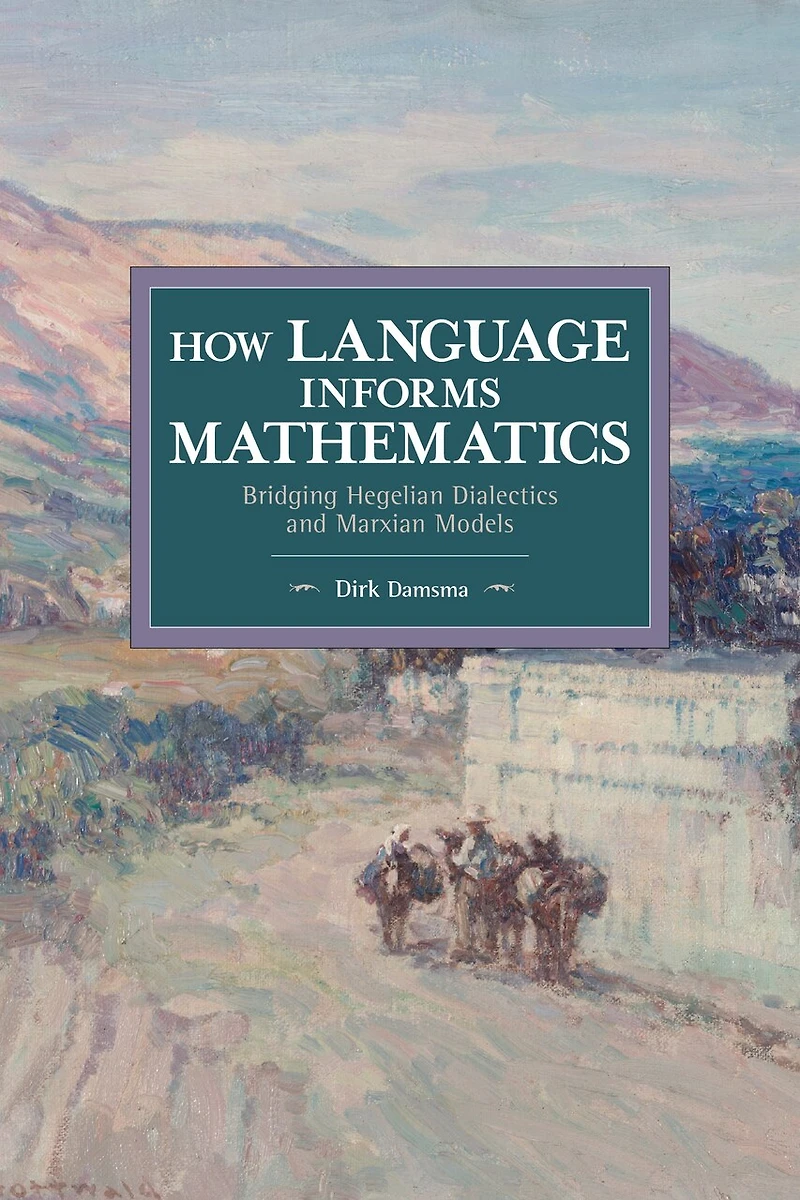
How Language Informs Mathematics: Bridging Hegelian Dialectics And Marxian Models in Grande Prairie, AB
Current price: $41.95
Coles
How Language Informs Mathematics: Bridging Hegelian Dialectics And Marxian Models in Grande Prairie, AB
Current price: $41.95
Loading Inventory...
Size: Paperback
*Product information and pricing may vary - to confirm current pricing, availability, shipping, and return information please contact Coles. In the event of a pricing discrepancy, the retailer's price will apply.
In How Language Informs Mathematics Dirk Damsma shows how Hegel''s and Marx''s systematic dialectical analysis of mathematical and economic language helps us understand the structure and nature of mathematical and capitalist systems. More importantly, Damsma shows how knowledge of the latter can inform model assumptions and help improve models.
His book provides a blueprint for an approach to economic model building that does away with arbitrarily chosen assumptions and is sensitive to the institutional structures of capitalism. In light of the failure of mainstream economics to understand systemic failures like the financial crisis and given the arbitrary character of most assumptions in mainstream models, such an approach is desperately needed.
In How Language Informs Mathematics Dirk Damsma shows how Hegel''s and Marx''s systematic dialectical analysis of mathematical and economic language helps us understand the structure and nature of mathematical and capitalist systems. More importantly, Damsma shows how knowledge of the latter can inform model assumptions and help improve models.
His book provides a blueprint for an approach to economic model building that does away with arbitrarily chosen assumptions and is sensitive to the institutional structures of capitalism. In light of the failure of mainstream economics to understand systemic failures like the financial crisis and given the arbitrary character of most assumptions in mainstream models, such an approach is desperately needed.
You May Also Like













Find at Prairie Mall in Grande Prairie, AB
Visit at Prairie Mall in Grande Prairie, AB