


Gifting Made Simple
Give the Gift of ChoiceClick below to purchase a Prairie Mall eGift Card that can be used at participating retailers at Prairie Mall.Buy Gift CardHome
How Does One Cut a Triangle?
Coles
Loading Inventory...
How Does One Cut a Triangle?
By None
Current price: $33.95
Coles
How Does One Cut a Triangle?
By None
Current price: $33.95
Loading Inventory...
Size: Paperback
*Product information and pricing may vary - to confirm current pricing, availability, shipping, and return information please contact Coles. In the event of a pricing discrepancy, the retailer's price will apply.
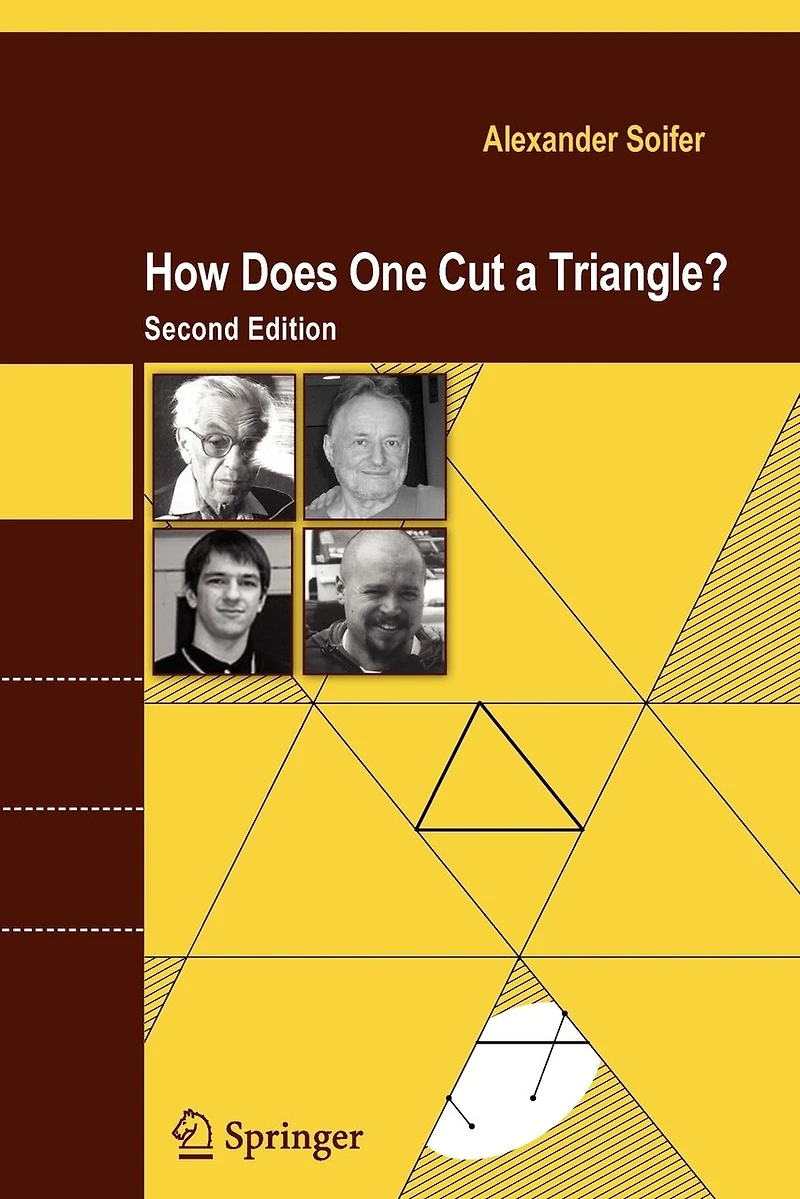
This second edition of Alexander Soifer's How Does One Cut a Triangle? demonstrates how different areas of mathematics can be juxtaposed in the solution of a given problem. The author employs geometry, algebra, trigonometry, linear algebra, and rings to develop a miniature model of mathematical research. How Does One Cut a Triangle? contains dozens of proofs and counterexamples to a variety of problems, such as a pool table problem, a fifty-dollar problem, a five-point problem, and a joint problem. By proving these examples, the author demonstrates that research is a collection of mathematical ideas that have been developed throughout the course of history. The author brings mathematics alive by giving the reader a taste of what mathematicians do. His book presents open problems that invite the reader to play the role of the mathematician. By doing so, the author skillfully inspires the discovery of uncharted solutions using his solutions as a guide.
This second edition of Alexander Soifer's How Does One Cut a Triangle? demonstrates how different areas of mathematics can be juxtaposed in the solution of a given problem. The author employs geometry, algebra, trigonometry, linear algebra, and rings to develop a miniature model of mathematical research. How Does One Cut a Triangle? contains dozens of proofs and counterexamples to a variety of problems, such as a pool table problem, a fifty-dollar problem, a five-point problem, and a joint problem. By proving these examples, the author demonstrates that research is a collection of mathematical ideas that have been developed throughout the course of history. The author brings mathematics alive by giving the reader a taste of what mathematicians do. His book presents open problems that invite the reader to play the role of the mathematician. By doing so, the author skillfully inspires the discovery of uncharted solutions using his solutions as a guide.
You May Also Like








More About Coles at Prairie Mall
11801 100 St #104, Grande Prairie, AB T8V 3Y2, Canada
Find Coles at Prairie Mall in Grande Prairie, AB
Visit Coles at Prairie Mall in Grande Prairie, AB