


Gifting Made Simple
Give the Gift of ChoiceClick below to purchase a Prairie Mall eGift Card that can be used at participating retailers at Prairie Mall.Buy Gift CardHome
Hope of Liberty: Culture, Community and Protest Among Northern Free Blacks, 1700-1860
Coles
Loading Inventory...
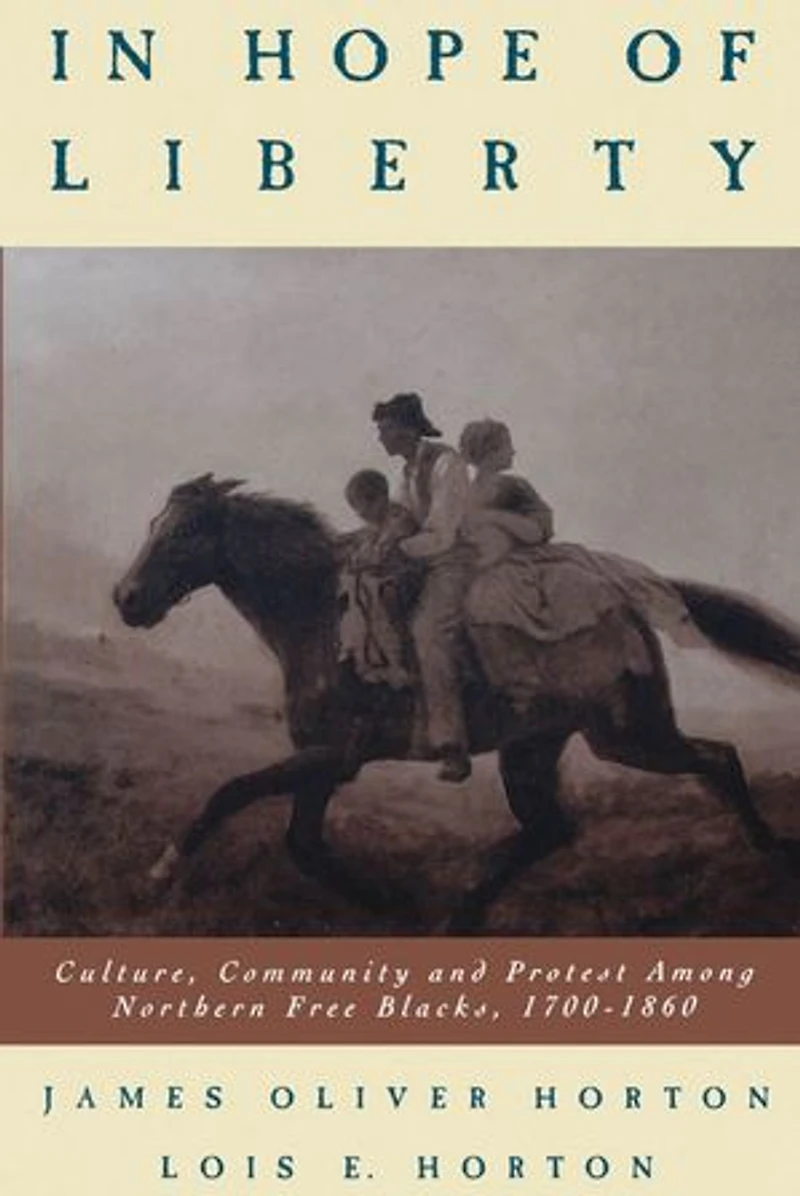
Hope of Liberty: Culture, Community and Protest Among Northern Free Blacks, 1700-1860 in Grande Prairie, AB
Current price: $73.95
Coles
Hope of Liberty: Culture, Community and Protest Among Northern Free Blacks, 1700-1860 in Grande Prairie, AB
Current price: $73.95
Loading Inventory...
Size: Hardcover
*Product information and pricing may vary - to confirm current pricing, availability, shipping, and return information please contact Coles. In the event of a pricing discrepancy, the retailer's price will apply.
In the unsettled days of the early United States, the protests of angry farmers, led by Daniel Shays, threatened to close down the local courts in western Massachusetts. Prince Hall, a black veteran of the American Revolution, volunteered to lead a troop of 700 Boston area blacks to put down
the rebellion. Massachusetts officials, although short on both funds and men, refused the offer and turned instead to wealthy white merchants. Hall may have been both insulted and disappointed, but was probably not surprised. Free blacks in the antebellum North had greater economic opportunities,
political rights, and social freedoms than their enslaved southern brethren, but still often faced fear, distrust, and outright racism from the whites they lived among. The lives of these struggling men and women, the first free blacks in America, are vividly described in In Hope of Liberty,
spanning the 200 years and eight generations from the colonial slave trade through the American Revolution to, finally, the Civil War.
In this marvelously peopled history, James and Lois Horton introduce us to a rich cast of characters. There are familiar historical figures such as Crispus Attucks, a leader of the Boston Massacre and one of the first casualties of the American Revolution; Sojourner Truth, the eloquent anti-slavery
and women''s rights activist whose own family had been separated at a slave auction block; and Prince Whipple, George Washington''s aide, easily recognizable in the portrait of Washington crossing the Delaware River. And there are the countless men and women who struggled to lead their daily lives
with courage and dignity: Zilpha Elaw, a visionary revivalist who preached before crowds of thousands; David James Peck, the first black to graduate from an American medical school in 1848; Paul Cuffe, a successful seafaring merchant who became an ardent supporter of the black African colonization
movement; and Nancy Vose, at eighteen the effective head of a scattered household of four siblings, each boarded in different homes.
In a seamless narrative weaving together all these stories and more, the Hortons describe the complex networks, both formal and informal, that made up free black society, from the black churches, which provided a sense of community and served as a breeding ground for black leaders and political
action, to the countless newspapers which spoke eloquently of their aspirations for blacks and their active role in the anti-slavery movement, to the informal networks which allowed far-flung families to maintain contact, and which provided support and aid to needy members of the free black
community and to fugitives from the South. Finally, they describe the vital role of the black family, the cornerstone of this tightly-knit community.
In Hope of Liberty brilliantly illuminates the free black community of the antebellum North as it struggled to assimilate while maintaining a unique cultural identity, and to work for social action in an atmosphere of racial injustice. As the black community today still struggles with many of the
same problems, this insightful history reminds us how far we have come, and how far we have yet to go.
In the unsettled days of the early United States, the protests of angry farmers, led by Daniel Shays, threatened to close down the local courts in western Massachusetts. Prince Hall, a black veteran of the American Revolution, volunteered to lead a troop of 700 Boston area blacks to put down
the rebellion. Massachusetts officials, although short on both funds and men, refused the offer and turned instead to wealthy white merchants. Hall may have been both insulted and disappointed, but was probably not surprised. Free blacks in the antebellum North had greater economic opportunities,
political rights, and social freedoms than their enslaved southern brethren, but still often faced fear, distrust, and outright racism from the whites they lived among. The lives of these struggling men and women, the first free blacks in America, are vividly described in In Hope of Liberty,
spanning the 200 years and eight generations from the colonial slave trade through the American Revolution to, finally, the Civil War.
In this marvelously peopled history, James and Lois Horton introduce us to a rich cast of characters. There are familiar historical figures such as Crispus Attucks, a leader of the Boston Massacre and one of the first casualties of the American Revolution; Sojourner Truth, the eloquent anti-slavery
and women''s rights activist whose own family had been separated at a slave auction block; and Prince Whipple, George Washington''s aide, easily recognizable in the portrait of Washington crossing the Delaware River. And there are the countless men and women who struggled to lead their daily lives
with courage and dignity: Zilpha Elaw, a visionary revivalist who preached before crowds of thousands; David James Peck, the first black to graduate from an American medical school in 1848; Paul Cuffe, a successful seafaring merchant who became an ardent supporter of the black African colonization
movement; and Nancy Vose, at eighteen the effective head of a scattered household of four siblings, each boarded in different homes.
In a seamless narrative weaving together all these stories and more, the Hortons describe the complex networks, both formal and informal, that made up free black society, from the black churches, which provided a sense of community and served as a breeding ground for black leaders and political
action, to the countless newspapers which spoke eloquently of their aspirations for blacks and their active role in the anti-slavery movement, to the informal networks which allowed far-flung families to maintain contact, and which provided support and aid to needy members of the free black
community and to fugitives from the South. Finally, they describe the vital role of the black family, the cornerstone of this tightly-knit community.
In Hope of Liberty brilliantly illuminates the free black community of the antebellum North as it struggled to assimilate while maintaining a unique cultural identity, and to work for social action in an atmosphere of racial injustice. As the black community today still struggles with many of the
same problems, this insightful history reminds us how far we have come, and how far we have yet to go.
You May Also Like


















Find at Prairie Mall in Grande Prairie, AB
Visit at Prairie Mall in Grande Prairie, AB