


Gifting Made Simple
Give the Gift of ChoiceClick below to purchase a Prairie Mall eGift Card that can be used at participating retailers at Prairie Mall.Buy Gift CardHome
Honey Bee Social Evolution: Group Formation, Behavior, and Preeminence
Coles
Loading Inventory...
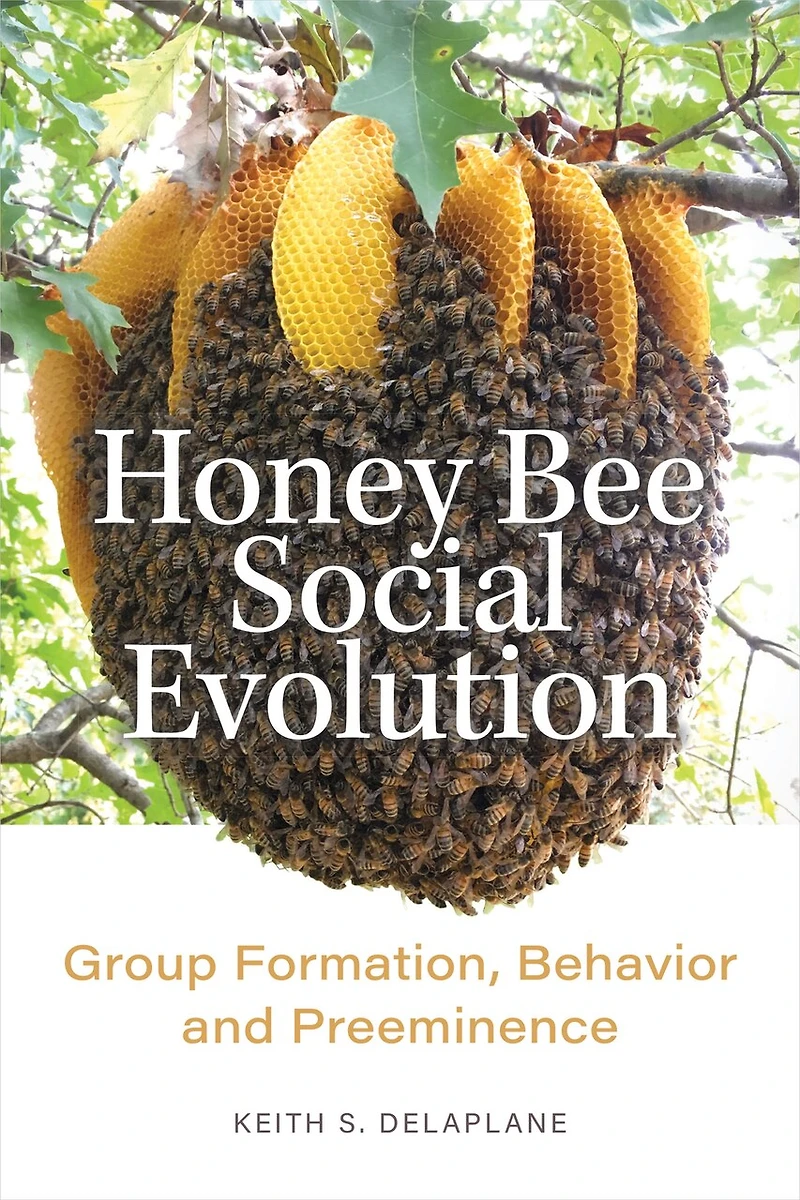

Honey Bee Social Evolution: Group Formation, Behavior, and Preeminence in Grande Prairie, AB
Current price: $90.95
Coles
Honey Bee Social Evolution: Group Formation, Behavior, and Preeminence in Grande Prairie, AB
Current price: $90.95
Loading Inventory...
Size: Hardcover
*Product information and pricing may vary - to confirm current pricing, availability, shipping, and return information please contact Coles. In the event of a pricing discrepancy, the retailer's price will apply.
What the honey bee can teach us about evolution—and ourselves. How did the honey bee evolve into the complex colonial species that exists today—and what does its evolution have to teach us about our own species? In Honey Bee Social Evolution, entomologist Keith Delaplane uses the humble but charismatic honey bee as a model of social evolution to highlight the many parallels a social insect colony shares with humans and other organisms. Delaplane shows how social processes drive evolution—for honey bee colonies, humans, and other animals. Each chapter spotlights a honey bee colony-level function such as group-level reproduction, task differentiation among cells, group decision-making, social immunity, defense behavior, senescence, anarchy, cancer, and more—all with stunning parallels to those of other organisms. These vivid comparisons, grounded in a practical context, emphasize how natural selection uses a common tool kit to solve similar problems across lineages. By revealing the complex hive of similarities between the honey bee's society and our own, Delaplane hopes to instill an ethos of solidarity with all organic life. The honey bee colony shows how evolution is more than selfish "survival of the fittest," but equally a story of the success of cooperation and altruism.
What the honey bee can teach us about evolution—and ourselves. How did the honey bee evolve into the complex colonial species that exists today—and what does its evolution have to teach us about our own species? In Honey Bee Social Evolution, entomologist Keith Delaplane uses the humble but charismatic honey bee as a model of social evolution to highlight the many parallels a social insect colony shares with humans and other organisms. Delaplane shows how social processes drive evolution—for honey bee colonies, humans, and other animals. Each chapter spotlights a honey bee colony-level function such as group-level reproduction, task differentiation among cells, group decision-making, social immunity, defense behavior, senescence, anarchy, cancer, and more—all with stunning parallels to those of other organisms. These vivid comparisons, grounded in a practical context, emphasize how natural selection uses a common tool kit to solve similar problems across lineages. By revealing the complex hive of similarities between the honey bee's society and our own, Delaplane hopes to instill an ethos of solidarity with all organic life. The honey bee colony shows how evolution is more than selfish "survival of the fittest," but equally a story of the success of cooperation and altruism.
You May Also Like















Find at Prairie Mall in Grande Prairie, AB
Visit at Prairie Mall in Grande Prairie, AB