


Gifting Made Simple
Give the Gift of ChoiceClick below to purchase a Prairie Mall eGift Card that can be used at participating retailers at Prairie Mall.Buy Gift CardHome
Handbook of Mathematical Models and Algorithms Computer Vision Imaging: Imaging
Coles
Loading Inventory...
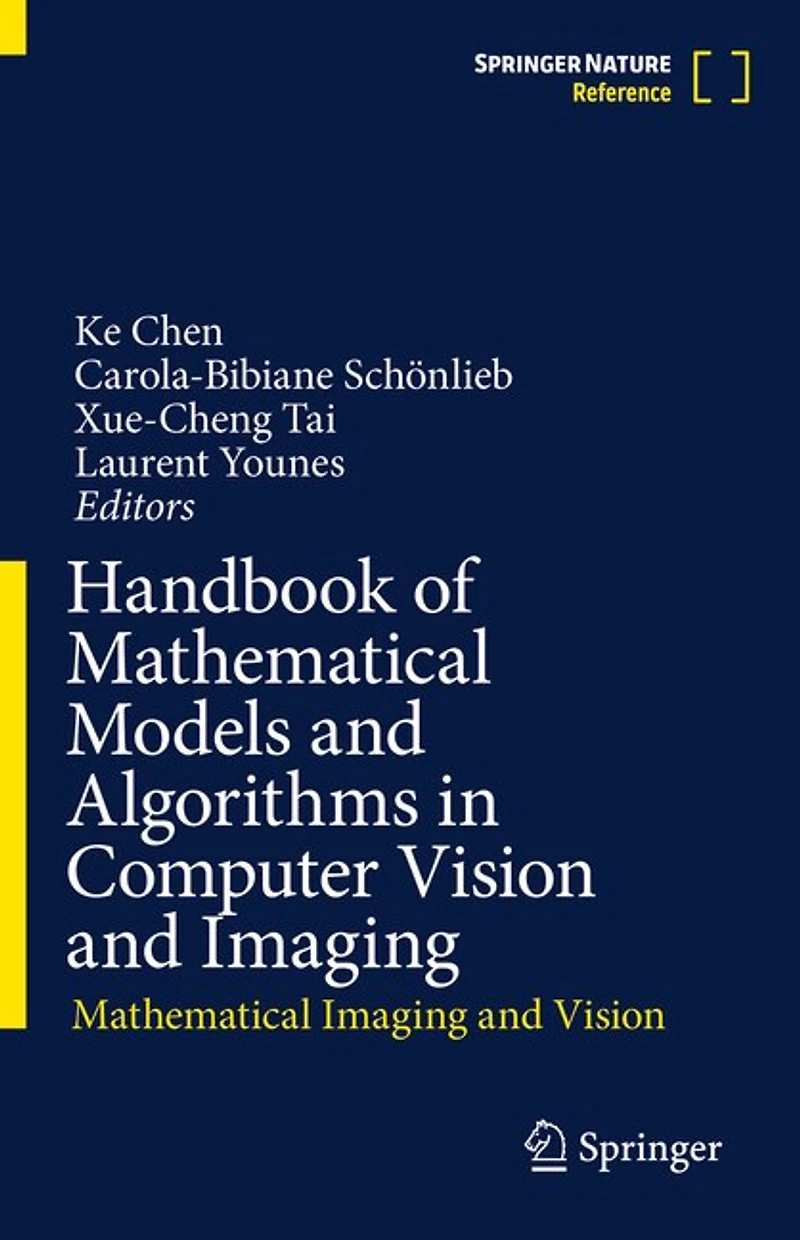
Handbook of Mathematical Models and Algorithms Computer Vision Imaging: Imaging in Grande Prairie, AB
Current price: $1,459.95
Coles
Handbook of Mathematical Models and Algorithms Computer Vision Imaging: Imaging in Grande Prairie, AB
Current price: $1,459.95
Loading Inventory...
Size: Hardcover
*Product information and pricing may vary - to confirm current pricing, availability, shipping, and return information please contact Coles. In the event of a pricing discrepancy, the retailer's price will apply.
This handbook gathers together the state of the art on mathematical models and algorithms for imaging and vision. Its emphasis lies on rigorous mathematical methods, which represent the optimal solutions to a class of imaging and vision problems, and on effective algorithms, which are necessary for the methods to be translated to practical use in various applications. Viewing discrete images as data sampled from functional surfaces enables the use of advanced tools from calculus, functions and calculus of variations, and nonlinear optimization, and provides the basis of high-resolution imaging through geometry and variational models. Besides, optimization naturally connects traditional model-driven approaches to the emerging data-driven approaches of machine and deep learning. No other framework can provide comparable accuracy and precision to imaging and vision. Written by leading researchers in imaging and vision, the chapters in this handbook all start with gentle introductions, which make this work accessible to graduate students. For newcomers to the field, the book provides a comprehensive and fast-track introduction to the content, to save time and get on with tackling new and emerging challenges. For researchers, exposure to the state of the art of research works leads to an overall view of the entire field so as to guide new research directions and avoid pitfalls in moving the field forward and looking into the next decades of imaging and information services. This work can greatly benefit graduate students, researchers, and practitioners in imaging and vision; applied mathematicians; medical imagers; engineers; and computer scientists.
This handbook gathers together the state of the art on mathematical models and algorithms for imaging and vision. Its emphasis lies on rigorous mathematical methods, which represent the optimal solutions to a class of imaging and vision problems, and on effective algorithms, which are necessary for the methods to be translated to practical use in various applications. Viewing discrete images as data sampled from functional surfaces enables the use of advanced tools from calculus, functions and calculus of variations, and nonlinear optimization, and provides the basis of high-resolution imaging through geometry and variational models. Besides, optimization naturally connects traditional model-driven approaches to the emerging data-driven approaches of machine and deep learning. No other framework can provide comparable accuracy and precision to imaging and vision. Written by leading researchers in imaging and vision, the chapters in this handbook all start with gentle introductions, which make this work accessible to graduate students. For newcomers to the field, the book provides a comprehensive and fast-track introduction to the content, to save time and get on with tackling new and emerging challenges. For researchers, exposure to the state of the art of research works leads to an overall view of the entire field so as to guide new research directions and avoid pitfalls in moving the field forward and looking into the next decades of imaging and information services. This work can greatly benefit graduate students, researchers, and practitioners in imaging and vision; applied mathematicians; medical imagers; engineers; and computer scientists.
You May Also Like








Find at Prairie Mall in Grande Prairie, AB
Visit at Prairie Mall in Grande Prairie, AB