


Gifting Made Simple
Give the Gift of ChoiceClick below to purchase a Prairie Mall eGift Card that can be used at participating retailers at Prairie Mall.Buy Gift CardHome
Greener Pastures: Politics, Markets, and Community among a Migrant Pastoral People
Coles
Loading Inventory...
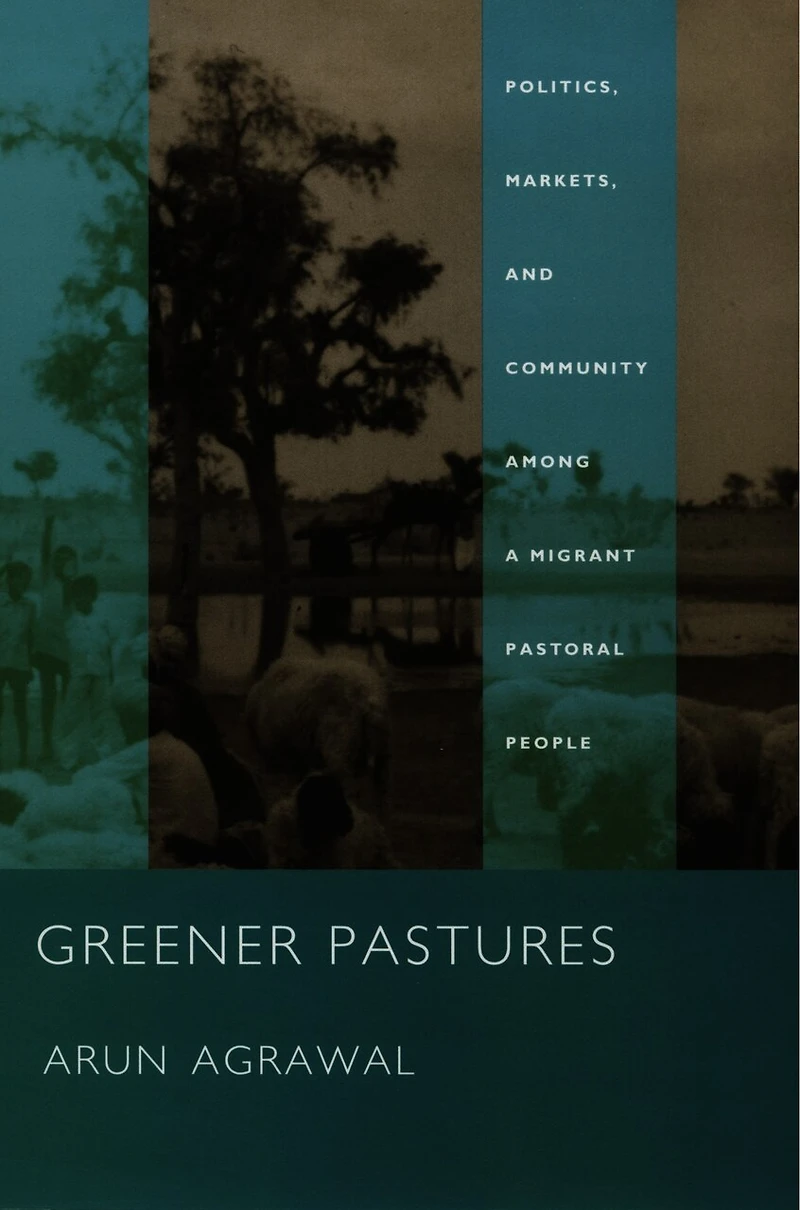
Greener Pastures: Politics, Markets, and Community among a Migrant Pastoral People in Grande Prairie, AB
Current price: $142.95
Coles
Greener Pastures: Politics, Markets, and Community among a Migrant Pastoral People in Grande Prairie, AB
Current price: $142.95
Loading Inventory...
Size: Hardcover
*Product information and pricing may vary - to confirm current pricing, availability, shipping, and return information please contact Coles. In the event of a pricing discrepancy, the retailer's price will apply.
Social scientists theorizing about political economy and the allocation of resources have usually omitted migrant communities from their studies. In Greener Pastures Arun Agrawal uses the story of the Raikas, a little-known group of migrant shepherds in western India, to reexamine current scholarship on markets and exchange, local and state politics, and community and hierarchy. The Raikas are virtually invisible in the regions through which they travel, as well as to the wider Indian society, yet they must operate as part of these larger spheres for their economic survival. Agrawal analyzes the institutions developed by the shepherds to solve livelihood problems. First, by focusing on the relations of the shepherds with their landholder neighbors, he explains why the shepherds migrate. He shows that struggles between these two groups led to a sociopolitical squeeze on the access of shepherds to the fodder resources they need to feed their sheep. Then, in an examination of why the shepherds migrate in groups, he demonstrates how their migratory lives depend on market exchanges and points to the social and political forces that influence prices and determine profits. Finally, he looks at decision-making processes such as division of labor and the delegation of power. Politics is ubiquitous in the interactions of the shepherds with their neighbors and with state officials, in their exchanges in markets and with farmers, and in their internal relations as a community.
Interspersing the words of the Raikas themselves with a sophisticated deployment of political theory, Agrawal has produced a volume that will interest scholars in a broad range of academic disciplines, including Asian studies, political science, human ecology, anthropology, comparative politics, rural sociology, and environmental studies and policy.
Social scientists theorizing about political economy and the allocation of resources have usually omitted migrant communities from their studies. In Greener Pastures Arun Agrawal uses the story of the Raikas, a little-known group of migrant shepherds in western India, to reexamine current scholarship on markets and exchange, local and state politics, and community and hierarchy. The Raikas are virtually invisible in the regions through which they travel, as well as to the wider Indian society, yet they must operate as part of these larger spheres for their economic survival. Agrawal analyzes the institutions developed by the shepherds to solve livelihood problems. First, by focusing on the relations of the shepherds with their landholder neighbors, he explains why the shepherds migrate. He shows that struggles between these two groups led to a sociopolitical squeeze on the access of shepherds to the fodder resources they need to feed their sheep. Then, in an examination of why the shepherds migrate in groups, he demonstrates how their migratory lives depend on market exchanges and points to the social and political forces that influence prices and determine profits. Finally, he looks at decision-making processes such as division of labor and the delegation of power. Politics is ubiquitous in the interactions of the shepherds with their neighbors and with state officials, in their exchanges in markets and with farmers, and in their internal relations as a community.
Interspersing the words of the Raikas themselves with a sophisticated deployment of political theory, Agrawal has produced a volume that will interest scholars in a broad range of academic disciplines, including Asian studies, political science, human ecology, anthropology, comparative politics, rural sociology, and environmental studies and policy.













Find at Prairie Mall in Grande Prairie, AB
Visit at Prairie Mall in Grande Prairie, AB