


Gifting Made Simple
Give the Gift of ChoiceClick below to purchase a Prairie Mall eGift Card that can be used at participating retailers at Prairie Mall.Buy Gift CardHome
Generalizability Theory: A Primer
Coles
Loading Inventory...
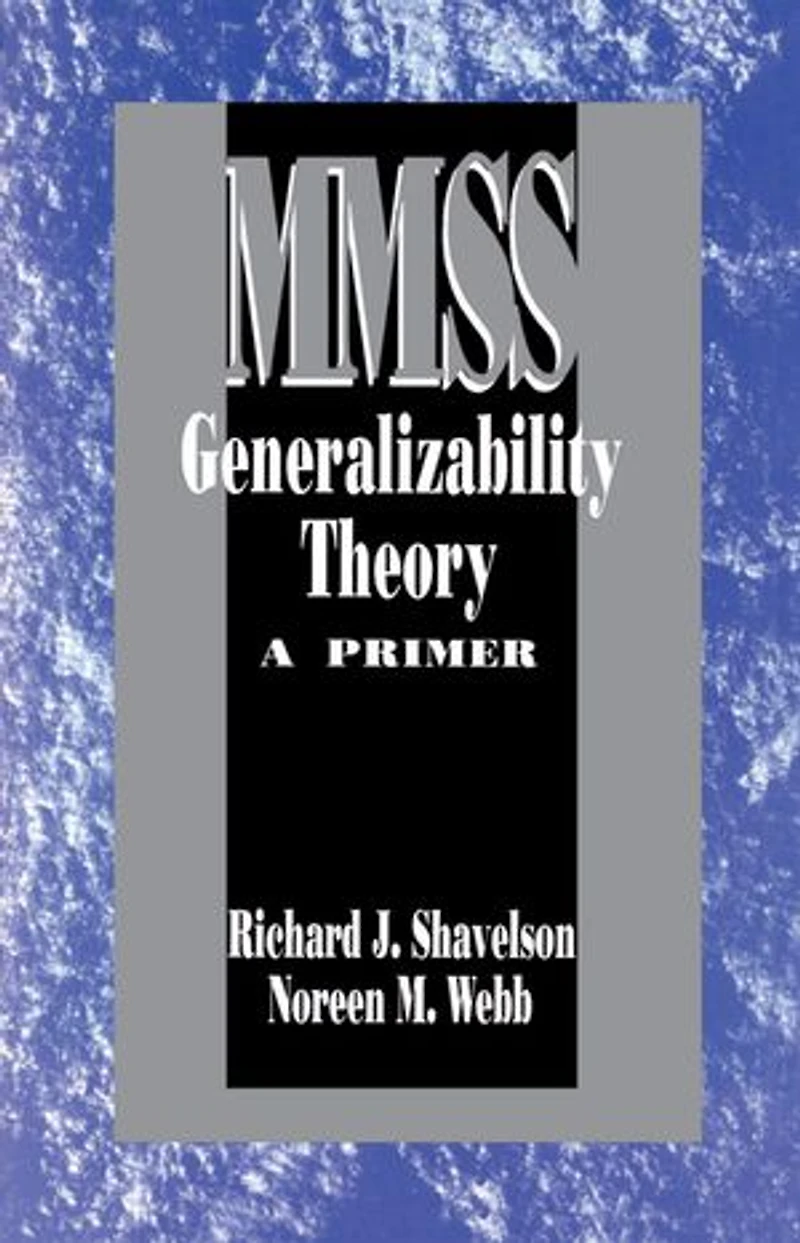
Generalizability Theory: A Primer in Grande Prairie, AB
Current price: $125.59
Original price: $157.00
Coles
Generalizability Theory: A Primer in Grande Prairie, AB
Current price: $125.59
Original price: $157.00
Loading Inventory...
Size: Kobo eBook
*Product information and pricing may vary - to confirm current pricing, availability, shipping, and return information please contact Coles. In the event of a pricing discrepancy, the retailer's price will apply.
Accessible to any professional or researcher who has a basic understanding of analysis of variance, Shavelson and Webb offer an intuitive development of generalizability theory, a technique for estimating the relative magnitudes of various components of error variation and for indicating the most efficient strategy for achieving desired measurement precision. Covering a variety of topics such as generalizability studies with nested facets and with fixed facets, measurement error and generalizability coefficients, and decision studies with same and with different designs, the text includes exercises so the reader may practice the application of each chapter's material. By using detailed illustrations and examples, Shavelson and Webb clearly describe the logic underlying major concepts in generalizability theory to enable readers to apply these methods when investigating the consistency of their own measurements.
Accessible to any professional or researcher who has a basic understanding of analysis of variance, Shavelson and Webb offer an intuitive development of generalizability theory, a technique for estimating the relative magnitudes of various components of error variation and for indicating the most efficient strategy for achieving desired measurement precision. Covering a variety of topics such as generalizability studies with nested facets and with fixed facets, measurement error and generalizability coefficients, and decision studies with same and with different designs, the text includes exercises so the reader may practice the application of each chapter's material. By using detailed illustrations and examples, Shavelson and Webb clearly describe the logic underlying major concepts in generalizability theory to enable readers to apply these methods when investigating the consistency of their own measurements.
You May Also Like















Find at Prairie Mall in Grande Prairie, AB
Visit at Prairie Mall in Grande Prairie, AB