


Gifting Made Simple
Give the Gift of ChoiceClick below to purchase a Prairie Mall eGift Card that can be used at participating retailers at Prairie Mall.Buy Gift CardHome
Foundations of Logico-Linguistics: A Unified Theory of Information, Language, and Logic
Coles
Loading Inventory...
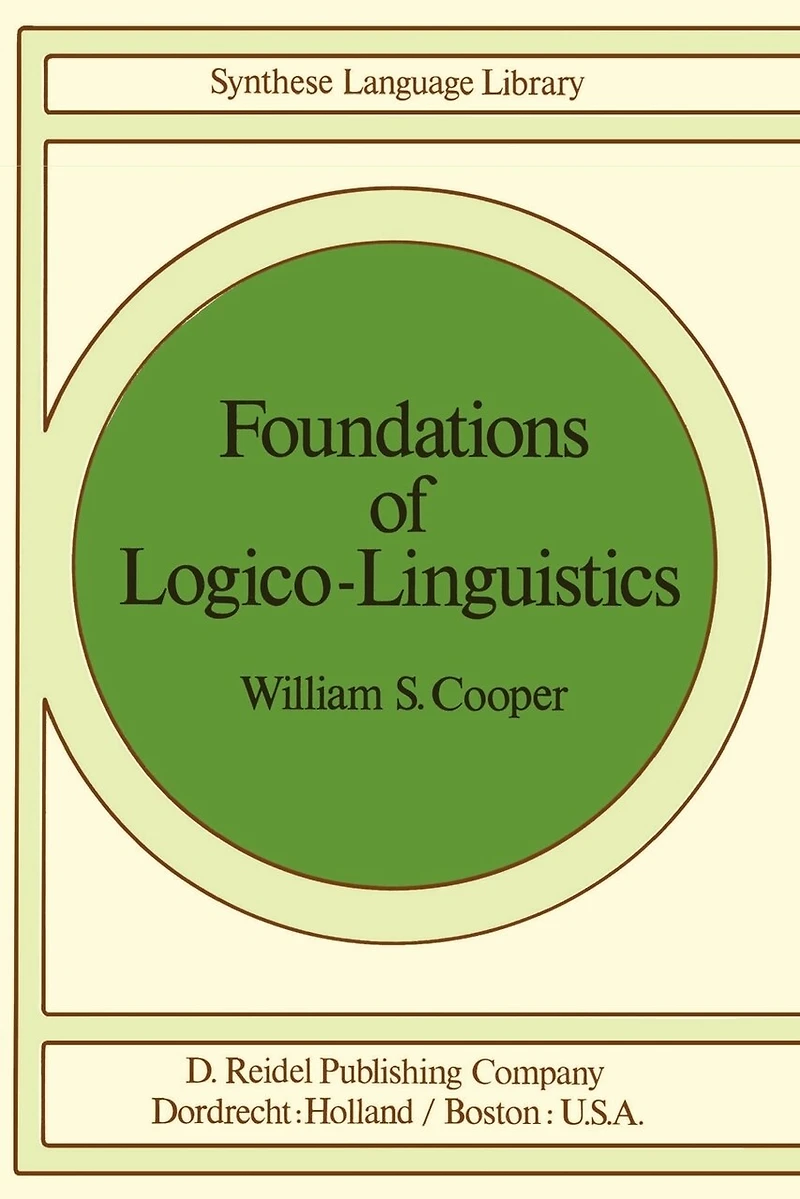
Foundations of Logico-Linguistics: A Unified Theory of Information, Language, and Logic in Grande Prairie, AB
Current price: $71.50
Coles
Foundations of Logico-Linguistics: A Unified Theory of Information, Language, and Logic in Grande Prairie, AB
Current price: $71.50
Loading Inventory...
Size: Paperback
*Product information and pricing may vary - to confirm current pricing, availability, shipping, and return information please contact Coles. In the event of a pricing discrepancy, the retailer's price will apply.
In 1962 a mimeographed sheet of paper fell into my possession. It had been prepared by Ernest Adams of the Philosophy Department at Berkeley as a handout for a colloquim. Headed 'SOME FALLACIES OF FORMAL LOGIC' it simply listed eleven little pieces of reasoning, all in ordinary English, and all absurd. I still have the sheet, and quote a couple of the arguments here to give the idea. - If you throw switch S and switch T, the motor will start. There- fore, either if you throw switch S the motor will start, or, if you throw switch T the motor will start . - It is not the case that if John passes history he will graduate. Therefore, John will pass history. The disconcerting thing about these inferences is, of course, that under the customary truth-functional interpretation of and, or, not, and if-then, they are supposed to be valid. What, if anything, is wrong? At first I was not disturbed by the examples. Having at that time consider- able personal commitment to rationality in general and formal logic in par- ticular, I felt it my duty and found myself easily able (or so I thought) to explain away most of them. But on reflection I had to admit that my expla- nations had an ad hoc character, varying suspiciously from example to example.
In 1962 a mimeographed sheet of paper fell into my possession. It had been prepared by Ernest Adams of the Philosophy Department at Berkeley as a handout for a colloquim. Headed 'SOME FALLACIES OF FORMAL LOGIC' it simply listed eleven little pieces of reasoning, all in ordinary English, and all absurd. I still have the sheet, and quote a couple of the arguments here to give the idea. - If you throw switch S and switch T, the motor will start. There- fore, either if you throw switch S the motor will start, or, if you throw switch T the motor will start . - It is not the case that if John passes history he will graduate. Therefore, John will pass history. The disconcerting thing about these inferences is, of course, that under the customary truth-functional interpretation of and, or, not, and if-then, they are supposed to be valid. What, if anything, is wrong? At first I was not disturbed by the examples. Having at that time consider- able personal commitment to rationality in general and formal logic in par- ticular, I felt it my duty and found myself easily able (or so I thought) to explain away most of them. But on reflection I had to admit that my expla- nations had an ad hoc character, varying suspiciously from example to example.
You May Also Like








Find at Prairie Mall in Grande Prairie, AB
Visit at Prairie Mall in Grande Prairie, AB