


Gifting Made Simple
Give the Gift of ChoiceClick below to purchase a Prairie Mall eGift Card that can be used at participating retailers at Prairie Mall.Buy Gift CardHome
Formation and Crust-Mantle Geodynamic Processes of the Neoarchean K-rich Granitoid Belt in the Southern Range of Eastern Hebei-Western Liaoning Provinces, North China Craton: Neoarchean K-rich Granitoid Belt in the Northern North China Craton
Coles
Loading Inventory...
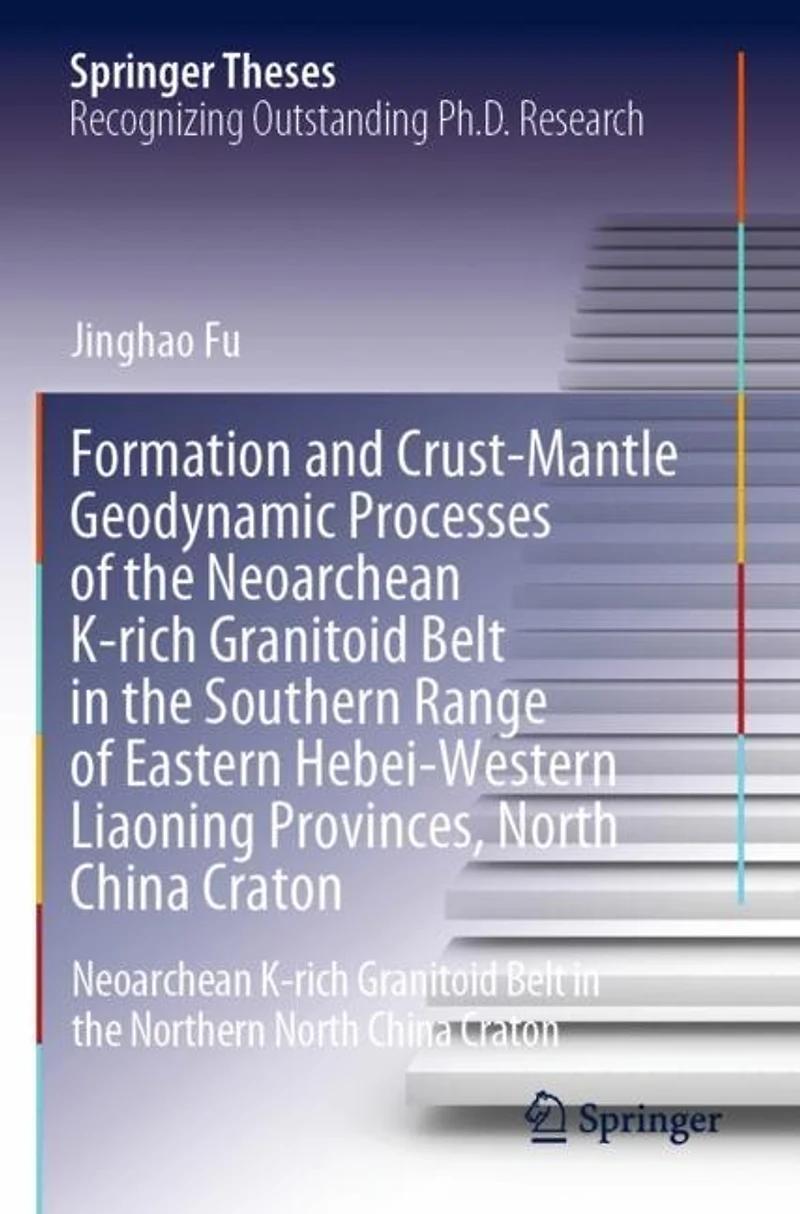
Formation and Crust-Mantle Geodynamic Processes of the Neoarchean K-rich Granitoid Belt in the Southern Range of Eastern Hebei-Western Liaoning Provinces, North China Craton: Neoarchean K-rich Granitoid Belt in the Northern North China Craton
By None
Current price: $248.50
Coles
Formation and Crust-Mantle Geodynamic Processes of the Neoarchean K-rich Granitoid Belt in the Southern Range of Eastern Hebei-Western Liaoning Provinces, North China Craton: Neoarchean K-rich Granitoid Belt in the Northern North China Craton
By None
Current price: $248.50
Loading Inventory...
Size: Paperback
*Product information and pricing may vary - to confirm current pricing, availability, shipping, and return information please contact Coles. In the event of a pricing discrepancy, the retailer's price will apply.
Meso- to Neoarchean is a critical transitional period for the formation and evolution of continental crust and the corresponding geodynamic mechanisms, during which the average composition of continental crust gradually shifted from Na-enriched to K-enriched. However, the ultimate source of K and its enrichment mechanism in continental crust are still enigmatic. Moreover, fierce controversies remain on the Precambrian subdivision and late Archean geodynamic models of the North China Craton (NCC). Archean basement terranes in the Eastern Hebei-Western Liaoning Provinces, northern NCC display characteristic lithological zonation similar to those developed in modern convergent plate margins, and from northwest to southeast can be subdivided into the MORB-type tholeiite belt, oceanic arc tectonic belt, and K-rich granitoid belt.
This book reports systematic field geological, petrographic, structural, whole-rock geochemical, and zircon U-Pb-Hf-O isotopic data for the various late Neoarchean lithological assemblages of the K-rich granitoid belt. Their deformational characteristics and petrogenesis are discussed in detail, and integrated with their spatiotemporal relationships and metamorphic features, a late Neoarchean active continental margin setting with multi-stage trench retreats and subsequent arc-continent collision is proposed to account for the formation and evolution of the K-rich granitoid belt. It also throws light upon the ultimate source and enrichment mechanism of K in the late Archean continental crust by comparing K-rich granitoid belt with the adjacent oceanic arc tectonic belt.
Meso- to Neoarchean is a critical transitional period for the formation and evolution of continental crust and the corresponding geodynamic mechanisms, during which the average composition of continental crust gradually shifted from Na-enriched to K-enriched. However, the ultimate source of K and its enrichment mechanism in continental crust are still enigmatic. Moreover, fierce controversies remain on the Precambrian subdivision and late Archean geodynamic models of the North China Craton (NCC). Archean basement terranes in the Eastern Hebei-Western Liaoning Provinces, northern NCC display characteristic lithological zonation similar to those developed in modern convergent plate margins, and from northwest to southeast can be subdivided into the MORB-type tholeiite belt, oceanic arc tectonic belt, and K-rich granitoid belt.
This book reports systematic field geological, petrographic, structural, whole-rock geochemical, and zircon U-Pb-Hf-O isotopic data for the various late Neoarchean lithological assemblages of the K-rich granitoid belt. Their deformational characteristics and petrogenesis are discussed in detail, and integrated with their spatiotemporal relationships and metamorphic features, a late Neoarchean active continental margin setting with multi-stage trench retreats and subsequent arc-continent collision is proposed to account for the formation and evolution of the K-rich granitoid belt. It also throws light upon the ultimate source and enrichment mechanism of K in the late Archean continental crust by comparing K-rich granitoid belt with the adjacent oceanic arc tectonic belt.
You May Also Like
















More About Coles at Prairie Mall
11801 100 St #104, Grande Prairie, AB T8V 3Y2, Canada
Find Coles at Prairie Mall in Grande Prairie, AB
Visit Coles at Prairie Mall in Grande Prairie, AB