


Gifting Made Simple
Give the Gift of ChoiceClick below to purchase a Prairie Mall eGift Card that can be used at participating retailers at Prairie Mall.Buy Gift CardHome
Finance's Wrong Turns: A New Foundation for Financial Markets, Asset Management, and Social Science
Coles
Loading Inventory...
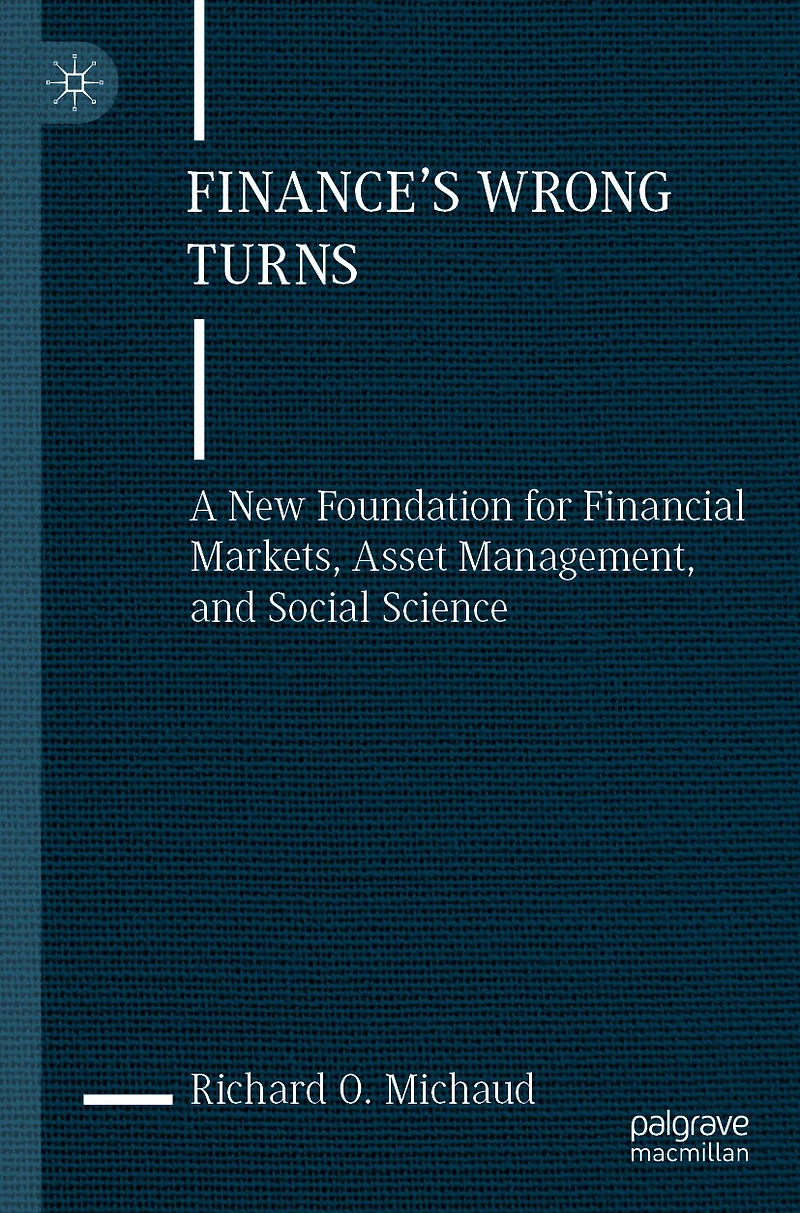
Finance's Wrong Turns: A New Foundation for Financial Markets, Asset Management, and Social Science
By None
Current price: $72.95
Coles
Finance's Wrong Turns: A New Foundation for Financial Markets, Asset Management, and Social Science
By None
Current price: $72.95
Loading Inventory...
Size: Paperback
*Product information and pricing may vary - to confirm current pricing, availability, shipping, and return information please contact Coles. In the event of a pricing discrepancy, the retailer's price will apply.
There is a foundational crisis in financial theory and professional investment practice: There is little, if any, credible evidence that active investment strategies and traditional institutional quantitative technologies are able to provide superior risk-adjusted, cost-adjusted return over investment relevant horizons.Economic and financial theory has been in error for more than fifty years and is the fundamental cause of the persistent ineffectiveness of professional asset management. Contemporary sociological and economic theory, agent-based modeling, and an appreciation of the social context for preference theory provides a rational and intuitive framework for understanding financial markets and economic behavior. The author narrates his long-term experience in the use and limitations of traditional tools of quantitative asset management as an institutional asset manager in practice and as a quantitative analyst and strategist on Wall Street. Monte Carlo simulation methods, modern statistical tools, and U.S. patented innovations are introduced to redefine portfolio optimality and procedures for enhanced professional asset management. A new social context for expected utility theory leads to a novel understanding of modern equity markets as a financial intermediary for purchasing power constant time-shift investing uniquely appropriate for meeting investor long-term investment objectives. This book addresses the limitations and indicated resolutions for more useful financial theory and more reliable asset management technology. In the process, it traces the major historical developments of theory and institutional asset management practice and their limitations over the course of the 20th century to the present, including Markowitz and the birth of modern finance, CAPM theory and emergence of institutional quantitative asset management, CAPM and VM theory limitations and ineffective iconic tools and strategies, andinnovations in statistical methodologies and financial market theory.
There is a foundational crisis in financial theory and professional investment practice: There is little, if any, credible evidence that active investment strategies and traditional institutional quantitative technologies are able to provide superior risk-adjusted, cost-adjusted return over investment relevant horizons.Economic and financial theory has been in error for more than fifty years and is the fundamental cause of the persistent ineffectiveness of professional asset management. Contemporary sociological and economic theory, agent-based modeling, and an appreciation of the social context for preference theory provides a rational and intuitive framework for understanding financial markets and economic behavior. The author narrates his long-term experience in the use and limitations of traditional tools of quantitative asset management as an institutional asset manager in practice and as a quantitative analyst and strategist on Wall Street. Monte Carlo simulation methods, modern statistical tools, and U.S. patented innovations are introduced to redefine portfolio optimality and procedures for enhanced professional asset management. A new social context for expected utility theory leads to a novel understanding of modern equity markets as a financial intermediary for purchasing power constant time-shift investing uniquely appropriate for meeting investor long-term investment objectives. This book addresses the limitations and indicated resolutions for more useful financial theory and more reliable asset management technology. In the process, it traces the major historical developments of theory and institutional asset management practice and their limitations over the course of the 20th century to the present, including Markowitz and the birth of modern finance, CAPM theory and emergence of institutional quantitative asset management, CAPM and VM theory limitations and ineffective iconic tools and strategies, andinnovations in statistical methodologies and financial market theory.
You May Also Like









More About Coles at Prairie Mall
11801 100 St #104, Grande Prairie, AB T8V 3Y2, Canada
Find Coles at Prairie Mall in Grande Prairie, AB
Visit Coles at Prairie Mall in Grande Prairie, AB