


Gifting Made Simple
Give the Gift of ChoiceClick below to purchase a Prairie Mall eGift Card that can be used at participating retailers at Prairie Mall.Buy Gift CardHome
Fighting for the Good Cause: Reflections on Francis Galton's Legacy to American Hereditarian Psychology Transactions, American Philosophical Society (vol. 91, part 2)
Coles
Loading Inventory...
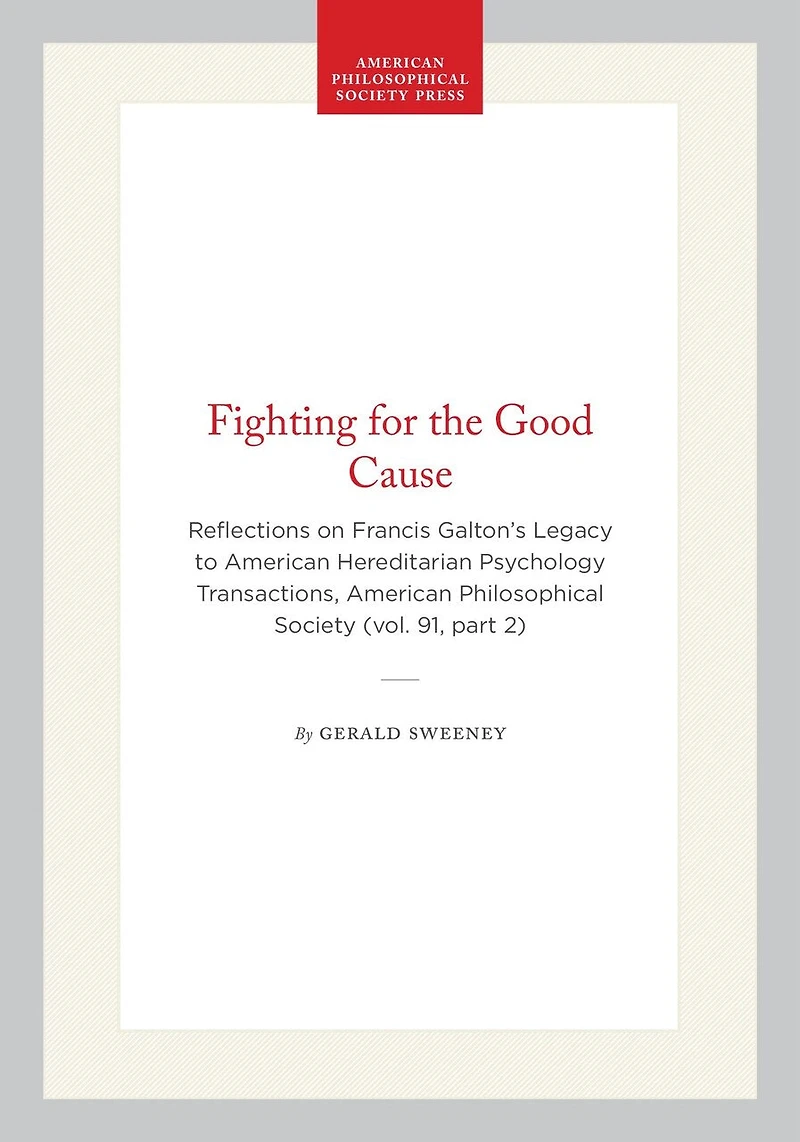
Fighting for the Good Cause: Reflections on Francis Galton's Legacy to American Hereditarian Psychology Transactions, American Philosophical Society (vol. 91, part 2) in Grande Prairie, AB
Current price: $58.99
Coles
Fighting for the Good Cause: Reflections on Francis Galton's Legacy to American Hereditarian Psychology Transactions, American Philosophical Society (vol. 91, part 2) in Grande Prairie, AB
Current price: $58.99
Loading Inventory...
Size: Paperback
*Product information and pricing may vary - to confirm current pricing, availability, shipping, and return information please contact Coles. In the event of a pricing discrepancy, the retailer's price will apply.
Sir Francis Galton was an influential mentor for the educational psychologists who supplied crucial doctrine to American eugenics from 1903 to 1930. Yet the nature of his influence has never been specified. The psychologists' own claim as to the Galton's contribution -- that he provided sufficient justification for their absolutist hereditarianism -- was clearly disingenuous. Rather, he appears to have functioned as a model for these figures, who were informed by their perceptions of Galton's ulterior purposes in constructing eugenics as he did. Any of various features in the 45-year-long course of that development could have encouraged these particular legatees to appreciate both Galton and his product as surreptitious stanchers of democracy.
Sir Francis Galton was an influential mentor for the educational psychologists who supplied crucial doctrine to American eugenics from 1903 to 1930. Yet the nature of his influence has never been specified. The psychologists' own claim as to the Galton's contribution -- that he provided sufficient justification for their absolutist hereditarianism -- was clearly disingenuous. Rather, he appears to have functioned as a model for these figures, who were informed by their perceptions of Galton's ulterior purposes in constructing eugenics as he did. Any of various features in the 45-year-long course of that development could have encouraged these particular legatees to appreciate both Galton and his product as surreptitious stanchers of democracy.
You May Also Like









Find at Prairie Mall in Grande Prairie, AB
Visit at Prairie Mall in Grande Prairie, AB