


Gifting Made Simple
Give the Gift of ChoiceClick below to purchase a Prairie Mall eGift Card that can be used at participating retailers at Prairie Mall.Buy Gift CardHome
Fault Diagnosis of Nonlinear Systems Using a Hybrid Approach
Coles
Loading Inventory...
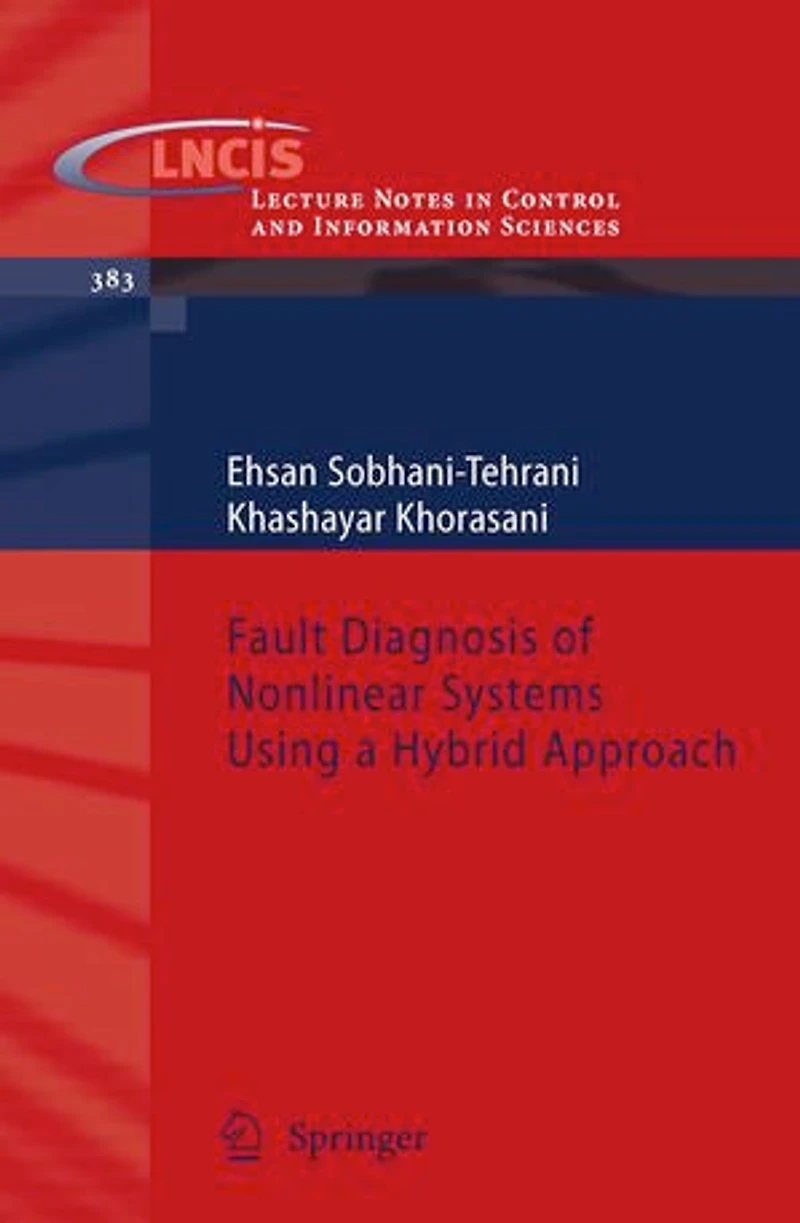
Fault Diagnosis of Nonlinear Systems Using a Hybrid Approach in Grande Prairie, AB
Current price: $180.69
Original price: $225.75
Coles
Fault Diagnosis of Nonlinear Systems Using a Hybrid Approach in Grande Prairie, AB
Current price: $180.69
Original price: $225.75
Loading Inventory...
Size: Kobo eBook
*Product information and pricing may vary - to confirm current pricing, availability, shipping, and return information please contact Coles. In the event of a pricing discrepancy, the retailer's price will apply.
Theincreasingcomplexityofspacevehiclessuchassatellites,andthecostreduction measures that have affected satellite operators are increasingly driving the need for more autonomy in satellite diagnostics and control systems. Current methods for detecting and correcting anomalies onboard the spacecraft as well as on the ground are primarily manual and labor intensive, and therefore, tend to be slow. Operators inspect telemetry data to determine the current satellite health. They use various statisticaltechniques andmodels,buttheanalysisandevaluation ofthelargevolume of data still require extensive human intervention and expertise that is prone to error. Furthermore, for spacecraft and most of these satellites, there can be potentially unduly long delays in round-trip communications between the ground station and the satellite. In this context, it is desirable to have onboard fault-diagnosis system that is capable of detecting, isolating, identifying or classifying faults in the system withouttheinvolvementandinterventionofoperators.Towardthisend,theprinciple goal here is to improve the ef?ciency, accuracy, and reliability of the trend analysis and diagnostics techniques through utilization of intelligent-based and hybrid-based methodologies.
Theincreasingcomplexityofspacevehiclessuchassatellites,andthecostreduction measures that have affected satellite operators are increasingly driving the need for more autonomy in satellite diagnostics and control systems. Current methods for detecting and correcting anomalies onboard the spacecraft as well as on the ground are primarily manual and labor intensive, and therefore, tend to be slow. Operators inspect telemetry data to determine the current satellite health. They use various statisticaltechniques andmodels,buttheanalysisandevaluation ofthelargevolume of data still require extensive human intervention and expertise that is prone to error. Furthermore, for spacecraft and most of these satellites, there can be potentially unduly long delays in round-trip communications between the ground station and the satellite. In this context, it is desirable to have onboard fault-diagnosis system that is capable of detecting, isolating, identifying or classifying faults in the system withouttheinvolvementandinterventionofoperators.Towardthisend,theprinciple goal here is to improve the ef?ciency, accuracy, and reliability of the trend analysis and diagnostics techniques through utilization of intelligent-based and hybrid-based methodologies.
You May Also Like













Find at Prairie Mall in Grande Prairie, AB
Visit at Prairie Mall in Grande Prairie, AB