


Gifting Made Simple
Give the Gift of ChoiceClick below to purchase a Prairie Mall eGift Card that can be used at participating retailers at Prairie Mall.Buy Gift CardHome
Fate of Pesticides The Atmosphere: Implications for Environmental Risk Assessment: Proceedings a workshop organised by Health Council Netherlands, held Driebergen, April 22-24, 1998
Coles
Loading Inventory...
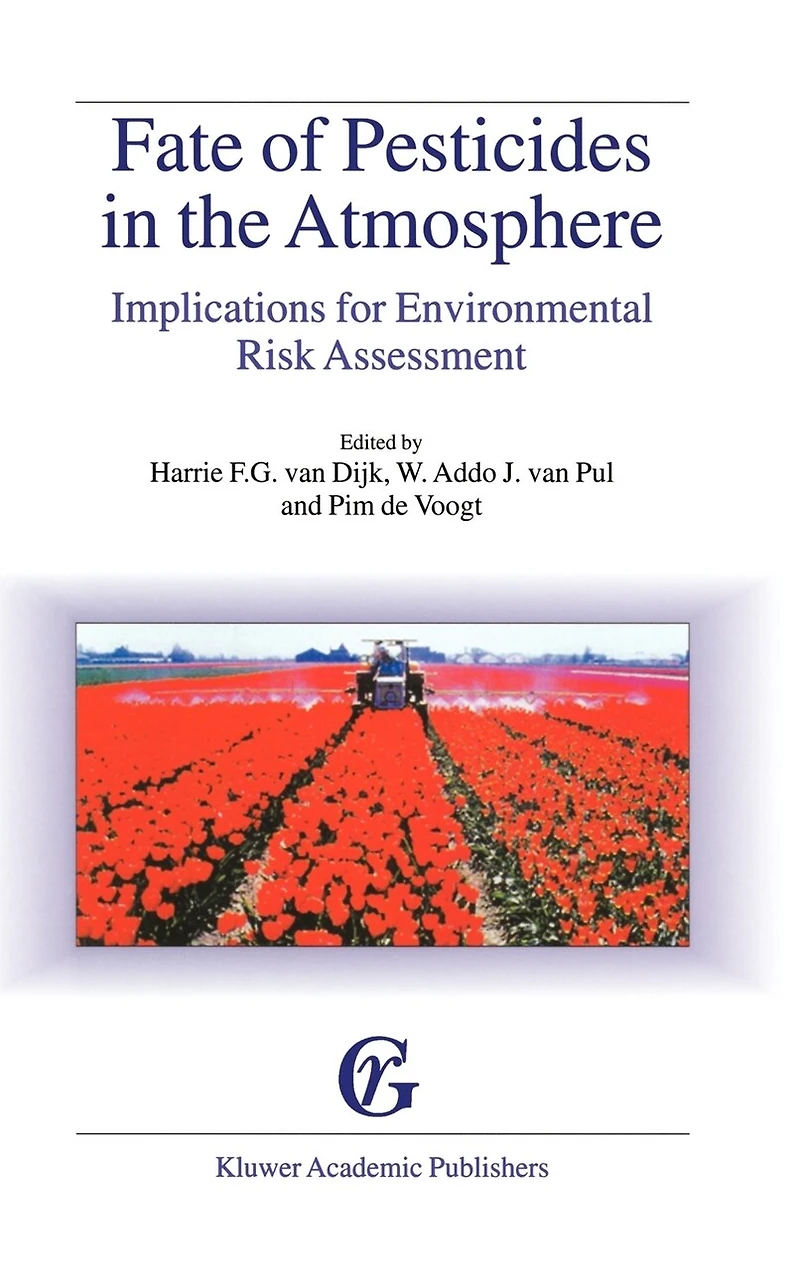
Fate of Pesticides The Atmosphere: Implications for Environmental Risk Assessment: Proceedings a workshop organised by Health Council Netherlands, held Driebergen, April 22-24, 1998
By None
Current price: $160.95
Coles
Fate of Pesticides The Atmosphere: Implications for Environmental Risk Assessment: Proceedings a workshop organised by Health Council Netherlands, held Driebergen, April 22-24, 1998
By None
Current price: $160.95
Loading Inventory...
Size: Hardcover
*Product information and pricing may vary - to confirm current pricing, availability, shipping, and return information please contact Coles. In the event of a pricing discrepancy, the retailer's price will apply.
Global pesticide use is currently estimated at approximately 2. 5 billion kg per year (Pimentel eta/. , 1998). To be effective, pesticides need to persist for a certain period of time. However, the longer their persistence, the greater the potential for transport of a fraction of the amount applied away from the target area. Pesticides are dispersed in the environment by water currents, wind, or biota. Pesticides can directly contaminate ground and surface waters by leaching, surface run-off and drift. Pesticides can also enter the atmosphere during application by evaporation and drift of small spray droplets, that remain airborne. Following application, pesticides may volatilise from the crop or the soil. Finally, wind erosion can cause soil particles and dust loaded with pesticides to enter the atmosphere. The extent to which pesticides enter the air compartment is dependent upon many factors: the properties of the substance in question (e. g. vapour pressure), the amount used, the method of application, the formulation, the weather conditions (such as wind speed, temperature, humidity), the nature of the crop and soil characteristics. Measurements at application sites reveal that sometimes more than half of the amount applied is lost into the atmosphere within a few days (Spencer and Cliath, 1990; Taylor and Spencer; 1990; Van den Berg et a/. , this issue).
Global pesticide use is currently estimated at approximately 2. 5 billion kg per year (Pimentel eta/. , 1998). To be effective, pesticides need to persist for a certain period of time. However, the longer their persistence, the greater the potential for transport of a fraction of the amount applied away from the target area. Pesticides are dispersed in the environment by water currents, wind, or biota. Pesticides can directly contaminate ground and surface waters by leaching, surface run-off and drift. Pesticides can also enter the atmosphere during application by evaporation and drift of small spray droplets, that remain airborne. Following application, pesticides may volatilise from the crop or the soil. Finally, wind erosion can cause soil particles and dust loaded with pesticides to enter the atmosphere. The extent to which pesticides enter the air compartment is dependent upon many factors: the properties of the substance in question (e. g. vapour pressure), the amount used, the method of application, the formulation, the weather conditions (such as wind speed, temperature, humidity), the nature of the crop and soil characteristics. Measurements at application sites reveal that sometimes more than half of the amount applied is lost into the atmosphere within a few days (Spencer and Cliath, 1990; Taylor and Spencer; 1990; Van den Berg et a/. , this issue).
You May Also Like
















More About Coles at Prairie Mall
11801 100 St #104, Grande Prairie, AB T8V 3Y2, Canada
Find Coles at Prairie Mall in Grande Prairie, AB
Visit Coles at Prairie Mall in Grande Prairie, AB