


Gifting Made Simple
Give the Gift of ChoiceClick below to purchase a Prairie Mall eGift Card that can be used at participating retailers at Prairie Mall.Buy Gift CardHome
Elements of Copula Modeling with R
Coles
Loading Inventory...
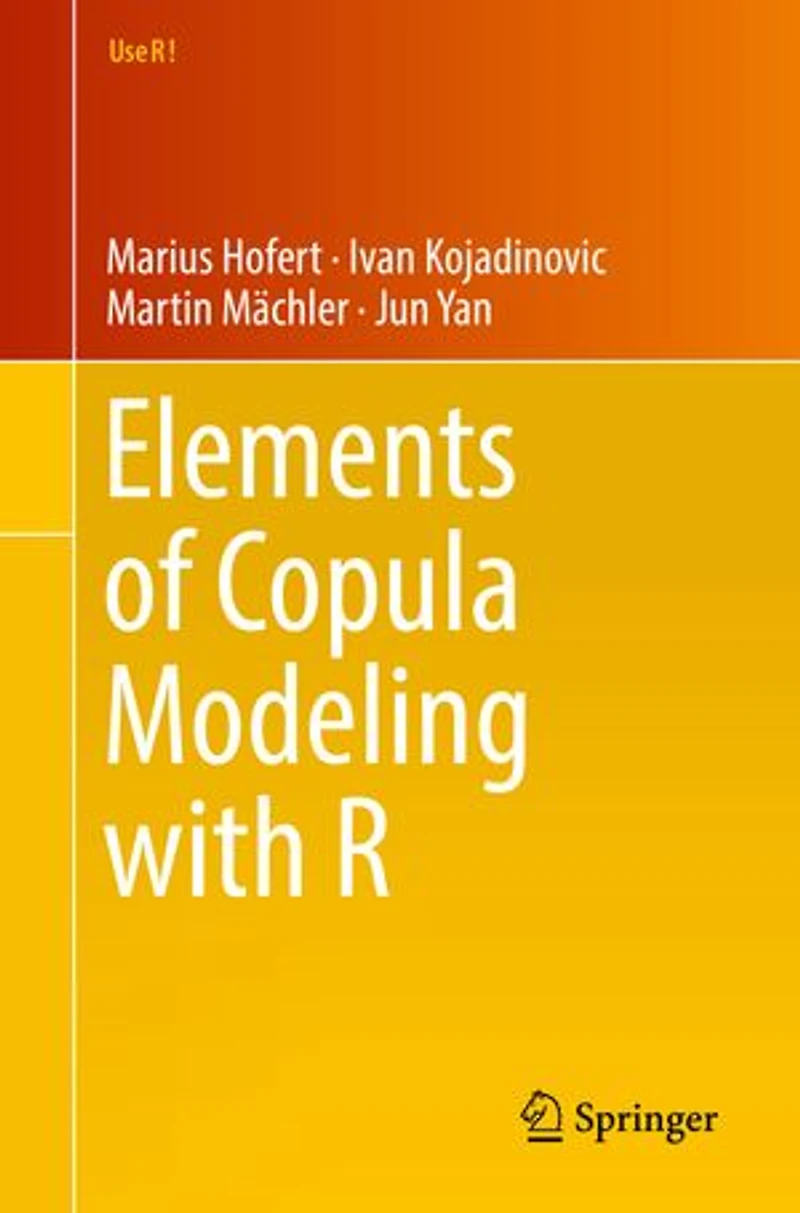
Elements of Copula Modeling with R in Grande Prairie, AB
Current price: $154.89
Original price: $193.50
Coles
Elements of Copula Modeling with R in Grande Prairie, AB
Current price: $154.89
Original price: $193.50
Loading Inventory...
Size: Kobo eBook
*Product information and pricing may vary - to confirm current pricing, availability, shipping, and return information please contact Coles. In the event of a pricing discrepancy, the retailer's price will apply.
This book introduces the main theoretical findings related to copulas and shows how statistical modeling of multivariate continuous distributions using copulas can be carried out in the R statistical environment with the package copula (among others). Copulas are multivariate distribution functions with standard uniform univariate margins. They are increasingly applied to modeling dependence among random variables in fields such as risk management, actuarial science, insurance, finance, engineering, hydrology, climatology, and meteorology, to name a few.
In the spirit of the Use R! series, each chapter combines key theoretical definitions or results with illustrations in R. Aimed at statisticians, actuaries, risk managers, engineers and environmental scientists wanting to learn about the theory and practice of copula modeling using R without an overwhelming amount of mathematics, the book can also be used for teaching a course on copula modeling.
This book introduces the main theoretical findings related to copulas and shows how statistical modeling of multivariate continuous distributions using copulas can be carried out in the R statistical environment with the package copula (among others). Copulas are multivariate distribution functions with standard uniform univariate margins. They are increasingly applied to modeling dependence among random variables in fields such as risk management, actuarial science, insurance, finance, engineering, hydrology, climatology, and meteorology, to name a few.
In the spirit of the Use R! series, each chapter combines key theoretical definitions or results with illustrations in R. Aimed at statisticians, actuaries, risk managers, engineers and environmental scientists wanting to learn about the theory and practice of copula modeling using R without an overwhelming amount of mathematics, the book can also be used for teaching a course on copula modeling.
You May Also Like










Find at Prairie Mall in Grande Prairie, AB
Visit at Prairie Mall in Grande Prairie, AB