


Gifting Made Simple
Give the Gift of ChoiceClick below to purchase a Prairie Mall eGift Card that can be used at participating retailers at Prairie Mall.Buy Gift CardHome
Earthly Encounters: Sensation, Feminist Theory, and the Anthropocene
Coles
Loading Inventory...
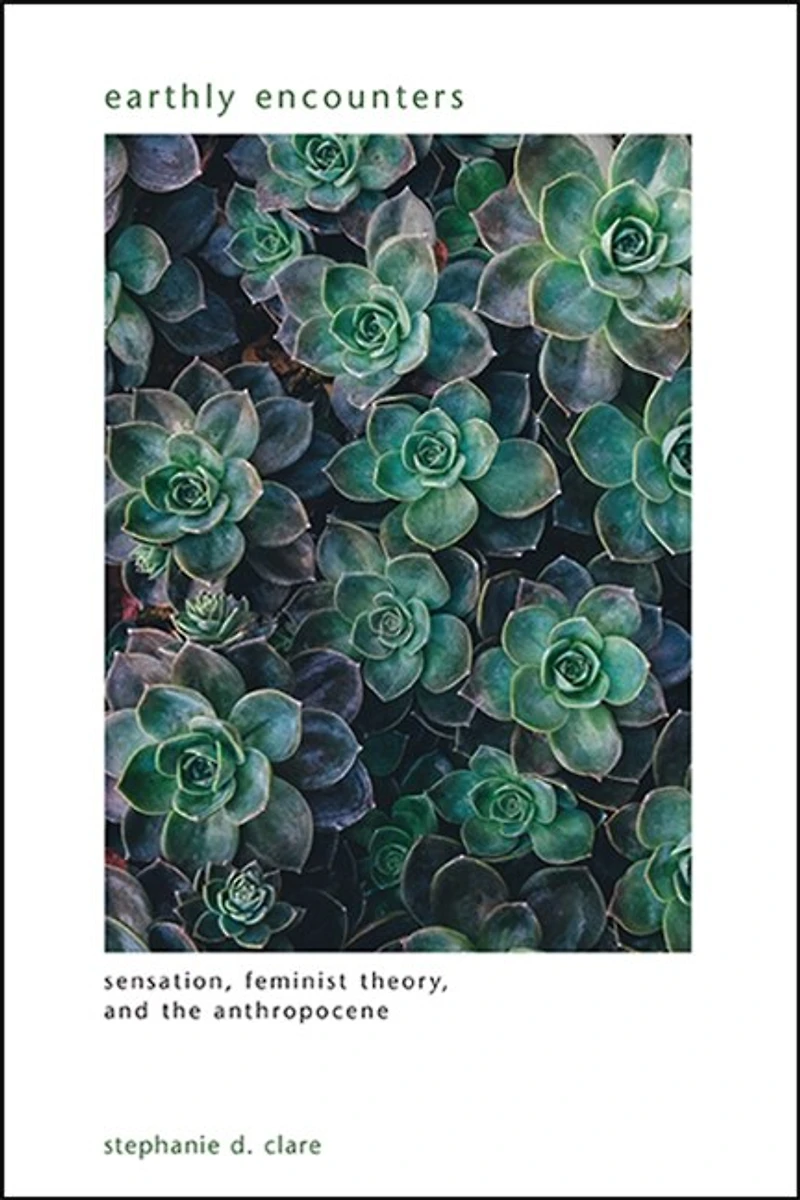
Earthly Encounters: Sensation, Feminist Theory, and the Anthropocene in Grande Prairie, AB
Current price: $135.95
Coles
Earthly Encounters: Sensation, Feminist Theory, and the Anthropocene in Grande Prairie, AB
Current price: $135.95
Loading Inventory...
Size: Hardcover
*Product information and pricing may vary - to confirm current pricing, availability, shipping, and return information please contact Coles. In the event of a pricing discrepancy, the retailer's price will apply.
A feminist approach to the Anthropocene that recovers the relevance of sensation and phenomenology.
Earthly Encounters develops a fuller account of the lived experience of racialized gender formation as it exists on this planet, earth. It analyzes sensations: the chill of winter, the warm embrace of the wind, the feeling of being immersed in water, and a stifling sense of containment. Through this analysis in settler colonial and colonial contexts, in twentieth-century North America and Africa, Stephanie D. Clare shows how sensation is unevenly distributed within social worlds and productive of racial, national, and gendered subjectivities. From revealing the relevance of phenomenology, especially in the writings of Maurice Merleau-Ponty and Frantz Fanon, to debates concerning new materialism and affect theory, Clare shows how the phenomenology of race and gender must consider both the production of the body-subject and the environment. She concludes by making a case for the continued significance of sensation in the context of the Anthropocene.
A feminist approach to the Anthropocene that recovers the relevance of sensation and phenomenology.
Earthly Encounters develops a fuller account of the lived experience of racialized gender formation as it exists on this planet, earth. It analyzes sensations: the chill of winter, the warm embrace of the wind, the feeling of being immersed in water, and a stifling sense of containment. Through this analysis in settler colonial and colonial contexts, in twentieth-century North America and Africa, Stephanie D. Clare shows how sensation is unevenly distributed within social worlds and productive of racial, national, and gendered subjectivities. From revealing the relevance of phenomenology, especially in the writings of Maurice Merleau-Ponty and Frantz Fanon, to debates concerning new materialism and affect theory, Clare shows how the phenomenology of race and gender must consider both the production of the body-subject and the environment. She concludes by making a case for the continued significance of sensation in the context of the Anthropocene.
You May Also Like














Find at Prairie Mall in Grande Prairie, AB
Visit at Prairie Mall in Grande Prairie, AB