


Gifting Made Simple
Give the Gift of ChoiceClick below to purchase a Prairie Mall eGift Card that can be used at participating retailers at Prairie Mall.Buy Gift CardHome
Dynamics and Mechanisms Design for Technology Students: A Project-Based Approach
Coles
Loading Inventory...
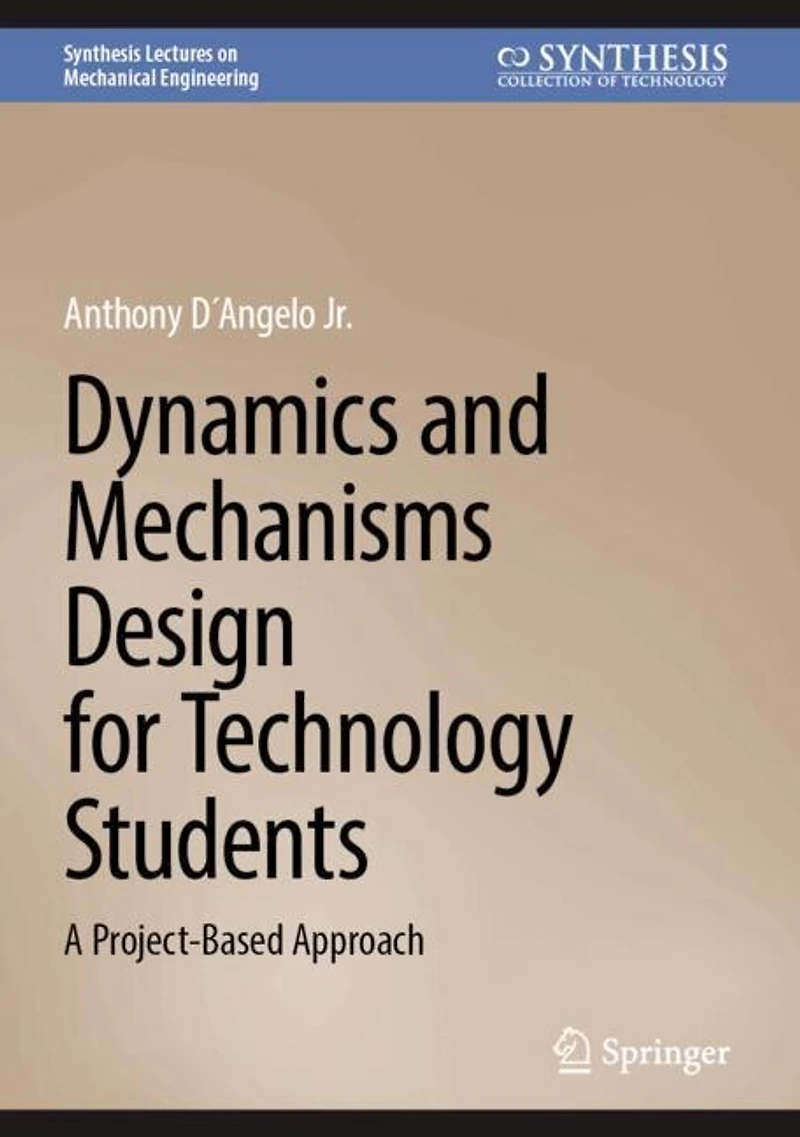
Dynamics and Mechanisms Design for Technology Students: A Project-Based Approach in Grande Prairie, AB
Current price: $65.95
Coles
Dynamics and Mechanisms Design for Technology Students: A Project-Based Approach in Grande Prairie, AB
Current price: $65.95
Loading Inventory...
Size: Hardcover
*Product information and pricing may vary - to confirm current pricing, availability, shipping, and return information please contact Coles. In the event of a pricing discrepancy, the retailer's price will apply.
The book reviews the algebra, trigonometry, and basic calculus students need to be successful in solving problems. Next, a review of kinematics and Newton's laws are discussed, and numerous examples are solved. Mechanisms include the slider crank, offset slider crank, gears and gear trains, belts and chains, and cams. A graphical and analytical approach is taken when covering slider crank mechanisms. The book uses vectors and Kennedy's theorem to solve a variety of included examples. Gears and gear trains as well as belts and chains are discussed. Finally, cams using graphical and analytical techniques are introduced. The concluding chapter gives multiple projects used in the class to capture the lectures and computer modeling using Excel and MATLAB.
The book reviews the algebra, trigonometry, and basic calculus students need to be successful in solving problems. Next, a review of kinematics and Newton's laws are discussed, and numerous examples are solved. Mechanisms include the slider crank, offset slider crank, gears and gear trains, belts and chains, and cams. A graphical and analytical approach is taken when covering slider crank mechanisms. The book uses vectors and Kennedy's theorem to solve a variety of included examples. Gears and gear trains as well as belts and chains are discussed. Finally, cams using graphical and analytical techniques are introduced. The concluding chapter gives multiple projects used in the class to capture the lectures and computer modeling using Excel and MATLAB.
You May Also Like
















Find at Prairie Mall in Grande Prairie, AB
Visit at Prairie Mall in Grande Prairie, AB