


Gifting Made Simple
Give the Gift of ChoiceClick below to purchase a Prairie Mall eGift Card that can be used at participating retailers at Prairie Mall.Buy Gift CardHome
Drug War Pathologies: Embedded Corporatism And U.s. Enforcement The Americas
Coles
Loading Inventory...
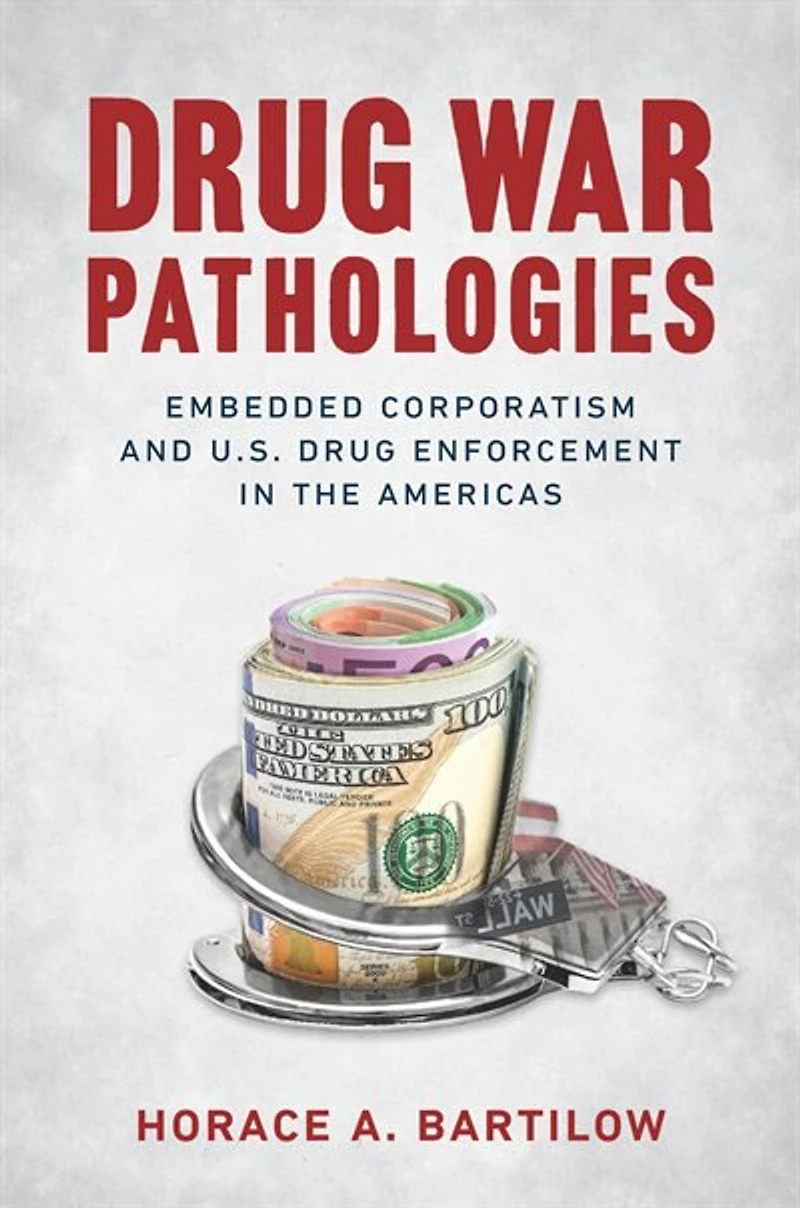
Drug War Pathologies: Embedded Corporatism And U.s. Enforcement The Americas in Grande Prairie, AB
Current price: $135.02
Coles
Drug War Pathologies: Embedded Corporatism And U.s. Enforcement The Americas in Grande Prairie, AB
Current price: $135.02
Loading Inventory...
Size: Hardcover
*Product information and pricing may vary - to confirm current pricing, availability, shipping, and return information please contact Coles. In the event of a pricing discrepancy, the retailer's price will apply.
In this book, Horace Bartilow develops a theory of embedded corporatism to explain the U.S. government’s war on drugs. Stemming from President Richard Nixon’s 1971 call for an international approach to this “war,” U.S. drug enforcement policy has persisted with few changes to the present day, despite widespread criticism of its effectiveness and of its unequal effects on hundreds of millions of people across the Americas. While researchers consistently emphasize the role of race in U.S. drug enforcement, Bartilow’s empirical analysis highlights the class dimension of the drug war and the immense power that American corporations wield within the regime.
Drawing on qualitative case study methods, declassified U.S. government documents, and advanced econometric estimators that analyze cross-national data, Bartilow demonstrates how corporate power is projected and embedded—in lobbying, financing of federal elections, funding of policy think tanks, and interlocks with the federal government and the military. Embedded corporatism, he explains, creates the conditions by which interests of state and nonstate members of the regime converge to promote capital accumulation. The subsequent human rights repression, illiberal democratic governments, antiworker practices, and widening income inequality throughout the Americas, Bartilow argues, are the pathological policy outcomes of embedded corporatism in drug enforcement.
In this book, Horace Bartilow develops a theory of embedded corporatism to explain the U.S. government’s war on drugs. Stemming from President Richard Nixon’s 1971 call for an international approach to this “war,” U.S. drug enforcement policy has persisted with few changes to the present day, despite widespread criticism of its effectiveness and of its unequal effects on hundreds of millions of people across the Americas. While researchers consistently emphasize the role of race in U.S. drug enforcement, Bartilow’s empirical analysis highlights the class dimension of the drug war and the immense power that American corporations wield within the regime.
Drawing on qualitative case study methods, declassified U.S. government documents, and advanced econometric estimators that analyze cross-national data, Bartilow demonstrates how corporate power is projected and embedded—in lobbying, financing of federal elections, funding of policy think tanks, and interlocks with the federal government and the military. Embedded corporatism, he explains, creates the conditions by which interests of state and nonstate members of the regime converge to promote capital accumulation. The subsequent human rights repression, illiberal democratic governments, antiworker practices, and widening income inequality throughout the Americas, Bartilow argues, are the pathological policy outcomes of embedded corporatism in drug enforcement.













Find at Prairie Mall in Grande Prairie, AB
Visit at Prairie Mall in Grande Prairie, AB