


Gifting Made Simple
Give the Gift of ChoiceClick below to purchase a Prairie Mall eGift Card that can be used at participating retailers at Prairie Mall.Buy Gift CardHome
Dialectics of the Concrete: A Study on Problems of Man and World
Coles
Loading Inventory...
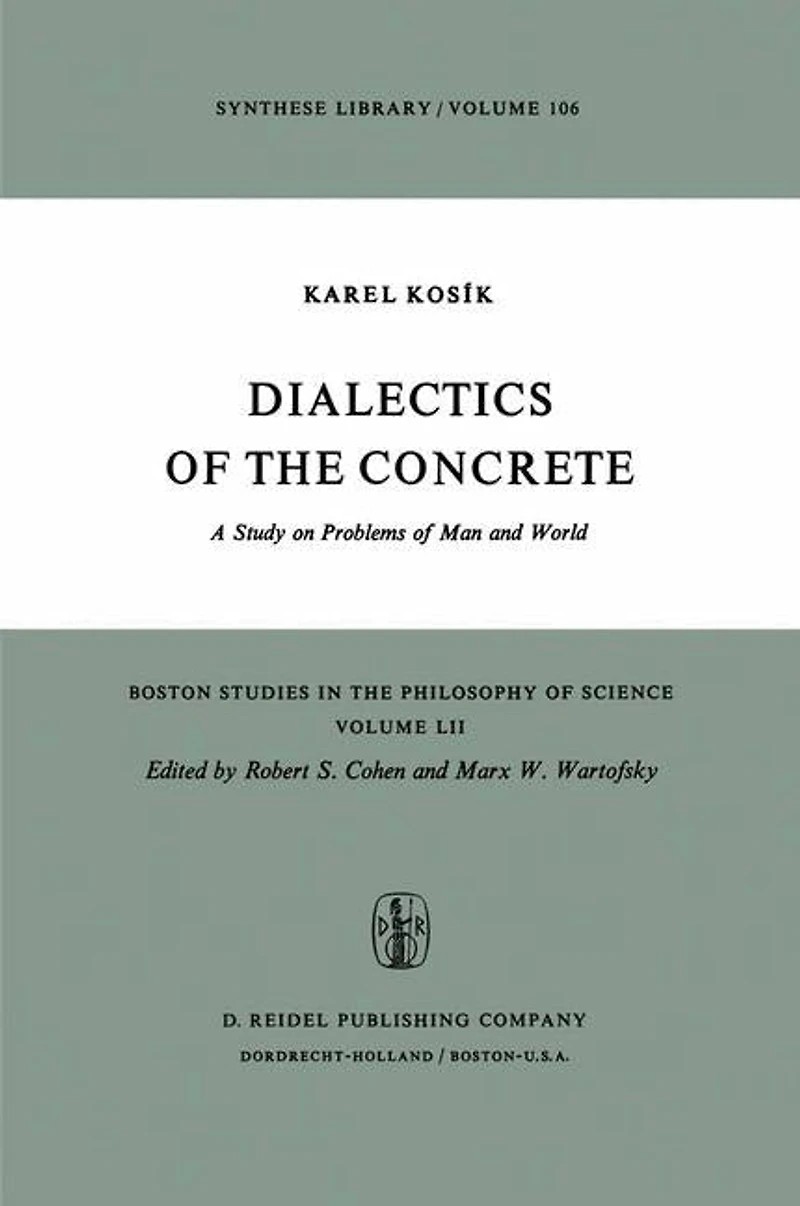
Dialectics of the Concrete: A Study on Problems of Man and World in Grande Prairie, AB
Current price: $160.95
Coles
Dialectics of the Concrete: A Study on Problems of Man and World in Grande Prairie, AB
Current price: $160.95
Loading Inventory...
Size: Paperback
*Product information and pricing may vary - to confirm current pricing, availability, shipping, and return information please contact Coles. In the event of a pricing discrepancy, the retailer's price will apply.
Kosik writes that the history of a text is in a certain sense the history of its interpretations. In the fifteen years that have passed since the first (Czech) edition of his Dialectics of the Concrete, this book has been widely read and interpreted throughout Europe, in diverse centers of scholarship as well as in private studies. A faithful English language edition is long overdue. This publication of KosIk's work will surely provoke a range of new interpretations. For its theme is the characterization of science and of rationality in the context of the social roots of science and the social critique which an appropriately rational science should afford. Kosik's question is: How shall Karl Marx's understanding of science itself be understood? And how can it be further developed? In his treatment of the question of scientific rationality, KOSIK drives bluntly into the issues of gravest human concern, not the least of which is how to avoid the pseudo-concrete, the pseudo-scientific, the pseudo-rational, the pseudo historical. Starting with Marx's methodological approach, of "ascending from the abstract to the concrete", KOSIK develops a critique of positivism, of phenomenalist empiricism, and of "metaphysical" rationalism, counter posing them to "dialectical rationalism". He takes the category of the concrete in the dialectical sense of that which comes to be known by the active transformation of nature and society by human purposive activity.
Kosik writes that the history of a text is in a certain sense the history of its interpretations. In the fifteen years that have passed since the first (Czech) edition of his Dialectics of the Concrete, this book has been widely read and interpreted throughout Europe, in diverse centers of scholarship as well as in private studies. A faithful English language edition is long overdue. This publication of KosIk's work will surely provoke a range of new interpretations. For its theme is the characterization of science and of rationality in the context of the social roots of science and the social critique which an appropriately rational science should afford. Kosik's question is: How shall Karl Marx's understanding of science itself be understood? And how can it be further developed? In his treatment of the question of scientific rationality, KOSIK drives bluntly into the issues of gravest human concern, not the least of which is how to avoid the pseudo-concrete, the pseudo-scientific, the pseudo-rational, the pseudo historical. Starting with Marx's methodological approach, of "ascending from the abstract to the concrete", KOSIK develops a critique of positivism, of phenomenalist empiricism, and of "metaphysical" rationalism, counter posing them to "dialectical rationalism". He takes the category of the concrete in the dialectical sense of that which comes to be known by the active transformation of nature and society by human purposive activity.
You May Also Like













Find at Prairie Mall in Grande Prairie, AB
Visit at Prairie Mall in Grande Prairie, AB