


Gifting Made Simple
Give the Gift of ChoiceClick below to purchase a Prairie Mall eGift Card that can be used at participating retailers at Prairie Mall.Buy Gift CardHome
Diachronic Diversity in Classical Biblical Hebrew
Coles
Loading Inventory...
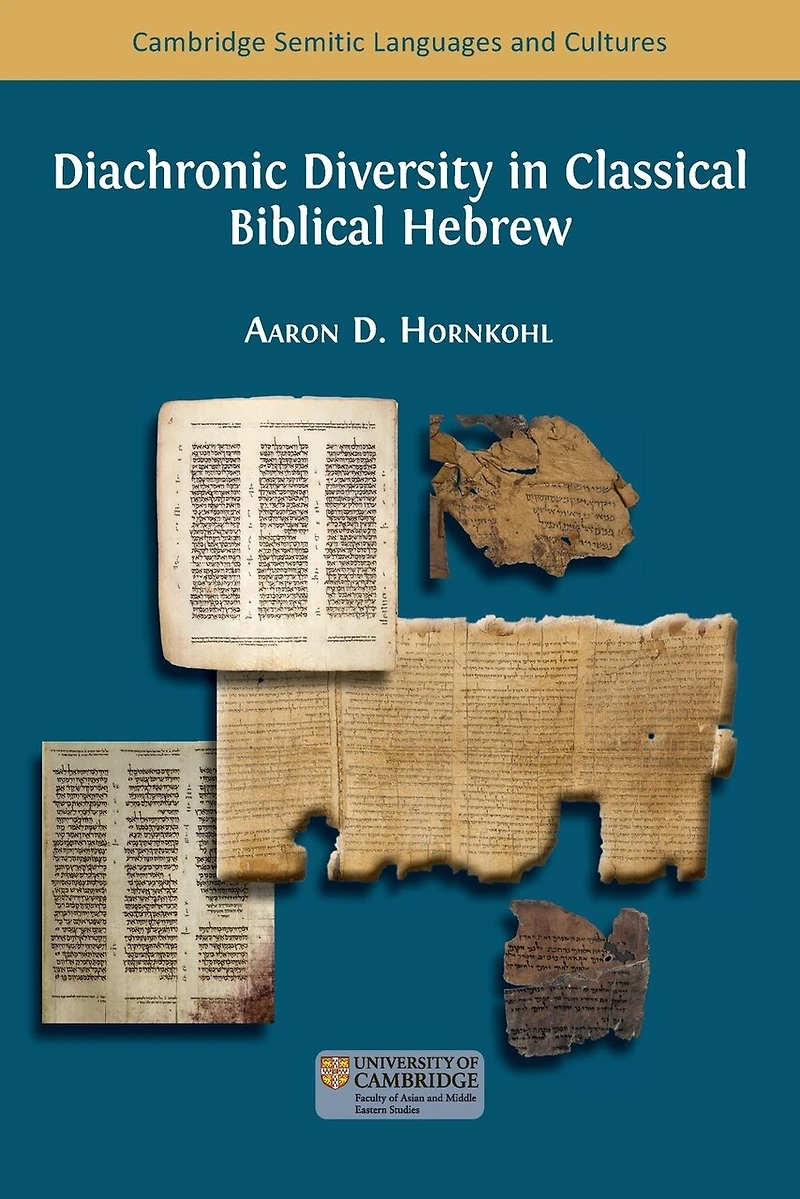
Diachronic Diversity in Classical Biblical Hebrew in Grande Prairie, AB
Current price: $56.95
Coles
Diachronic Diversity in Classical Biblical Hebrew in Grande Prairie, AB
Current price: $56.95
Loading Inventory...
Size: Paperback
*Product information and pricing may vary - to confirm current pricing, availability, shipping, and return information please contact Coles. In the event of a pricing discrepancy, the retailer's price will apply.
According to the standard periodisation of ancient Hebrew, the division of Biblical Hebrew as reflected in the Masoretic tradition is basically dichotomous: pre-exilic Classical Biblical Hebrew (CBH) versus post-Restoration Late Biblical Hebrew (LBH). Within this paradigm, the chronolectal unity of CBH is rarely questioned-this despite the reasonable expectation that the language of a corpus encompassing traditions of various ages and comprising works composed, edited, and transmitted over the course of centuries would show signs of diachronic development. From the perspective of historical evolution, CBH is remarkably homogenous. Within this apparent uniformity, however, there are indeed signs of historical development, sets of alternant features whose respective concentrations seem to divide CBH into two sub-chronolects. The most conspicuous typological division that emerges is between the CBH of the Pentateuch and that of the relevant Prophets and Writings. The present volume investigates a series of features that distinguish the two ostensible CBH sub-chronolects, weighs alternative explanations for distribution patterns that appear to have chronological significance, and considers broader implications for Hebrew diachrony and periodisation and for the composition of the Torah.
According to the standard periodisation of ancient Hebrew, the division of Biblical Hebrew as reflected in the Masoretic tradition is basically dichotomous: pre-exilic Classical Biblical Hebrew (CBH) versus post-Restoration Late Biblical Hebrew (LBH). Within this paradigm, the chronolectal unity of CBH is rarely questioned-this despite the reasonable expectation that the language of a corpus encompassing traditions of various ages and comprising works composed, edited, and transmitted over the course of centuries would show signs of diachronic development. From the perspective of historical evolution, CBH is remarkably homogenous. Within this apparent uniformity, however, there are indeed signs of historical development, sets of alternant features whose respective concentrations seem to divide CBH into two sub-chronolects. The most conspicuous typological division that emerges is between the CBH of the Pentateuch and that of the relevant Prophets and Writings. The present volume investigates a series of features that distinguish the two ostensible CBH sub-chronolects, weighs alternative explanations for distribution patterns that appear to have chronological significance, and considers broader implications for Hebrew diachrony and periodisation and for the composition of the Torah.
You May Also Like








Find at Prairie Mall in Grande Prairie, AB
Visit at Prairie Mall in Grande Prairie, AB