


Gifting Made Simple
Give the Gift of ChoiceClick below to purchase a Prairie Mall eGift Card that can be used at participating retailers at Prairie Mall.Buy Gift CardHome
Data-Driven Fluid Mechanics: Combining First Principles and Machine Learning
Coles
Loading Inventory...
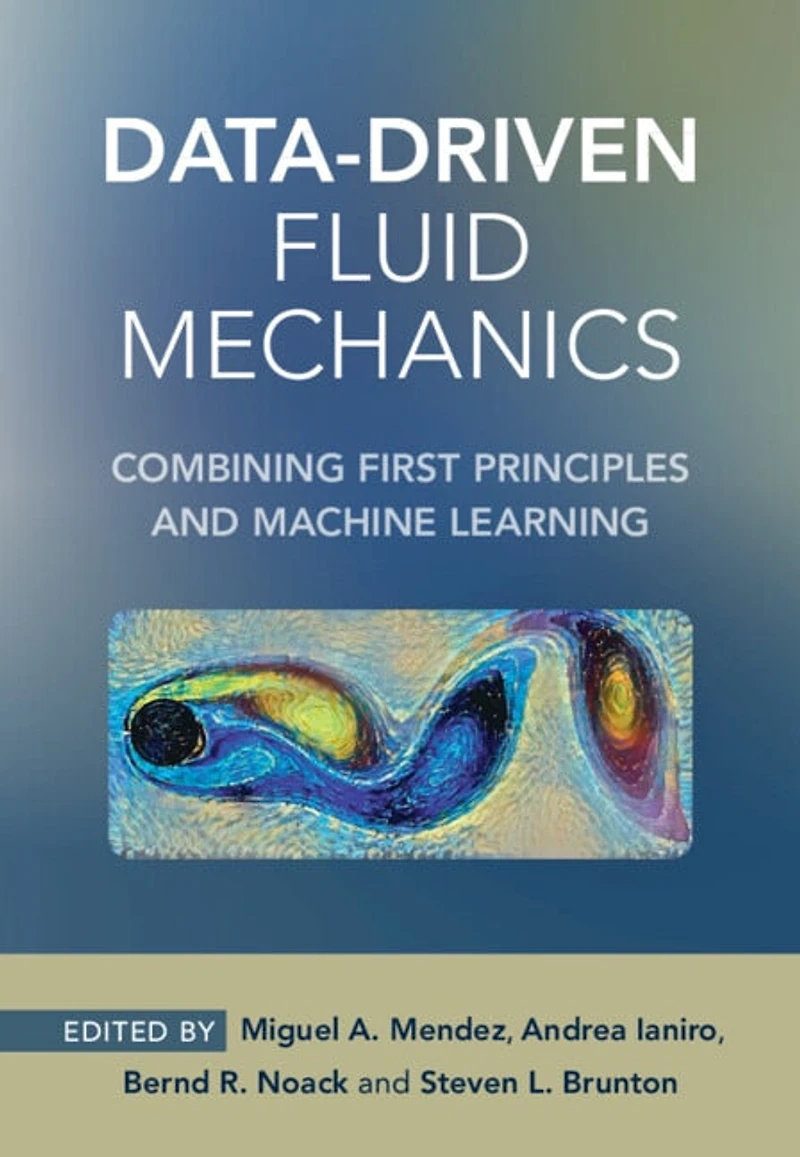
Data-Driven Fluid Mechanics: Combining First Principles and Machine Learning in Grande Prairie, AB
Current price: $101.95
Coles
Data-Driven Fluid Mechanics: Combining First Principles and Machine Learning in Grande Prairie, AB
Current price: $101.95
Loading Inventory...
Size: Hardcover
*Product information and pricing may vary - to confirm current pricing, availability, shipping, and return information please contact Coles. In the event of a pricing discrepancy, the retailer's price will apply.
Data-driven methods have become an essential part of the methodological portfolio of fluid dynamicists, motivating students and practitioners to gather practical knowledge from a diverse range of disciplines. These fields include computer science, statistics, optimization, signal processing, pattern recognition, nonlinear dynamics, and control. Fluid mechanics is historically a big data field and offers a fertile ground for developing and applying data-driven methods, while also providing valuable shortcuts, constraints, and interpretations based on its powerful connections to basic physics. Thus, hybrid approaches that leverage both methods based on data as well as fundamental principles are the focus of active and exciting research. Originating from a one-week lecture series course by the von Karman Institute for Fluid Dynamics, this book presents an overview and a pedagogical treatment of some of the data-driven and machine learning tools that are leading research advancements in model-order reduction, system identification, flow control, and data-driven turbulence closures.
Data-driven methods have become an essential part of the methodological portfolio of fluid dynamicists, motivating students and practitioners to gather practical knowledge from a diverse range of disciplines. These fields include computer science, statistics, optimization, signal processing, pattern recognition, nonlinear dynamics, and control. Fluid mechanics is historically a big data field and offers a fertile ground for developing and applying data-driven methods, while also providing valuable shortcuts, constraints, and interpretations based on its powerful connections to basic physics. Thus, hybrid approaches that leverage both methods based on data as well as fundamental principles are the focus of active and exciting research. Originating from a one-week lecture series course by the von Karman Institute for Fluid Dynamics, this book presents an overview and a pedagogical treatment of some of the data-driven and machine learning tools that are leading research advancements in model-order reduction, system identification, flow control, and data-driven turbulence closures.
You May Also Like











Find at Prairie Mall in Grande Prairie, AB
Visit at Prairie Mall in Grande Prairie, AB