


Gifting Made Simple
Give the Gift of ChoiceClick below to purchase a Prairie Mall eGift Card that can be used at participating retailers at Prairie Mall.Buy Gift CardHome
Crossing Borders and Shifting Boundaries: Vol. I: Gender on the Move
Coles
Loading Inventory...
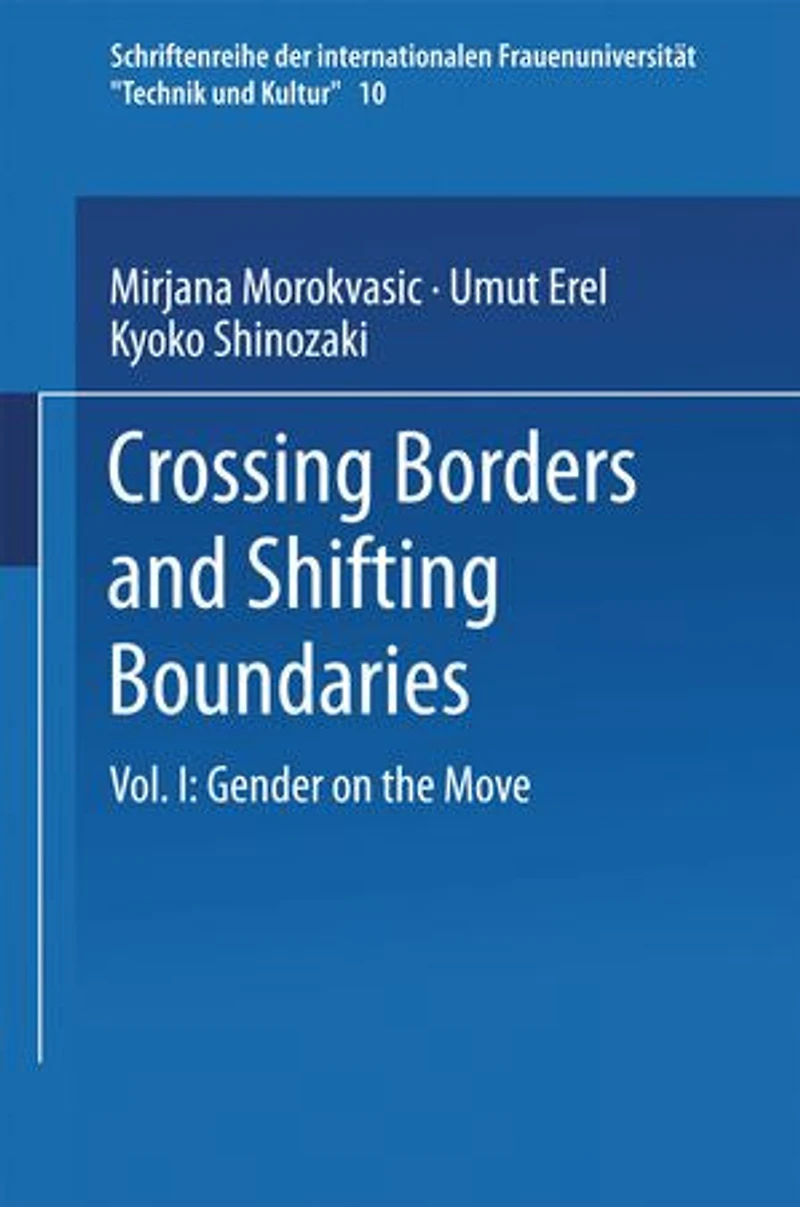
Crossing Borders and Shifting Boundaries: Vol. I: Gender on the Move in Grande Prairie, AB
Current price: $64.49
Original price: $80.62
Coles
Crossing Borders and Shifting Boundaries: Vol. I: Gender on the Move in Grande Prairie, AB
Current price: $64.49
Original price: $80.62
Loading Inventory...
Size: Kobo eBook
*Product information and pricing may vary - to confirm current pricing, availability, shipping, and return information please contact Coles. In the event of a pricing discrepancy, the retailer's price will apply.
11 tions involving women and men and their relations to one another. Gender is an important organising principle of social relations as it structures every aspect of human interaction on a personal or household level, in the local community, and in international relations. Who will be socialised to become vulnerable or strong? Who will have property and political power? Who will be excluded from privileges? Who is likely to become mobile or denied the possibility to move? Our concern in this collection of articles was not to merely make women in migration visible, but to show that patterns, causes, experiences and social im- pacts of migration are gendered. This is still not self-evident. As long as the male bias persists - the pervasive assumption that the inter- national migrant is a young, economically motivated male, ignoring the reality of the composition of migration streams world-wide and influencing policy making - the compensatory approach which concentrates on women as the pri- mary subject of studies will be necessary.
11 tions involving women and men and their relations to one another. Gender is an important organising principle of social relations as it structures every aspect of human interaction on a personal or household level, in the local community, and in international relations. Who will be socialised to become vulnerable or strong? Who will have property and political power? Who will be excluded from privileges? Who is likely to become mobile or denied the possibility to move? Our concern in this collection of articles was not to merely make women in migration visible, but to show that patterns, causes, experiences and social im- pacts of migration are gendered. This is still not self-evident. As long as the male bias persists - the pervasive assumption that the inter- national migrant is a young, economically motivated male, ignoring the reality of the composition of migration streams world-wide and influencing policy making - the compensatory approach which concentrates on women as the pri- mary subject of studies will be necessary.

















Find at Prairie Mall in Grande Prairie, AB
Visit at Prairie Mall in Grande Prairie, AB