


Gifting Made Simple
Give the Gift of ChoiceClick below to purchase a Prairie Mall eGift Card that can be used at participating retailers at Prairie Mall.Buy Gift CardHome
Classical Theory Of Crystal Dislocations: From Iron To Gallium Nitride
Coles
Loading Inventory...
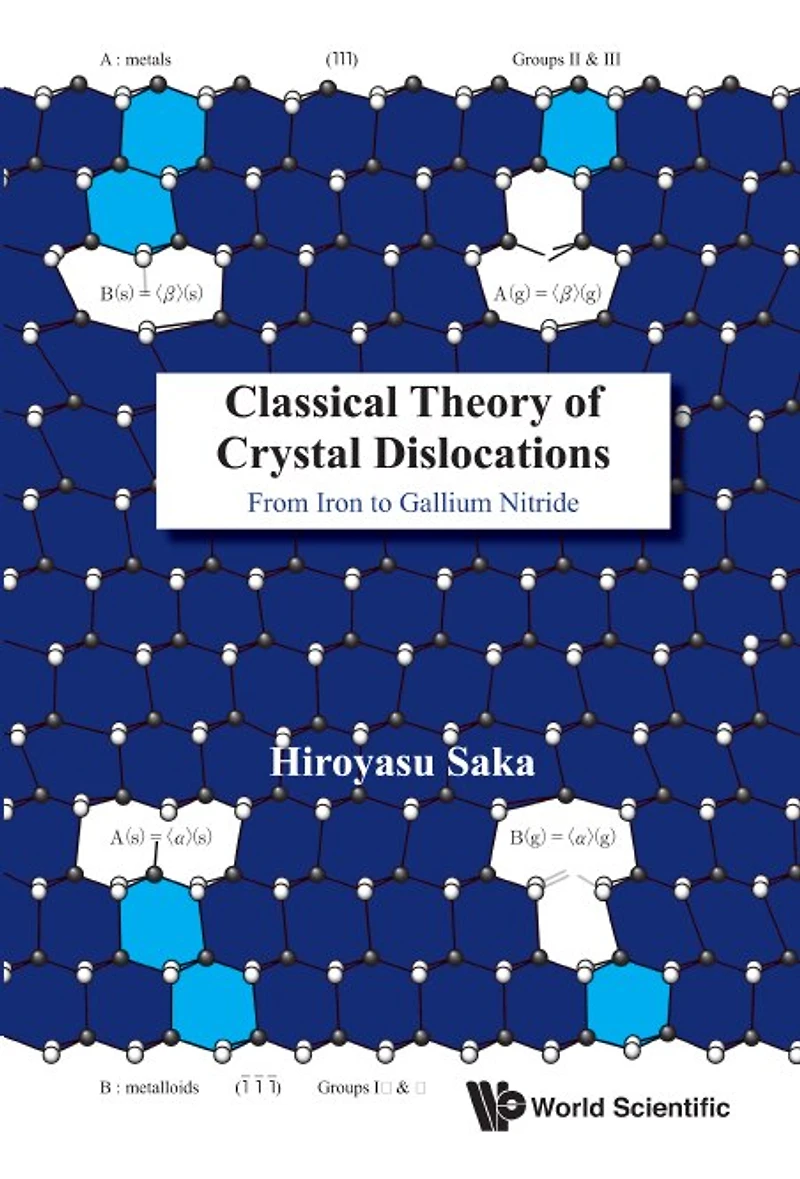
Classical Theory Of Crystal Dislocations: From Iron To Gallium Nitride in Grande Prairie, AB
Current price: $200.50
Coles
Classical Theory Of Crystal Dislocations: From Iron To Gallium Nitride in Grande Prairie, AB
Current price: $200.50
Loading Inventory...
Size: Hardcover
*Product information and pricing may vary - to confirm current pricing, availability, shipping, and return information please contact Coles. In the event of a pricing discrepancy, the retailer's price will apply.
The book consists of two parts: Part 1 is a standard text of dislocation theory. Mathematics is avoided as much as possible. Part 2 describes application of dislocation theory, which includes mechanical properties (including the inverse temperature dependence of strength) and dislocations in functional materials such as Si, GaN and SiC and dislocations in a thin crystal such as an epitaxial layer. This is what has been long anticipated among researchers in industry.The book contains about 330 illustrations (mostly originals by the author) and the pictures obtained by the author by means of in-situ experiment in a transmission electron microscope over the past 50 years.This book includes many exercises, which the author found useful when he was teaching in Department of Materials Science and Engineering of Nagoya University to stimulate their interests in dislocation theory.
The book consists of two parts: Part 1 is a standard text of dislocation theory. Mathematics is avoided as much as possible. Part 2 describes application of dislocation theory, which includes mechanical properties (including the inverse temperature dependence of strength) and dislocations in functional materials such as Si, GaN and SiC and dislocations in a thin crystal such as an epitaxial layer. This is what has been long anticipated among researchers in industry.The book contains about 330 illustrations (mostly originals by the author) and the pictures obtained by the author by means of in-situ experiment in a transmission electron microscope over the past 50 years.This book includes many exercises, which the author found useful when he was teaching in Department of Materials Science and Engineering of Nagoya University to stimulate their interests in dislocation theory.
You May Also Like









Find at Prairie Mall in Grande Prairie, AB
Visit at Prairie Mall in Grande Prairie, AB