


Gifting Made Simple
Give the Gift of ChoiceClick below to purchase a Prairie Mall eGift Card that can be used at participating retailers at Prairie Mall.Buy Gift CardHome
Carlo Borromeo and the Sacred Image in Sixteenth-Century Italy: A Reformer's Itinerary
Coles
Loading Inventory...
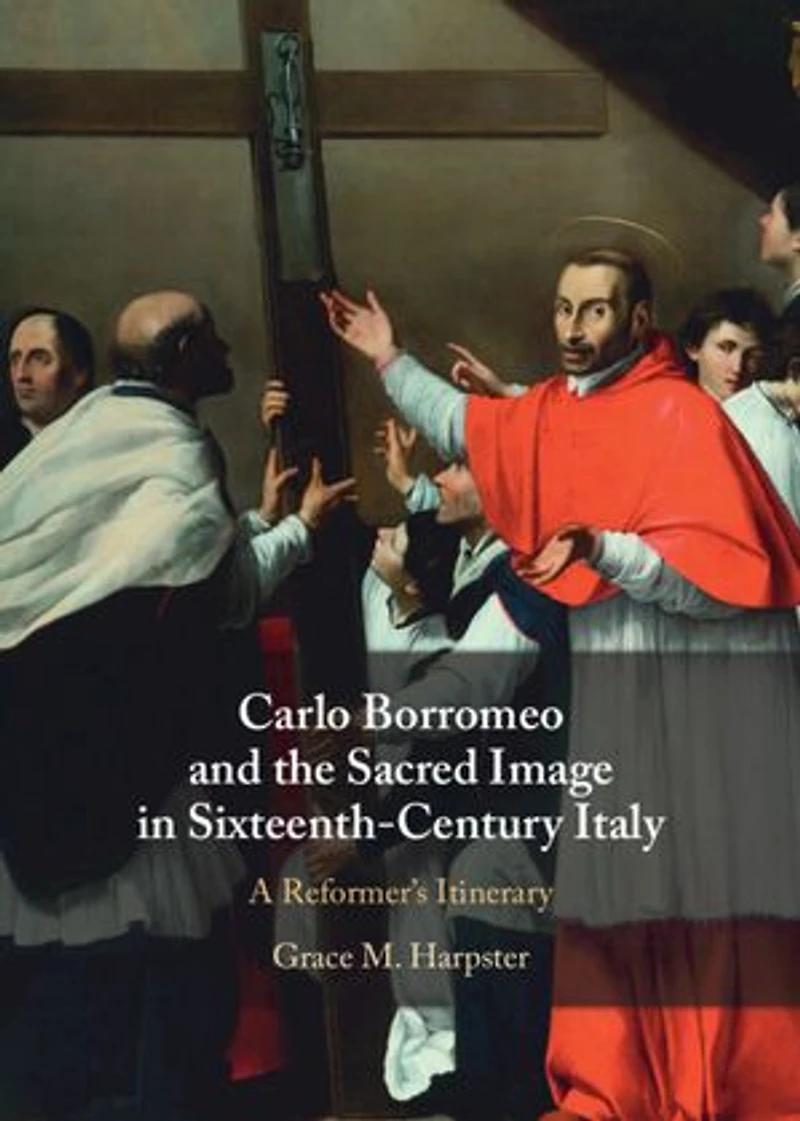
Carlo Borromeo and the Sacred Image in Sixteenth-Century Italy: A Reformer's Itinerary in Grande Prairie, AB
Current price: $119.99
Original price: $149.95
Coles
Carlo Borromeo and the Sacred Image in Sixteenth-Century Italy: A Reformer's Itinerary in Grande Prairie, AB
Current price: $119.99
Original price: $149.95
Loading Inventory...
Size: Kobo eBook
*Product information and pricing may vary - to confirm current pricing, availability, shipping, and return information please contact Coles. In the event of a pricing discrepancy, the retailer's price will apply.
Scholars have long acknowledged that reforms after the Catholic Council of Trent (1545–63) represent a watershed in art history, yet they have failed to agree on whether, and how, they had any effect on art. In this study, Grace Harpster offers new insights on the impact of Catholic reform on early modern art. Exploring the social roles of images in late sixteenth-century Italy, she demonstrates that the pressures of Catholic reform increased, rather than limited, the authority of the image. Harpster approaches the topic through a focus on the zealous, peripatetic reformer Carlo Borromeo (1538–84), who implemented new ways to police and pray to sacred images after Trent. His actions demonstrate that Catholic reformers endorsed the image as a powerful object, truthteller, and miracle-worker. The diverse corpus of images on his itinerary, moreover, reveals the critical role of the sacred image in a formative religious and art historical moment.
Scholars have long acknowledged that reforms after the Catholic Council of Trent (1545–63) represent a watershed in art history, yet they have failed to agree on whether, and how, they had any effect on art. In this study, Grace Harpster offers new insights on the impact of Catholic reform on early modern art. Exploring the social roles of images in late sixteenth-century Italy, she demonstrates that the pressures of Catholic reform increased, rather than limited, the authority of the image. Harpster approaches the topic through a focus on the zealous, peripatetic reformer Carlo Borromeo (1538–84), who implemented new ways to police and pray to sacred images after Trent. His actions demonstrate that Catholic reformers endorsed the image as a powerful object, truthteller, and miracle-worker. The diverse corpus of images on his itinerary, moreover, reveals the critical role of the sacred image in a formative religious and art historical moment.
You May Also Like











Find at Prairie Mall in Grande Prairie, AB
Visit at Prairie Mall in Grande Prairie, AB