


Gifting Made Simple
Give the Gift of ChoiceClick below to purchase a Prairie Mall eGift Card that can be used at participating retailers at Prairie Mall.Buy Gift CardHome
Camion Letters From American College Men: Volunteer Drivers of the Field Service France, 1917 (Classic Reprint)
Coles
Loading Inventory...
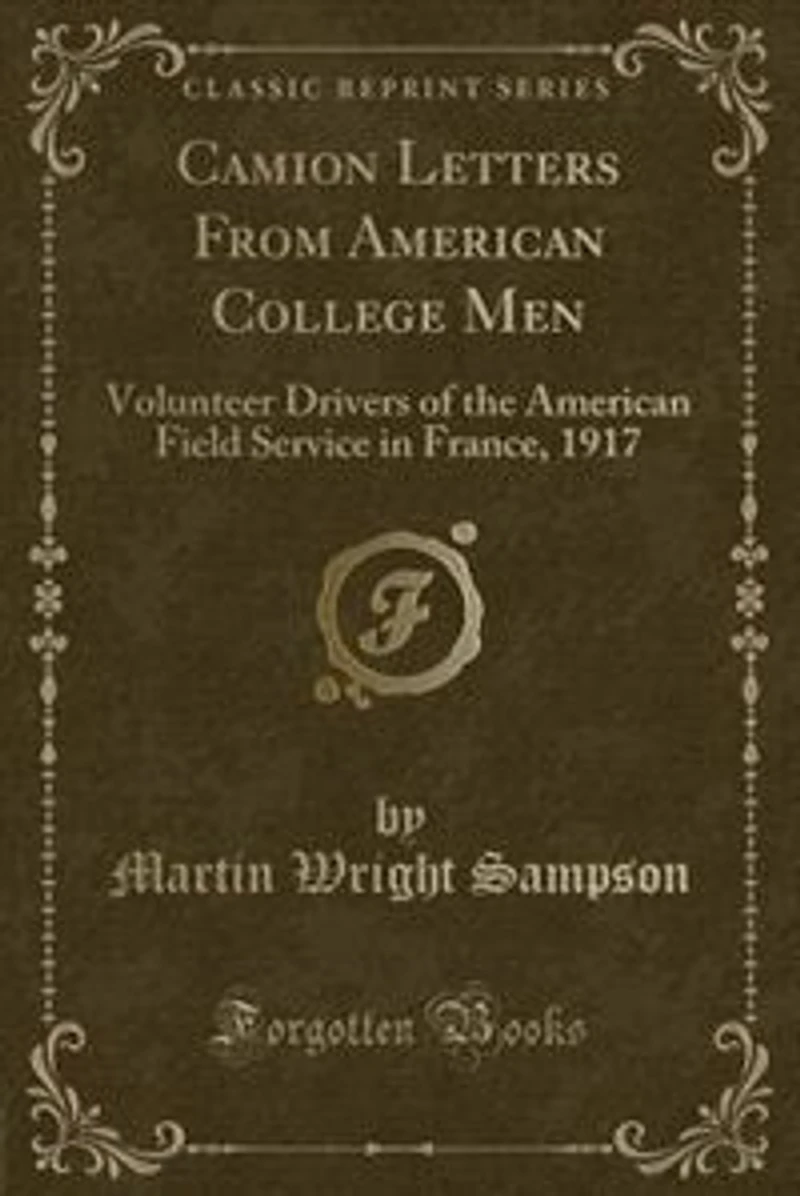
Camion Letters From American College Men: Volunteer Drivers of the Field Service France, 1917 (Classic Reprint) in Grande Prairie, AB
Current price: $25.95
Coles
Camion Letters From American College Men: Volunteer Drivers of the Field Service France, 1917 (Classic Reprint) in Grande Prairie, AB
Current price: $25.95
Loading Inventory...
Size: Paperback (2009)
*Product information and pricing may vary - to confirm current pricing, availability, shipping, and return information please contact Coles. In the event of a pricing discrepancy, the retailer's price will apply.
Excerpt from Camion Letters From American College Men: Volunteer Drivers of the American Field Service in France, 1917 The Service gladly took on the new work and made a prompt appeal to the men on hand. Al though they had come over to drive ambulances, most of them appreciated the new need and volum teered for the transport work. A training camp was at once established, and after a brief but adequate period of drill in handling the heavy vehicles on difficult roads, the first transport sec tion set out for the front, carrying the first Ameri can flag authorized to be borne in this war. As it happened, most of the forty men in the section were from Cornell, and at the head was a Cornell man, Edward Tinkham, who had already won his Cross of War in ambulance work by his untiring devotion under the violent fire of the enemy. Conformably to its new function the Service changed its name to The American Field Service and sent out a call for volunteers in this country. About the Publisher Forgotten Books publishes hundreds of thousands of rare and classic books. Find more at www.forgottenbooks.com This book is a reproduction of an important historical work. Forgotten Books uses state-of-the-art technology to digitally reconstruct the work, preserving the original format whilst repairing imperfections present in the aged copy. In rare cases, an imperfection in the original, such as a blemish or missing page, may be replicated in our edition. We do, however, repair the vast majority of imperfections successfully; any imperfections that remain are intentionally left to preserve the state of such historical works.
Excerpt from Camion Letters From American College Men: Volunteer Drivers of the American Field Service in France, 1917 The Service gladly took on the new work and made a prompt appeal to the men on hand. Al though they had come over to drive ambulances, most of them appreciated the new need and volum teered for the transport work. A training camp was at once established, and after a brief but adequate period of drill in handling the heavy vehicles on difficult roads, the first transport sec tion set out for the front, carrying the first Ameri can flag authorized to be borne in this war. As it happened, most of the forty men in the section were from Cornell, and at the head was a Cornell man, Edward Tinkham, who had already won his Cross of War in ambulance work by his untiring devotion under the violent fire of the enemy. Conformably to its new function the Service changed its name to The American Field Service and sent out a call for volunteers in this country. About the Publisher Forgotten Books publishes hundreds of thousands of rare and classic books. Find more at www.forgottenbooks.com This book is a reproduction of an important historical work. Forgotten Books uses state-of-the-art technology to digitally reconstruct the work, preserving the original format whilst repairing imperfections present in the aged copy. In rare cases, an imperfection in the original, such as a blemish or missing page, may be replicated in our edition. We do, however, repair the vast majority of imperfections successfully; any imperfections that remain are intentionally left to preserve the state of such historical works.
You May Also Like










Find at Prairie Mall in Grande Prairie, AB
Visit at Prairie Mall in Grande Prairie, AB