


Gifting Made Simple
Give the Gift of ChoiceClick below to purchase a Prairie Mall eGift Card that can be used at participating retailers at Prairie Mall.Buy Gift CardHome
Calibrated Delusions: The Mathematical Bias of Human Confidence: Arrogance, Anxiety, and the Paradoxical Misjudgment of Difficulty in Modern Behavioral Economics
Coles
Loading Inventory...
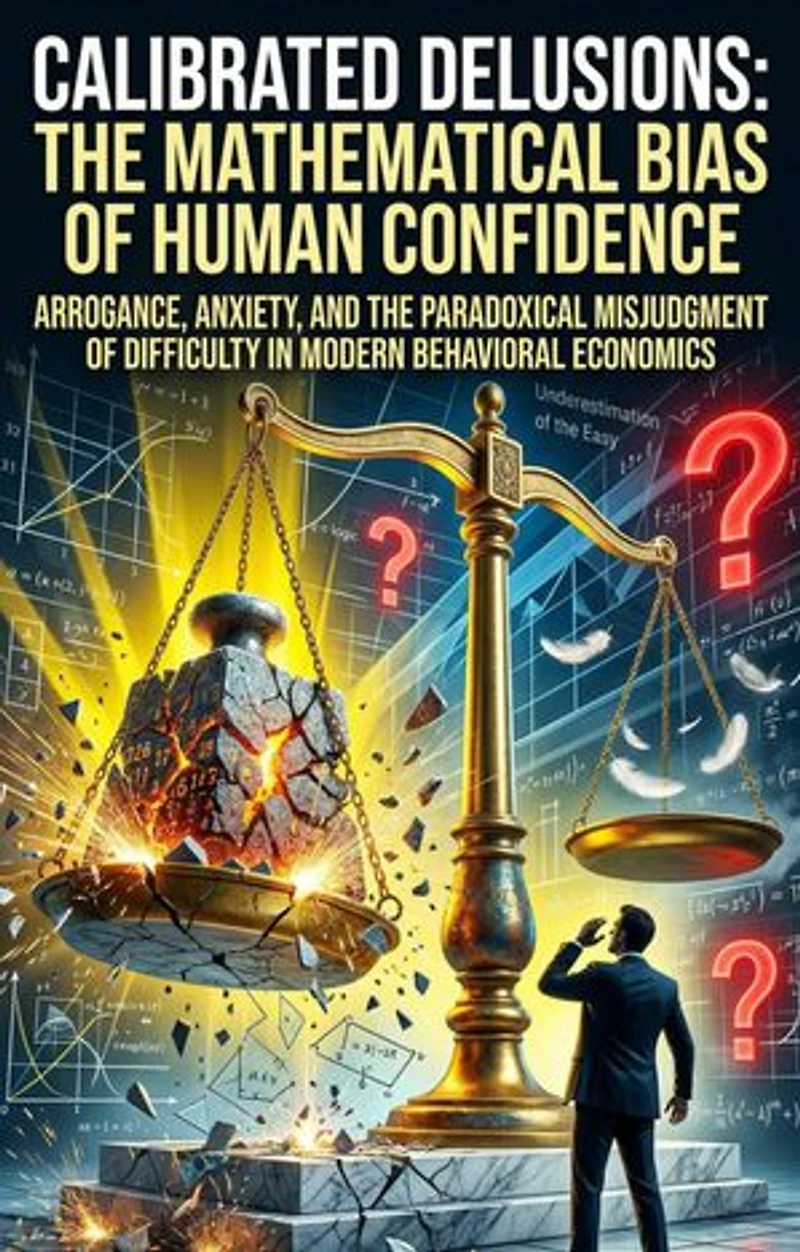
Calibrated Delusions: The Mathematical Bias of Human Confidence: Arrogance, Anxiety, and the Paradoxical Misjudgment of Difficulty in Modern Behavioral Economics in Grande Prairie, AB
Current price: $33.99
Coles
Calibrated Delusions: The Mathematical Bias of Human Confidence: Arrogance, Anxiety, and the Paradoxical Misjudgment of Difficulty in Modern Behavioral Economics in Grande Prairie, AB
Current price: $33.99
Loading Inventory...
Size: Kobo eBook
*Product information and pricing may vary - to confirm current pricing, availability, shipping, and return information please contact Coles. In the event of a pricing discrepancy, the retailer's price will apply.
Human beings are notoriously terrible at judging their own abilities, but our miscalculations are not random. We suffer from a highly specific, predictable mathematical glitch known as the Hard-Easy Effect. When faced with an incredibly complex, near-impossible task—like predicting the stock market or managing a massive corporate merger—we bizarrely overestimate our chances of success. Yet, when confronted with an extremely simple, straightforward task, we systematically underestimate our ability to complete it. Our brain's confidence calibration is entirely inverted. This book deconstructs the psychology of flawed probability estimation. We explore why executives confidently launch doomed global products while agonizing over simple email replies, dissecting the cognitive blind spots that warp our risk assessment. Recalibrate your internal metrics of success. Learn how to identify when your brain is mathematically lying to you about the difficulty of the road ahead.
Human beings are notoriously terrible at judging their own abilities, but our miscalculations are not random. We suffer from a highly specific, predictable mathematical glitch known as the Hard-Easy Effect. When faced with an incredibly complex, near-impossible task—like predicting the stock market or managing a massive corporate merger—we bizarrely overestimate our chances of success. Yet, when confronted with an extremely simple, straightforward task, we systematically underestimate our ability to complete it. Our brain's confidence calibration is entirely inverted. This book deconstructs the psychology of flawed probability estimation. We explore why executives confidently launch doomed global products while agonizing over simple email replies, dissecting the cognitive blind spots that warp our risk assessment. Recalibrate your internal metrics of success. Learn how to identify when your brain is mathematically lying to you about the difficulty of the road ahead.
You May Also Like



















Find at Prairie Mall in Grande Prairie, AB
Visit at Prairie Mall in Grande Prairie, AB