


Gifting Made Simple
Give the Gift of ChoiceClick below to purchase a Prairie Mall eGift Card that can be used at participating retailers at Prairie Mall.Buy Gift CardHome
Bounded Integration: The Religion-State Relationship and Democratic Performance Turkey Israel
Coles
Loading Inventory...
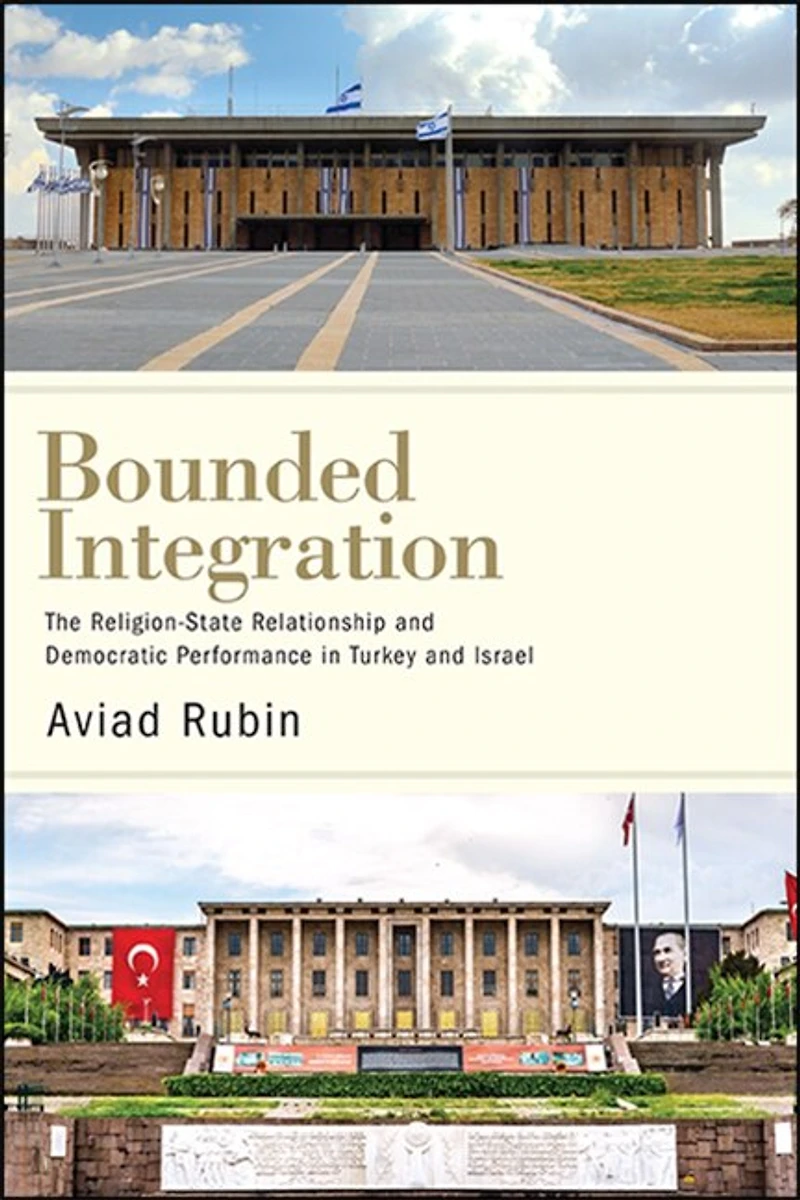
Bounded Integration: The Religion-State Relationship and Democratic Performance Turkey Israel in Grande Prairie, AB
Current price: $135.95
Coles
Bounded Integration: The Religion-State Relationship and Democratic Performance Turkey Israel in Grande Prairie, AB
Current price: $135.95
Loading Inventory...
Size: Hardcover
*Product information and pricing may vary - to confirm current pricing, availability, shipping, and return information please contact Coles. In the event of a pricing discrepancy, the retailer's price will apply.
reveals the influence this dynamic interaction has had on democratic performance in both countries. In societies where a dominant religion serves as an important component of individual and collective identity, the imposition of secular policies from above may not facilitate democratization but may rather impede the embedding of democracy in society. Moreover, the inclusion or exclusion of religion following statehood may facilitate a certain type of path-dependent political culture, one with long-term political consequences. Aviad Rubin's refreshing analytical approach comparing and contrasting the region's only two longstanding democratic entities and the dynamics of religion and the state in two different religions, Islam and Judaism, facilitates generalizable lessons for emergent political regimes in the post–Arab Spring Middle East.
reveals the influence this dynamic interaction has had on democratic performance in both countries. In societies where a dominant religion serves as an important component of individual and collective identity, the imposition of secular policies from above may not facilitate democratization but may rather impede the embedding of democracy in society. Moreover, the inclusion or exclusion of religion following statehood may facilitate a certain type of path-dependent political culture, one with long-term political consequences. Aviad Rubin's refreshing analytical approach comparing and contrasting the region's only two longstanding democratic entities and the dynamics of religion and the state in two different religions, Islam and Judaism, facilitates generalizable lessons for emergent political regimes in the post–Arab Spring Middle East.
You May Also Like



















Find at Prairie Mall in Grande Prairie, AB
Visit at Prairie Mall in Grande Prairie, AB