


Gifting Made Simple
Give the Gift of ChoiceClick below to purchase a Prairie Mall eGift Card that can be used at participating retailers at Prairie Mall.Buy Gift CardHome
Blurred Strategy: Collaborating Civil-military Interagency Doctrine For Post Conflict Operations
Coles
Loading Inventory...
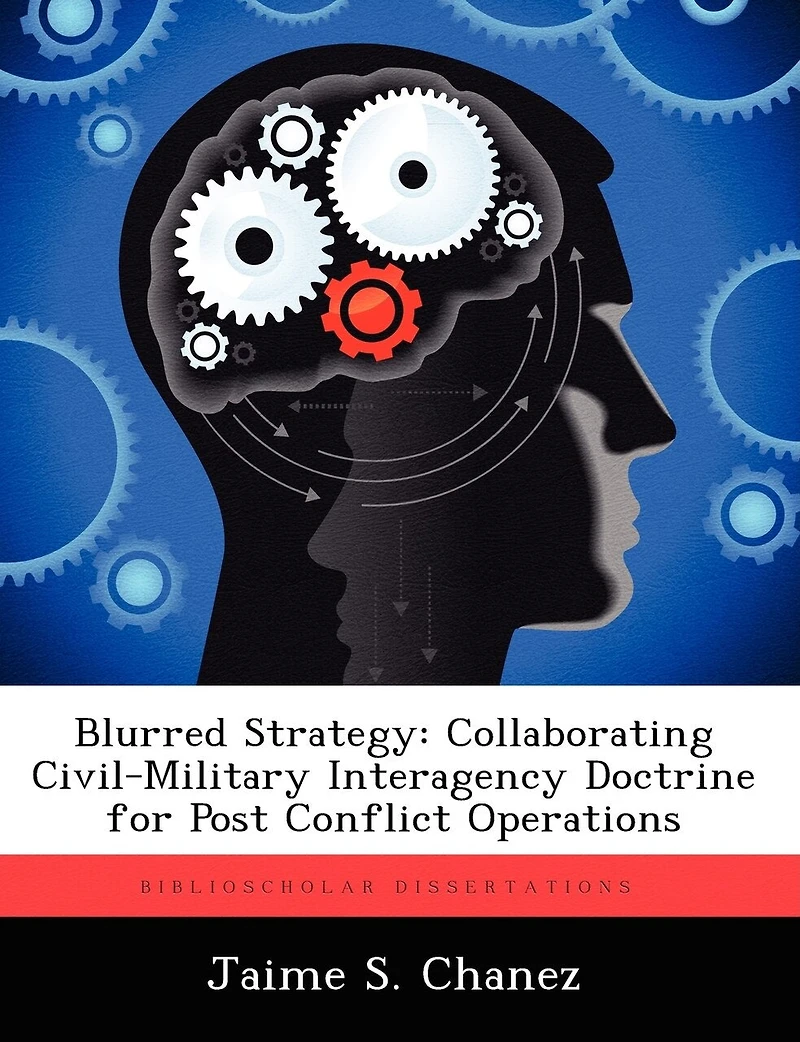
Blurred Strategy: Collaborating Civil-military Interagency Doctrine For Post Conflict Operations in Grande Prairie, AB
Current price: $59.00
Coles
Blurred Strategy: Collaborating Civil-military Interagency Doctrine For Post Conflict Operations in Grande Prairie, AB
Current price: $59.00
Loading Inventory...
Size: Paperback
*Product information and pricing may vary - to confirm current pricing, availability, shipping, and return information please contact Coles. In the event of a pricing discrepancy, the retailer's price will apply.
The premise for this study evolved during Operation IRAQI FREEDOM (OIF). It stems from a perception that the combat plan for the Coalition force invasion worked brilliantly but noticeably absent was a detailed plan for transitioning to peace. This study conducts a thorough review of the current joint military doctrine and the interagency policy and guidance relevant to post-conflict operations, complex contingency and Military Operations Other Than War (MOOTW). It includes a case study of the formal USG civil-military interagency planning effort for OIF's post-conflict operations. It creatively employs a gap analysis research strategy in concert with a case study methodology, the research addresses its primary research question: Is joint military doctrine sufficiently robust to be adopted by the USG civil-military planning community as the framework for developing a single integrated doctrine for planning complex contingency and post-conflict operations? Several factors are cited as contributing reasons for the lack of a robust post-conflict plan: strategical errors by the Bush Administration, poor coordination between USG civil-military interagency planners, and the lack of a solid planning framework for complex contingency and post-conflict operations. The research concluded that a fundamental impediment to planning is fact that its departments and agencies do not focus and coordinate their activities effectively. There are a number of reasons degrading the integrated effort: unfamiliarity, ineffective coordination structures, incompatible approaches, under developed lines of responsibility, incompatible architecture, organizational dogmas, and resource constraints. This study recommends that civil-military planners establish a solid and well-resourced planning framework that includes well-defined lines of coordination, a collaborative architecture, a means for continuous professional education and training, and a single common integrated doctrine. The proposed f
The premise for this study evolved during Operation IRAQI FREEDOM (OIF). It stems from a perception that the combat plan for the Coalition force invasion worked brilliantly but noticeably absent was a detailed plan for transitioning to peace. This study conducts a thorough review of the current joint military doctrine and the interagency policy and guidance relevant to post-conflict operations, complex contingency and Military Operations Other Than War (MOOTW). It includes a case study of the formal USG civil-military interagency planning effort for OIF's post-conflict operations. It creatively employs a gap analysis research strategy in concert with a case study methodology, the research addresses its primary research question: Is joint military doctrine sufficiently robust to be adopted by the USG civil-military planning community as the framework for developing a single integrated doctrine for planning complex contingency and post-conflict operations? Several factors are cited as contributing reasons for the lack of a robust post-conflict plan: strategical errors by the Bush Administration, poor coordination between USG civil-military interagency planners, and the lack of a solid planning framework for complex contingency and post-conflict operations. The research concluded that a fundamental impediment to planning is fact that its departments and agencies do not focus and coordinate their activities effectively. There are a number of reasons degrading the integrated effort: unfamiliarity, ineffective coordination structures, incompatible approaches, under developed lines of responsibility, incompatible architecture, organizational dogmas, and resource constraints. This study recommends that civil-military planners establish a solid and well-resourced planning framework that includes well-defined lines of coordination, a collaborative architecture, a means for continuous professional education and training, and a single common integrated doctrine. The proposed f
You May Also Like











Find at Prairie Mall in Grande Prairie, AB
Visit at Prairie Mall in Grande Prairie, AB