


Gifting Made Simple
Give the Gift of ChoiceClick below to purchase a Prairie Mall eGift Card that can be used at participating retailers at Prairie Mall.Buy Gift CardHome
Biography of Pinaki Bhattacharya: Public Intellectual, Dissident and The Philosophy of Resistance
Coles
Loading Inventory...
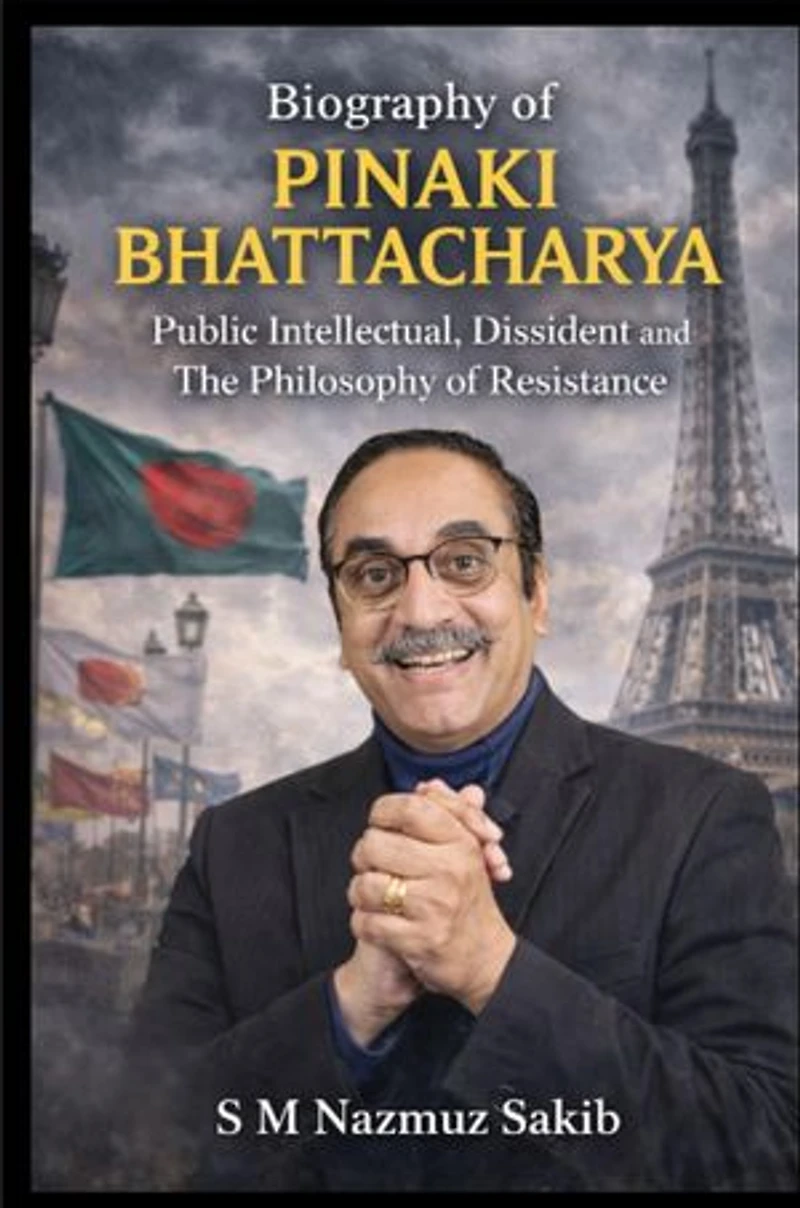
Biography of Pinaki Bhattacharya: Public Intellectual, Dissident and The Philosophy of Resistance in Grande Prairie, AB
Current price: $2.99
Coles
Biography of Pinaki Bhattacharya: Public Intellectual, Dissident and The Philosophy of Resistance in Grande Prairie, AB
Current price: $2.99
Loading Inventory...
Size: Kobo eBook
*Product information and pricing may vary - to confirm current pricing, availability, shipping, and return information please contact Coles. In the event of a pricing discrepancy, the retailer's price will apply.
This textbook is designed as a rigorous and deeply investigative study of one of the most complex, controversial, and intellectually significant figures to emerge from the South Asian digital public sphere in the twenty-first century. Pinaki Bhattacharya, physician, writer, activist, exile, philosopher in practice, political commentator, and self-made media personality of remarkable reach, presents to the serious student of history and ideas a case study of extraordinary richness. He is simultaneously a product of Bangladesh's turbulent postcolonial history and a shaper of its present political imagination. He is both a student of Western philosophy and a practitioner of what might loosely be called a Bengali popular intellectual tradition. He is both the accused and the acquitted, the celebrated and the condemned, the exile who speaks from Paris and yet seems to stand in the streets of Dhaka.
This Part One of six is not simply a biography. It is an intellectual excavation. It moves through the layers of Bhattacharya's life, thought, formation, political theory, and philosophical commitments with the goal of understanding not merely what he has said and written, but why, and in what intellectual tradition he stands, and what his existence as a thinker and activist tells us about the broader condition of postcolonial societies, digital democracy, the limits of state power, the philosophy of liberation, the psychology of the dissident, and the global politics of information in the age of social media.
Students who approach this text will encounter Bhattacharya alongside Descartes and Foucault, alongside Marx and Gramsci, alongside Tagore and Mujibur Rahman, alongside Hannah Arendt and Edward Said. They will encounter him in the streets of Bogura in 1967 and in the lecture halls of Rajshahi Medical College in the late 1980s. They will encounter him hiding in a friend's house in Dhaka in August 2018 while officers of the Directorate General of Forces Intelligence waited for him at his door. They will encounter him stepping off a plane in Bangkok and then in Paris, building a media empire from a modest apartment, speaking Bengali into a camera and being heard by four million people.
This is a story about one man. But it is also a story about Bangladesh. About India. About France. About the philosophy of knowledge, the politics of sovereignty, the jurisprudence of digital expression, and the ancient human struggle between those who hold power and those who speak truth to it.
This textbook is designed as a rigorous and deeply investigative study of one of the most complex, controversial, and intellectually significant figures to emerge from the South Asian digital public sphere in the twenty-first century. Pinaki Bhattacharya, physician, writer, activist, exile, philosopher in practice, political commentator, and self-made media personality of remarkable reach, presents to the serious student of history and ideas a case study of extraordinary richness. He is simultaneously a product of Bangladesh's turbulent postcolonial history and a shaper of its present political imagination. He is both a student of Western philosophy and a practitioner of what might loosely be called a Bengali popular intellectual tradition. He is both the accused and the acquitted, the celebrated and the condemned, the exile who speaks from Paris and yet seems to stand in the streets of Dhaka.
This Part One of six is not simply a biography. It is an intellectual excavation. It moves through the layers of Bhattacharya's life, thought, formation, political theory, and philosophical commitments with the goal of understanding not merely what he has said and written, but why, and in what intellectual tradition he stands, and what his existence as a thinker and activist tells us about the broader condition of postcolonial societies, digital democracy, the limits of state power, the philosophy of liberation, the psychology of the dissident, and the global politics of information in the age of social media.
Students who approach this text will encounter Bhattacharya alongside Descartes and Foucault, alongside Marx and Gramsci, alongside Tagore and Mujibur Rahman, alongside Hannah Arendt and Edward Said. They will encounter him in the streets of Bogura in 1967 and in the lecture halls of Rajshahi Medical College in the late 1980s. They will encounter him hiding in a friend's house in Dhaka in August 2018 while officers of the Directorate General of Forces Intelligence waited for him at his door. They will encounter him stepping off a plane in Bangkok and then in Paris, building a media empire from a modest apartment, speaking Bengali into a camera and being heard by four million people.
This is a story about one man. But it is also a story about Bangladesh. About India. About France. About the philosophy of knowledge, the politics of sovereignty, the jurisprudence of digital expression, and the ancient human struggle between those who hold power and those who speak truth to it.
You May Also Like













Find at Prairie Mall in Grande Prairie, AB
Visit at Prairie Mall in Grande Prairie, AB