


Gifting Made Simple
Give the Gift of ChoiceClick below to purchase a Prairie Mall eGift Card that can be used at participating retailers at Prairie Mall.Buy Gift CardHome
Binary Stars, Neutrinos, and Liquid Crystals: the First 250 Years of Physics Astronomy at University Pennsylvania
Coles
Loading Inventory...
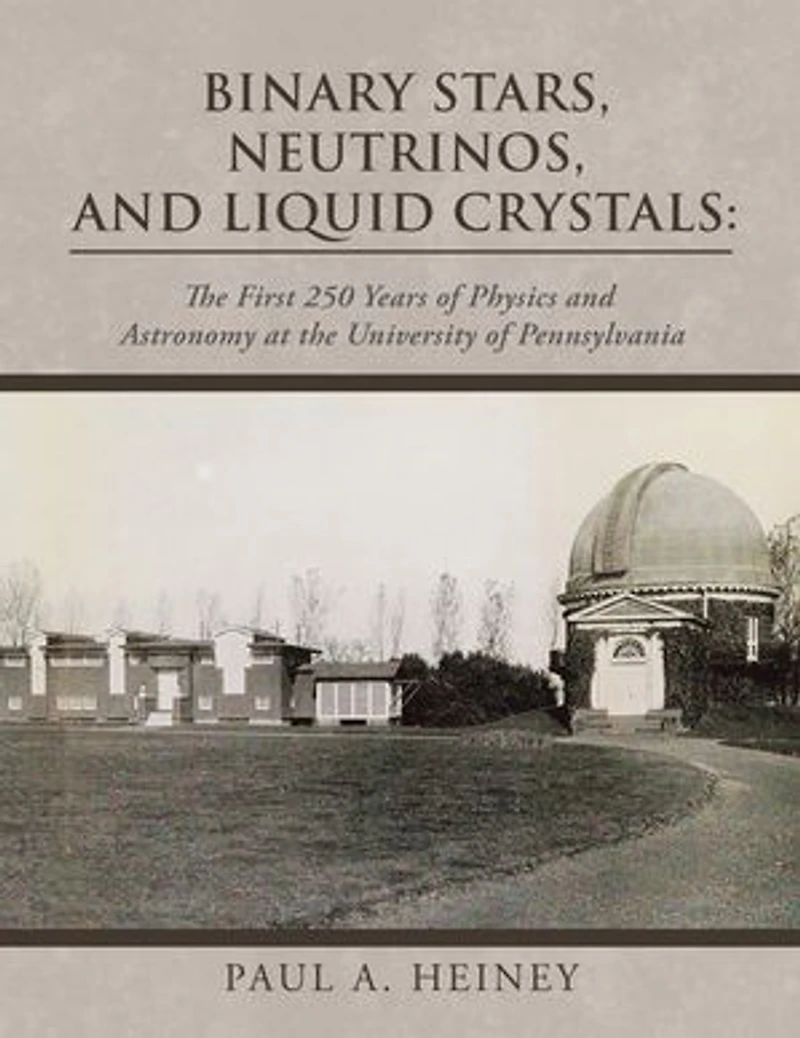

Binary Stars, Neutrinos, and Liquid Crystals: the First 250 Years of Physics Astronomy at University Pennsylvania in Grande Prairie, AB
Current price: $5.39
Original price: $5.99
Coles
Binary Stars, Neutrinos, and Liquid Crystals: the First 250 Years of Physics Astronomy at University Pennsylvania in Grande Prairie, AB
Current price: $5.39
Original price: $5.99
Loading Inventory...
Size: Kobo eBook
*Product information and pricing may vary - to confirm current pricing, availability, shipping, and return information please contact Coles. In the event of a pricing discrepancy, the retailer's price will apply.
This book traces the parallel paths of physics and astronomy at the University of Pennsylvania, starting with their genesis in the 18th century, through the rising stature of both departments in the 20th century, and concluding with their unification in 1994. Along the way we meet David Rittenhouse, who observed the transit of Venus in 1769, Charles Doolittle, whose remarkable beard would freeze to his telescope on cold nights, Gaylord Harnwell, who transformed first the physics department and then the entire university, and Raymond Davis, who uncovered a mystery in the middle of the sun. The stories are tragic (Arthur Goodspeed failed to discover X-rays through inattention), horrifying (Dicran Kabakjian poisoned an entire neighborhood), and celebratory (three Penn physicists received the Nobel Prize in the late 20th Century). The reader will gain an appreciation, not just of the history of one institution, but of the ways these two disciplines both intersect and complement each other.
This book traces the parallel paths of physics and astronomy at the University of Pennsylvania, starting with their genesis in the 18th century, through the rising stature of both departments in the 20th century, and concluding with their unification in 1994. Along the way we meet David Rittenhouse, who observed the transit of Venus in 1769, Charles Doolittle, whose remarkable beard would freeze to his telescope on cold nights, Gaylord Harnwell, who transformed first the physics department and then the entire university, and Raymond Davis, who uncovered a mystery in the middle of the sun. The stories are tragic (Arthur Goodspeed failed to discover X-rays through inattention), horrifying (Dicran Kabakjian poisoned an entire neighborhood), and celebratory (three Penn physicists received the Nobel Prize in the late 20th Century). The reader will gain an appreciation, not just of the history of one institution, but of the ways these two disciplines both intersect and complement each other.
You May Also Like













Find at Prairie Mall in Grande Prairie, AB
Visit at Prairie Mall in Grande Prairie, AB