


Gifting Made Simple
Give the Gift of ChoiceClick below to purchase a Prairie Mall eGift Card that can be used at participating retailers at Prairie Mall.Buy Gift CardHome
Before The Movement: Hidden History of Black Civil Rights
Coles
Loading Inventory...
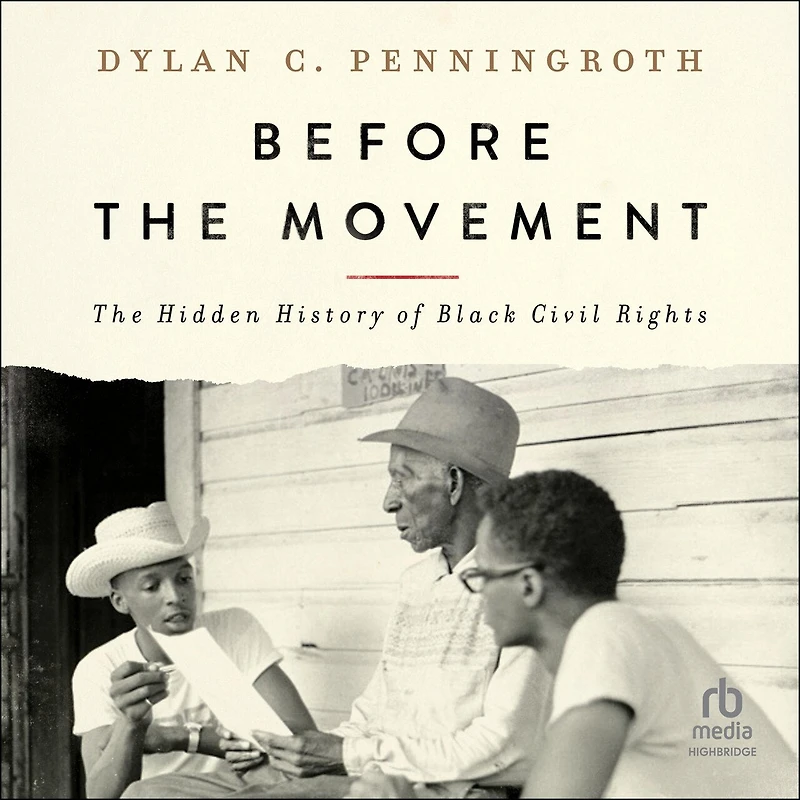
Before The Movement: Hidden History of Black Civil Rights in Grande Prairie, AB
Current price: $59.95
Coles
Before The Movement: Hidden History of Black Civil Rights in Grande Prairie, AB
Current price: $59.95
Loading Inventory...
Size: Audiobook (2024 A)
*Product information and pricing may vary - to confirm current pricing, availability, shipping, and return information please contact Coles. In the event of a pricing discrepancy, the retailer's price will apply.
The familiar story of civil rights goes like this: once, America's legal system shut Black people out and refused to recognize their rights, their basic human dignity, or even their very lives. When lynch mobs gathered, police often closed their eyes, if they didn't join in. For Black people, law was a hostile, fearsome power to be avoided whenever possible. Then, starting in the 1940s, a few brave lawyers ventured south, bent on changing the law. Soon, ordinary African Americans, awakened by Supreme Court victories and galvanized by racial justice activists, launched the civil rights movement. In Before the Movement , Dylan C. Penningroth brilliantly revises the conventional story. Drawing on long-forgotten sources found in the basements of county courthouses across the nation, Penningroth reveals that African Americans, far from being ignorant about law until the middle of the twentieth century, have thought about, talked about, and used it going as far back as even the era of slavery. They dealt with the laws of property, contract, inheritance, marriage and divorce, of associations (like churches and businesses and activist groups), and more. By exercising these "rights of everyday use," Penningroth demonstrates, they made Black rights seem unremarkable. And in innumerable subtle ways, they helped shape the law itself—the laws all of us live under today.
The familiar story of civil rights goes like this: once, America's legal system shut Black people out and refused to recognize their rights, their basic human dignity, or even their very lives. When lynch mobs gathered, police often closed their eyes, if they didn't join in. For Black people, law was a hostile, fearsome power to be avoided whenever possible. Then, starting in the 1940s, a few brave lawyers ventured south, bent on changing the law. Soon, ordinary African Americans, awakened by Supreme Court victories and galvanized by racial justice activists, launched the civil rights movement. In Before the Movement , Dylan C. Penningroth brilliantly revises the conventional story. Drawing on long-forgotten sources found in the basements of county courthouses across the nation, Penningroth reveals that African Americans, far from being ignorant about law until the middle of the twentieth century, have thought about, talked about, and used it going as far back as even the era of slavery. They dealt with the laws of property, contract, inheritance, marriage and divorce, of associations (like churches and businesses and activist groups), and more. By exercising these "rights of everyday use," Penningroth demonstrates, they made Black rights seem unremarkable. And in innumerable subtle ways, they helped shape the law itself—the laws all of us live under today.
You May Also Like








Find at Prairie Mall in Grande Prairie, AB
Visit at Prairie Mall in Grande Prairie, AB