


Gifting Made Simple
Give the Gift of ChoiceClick below to purchase a Prairie Mall eGift Card that can be used at participating retailers at Prairie Mall.Buy Gift CardHome
Before The Law: Complete Text of Préjugés
Coles
Loading Inventory...
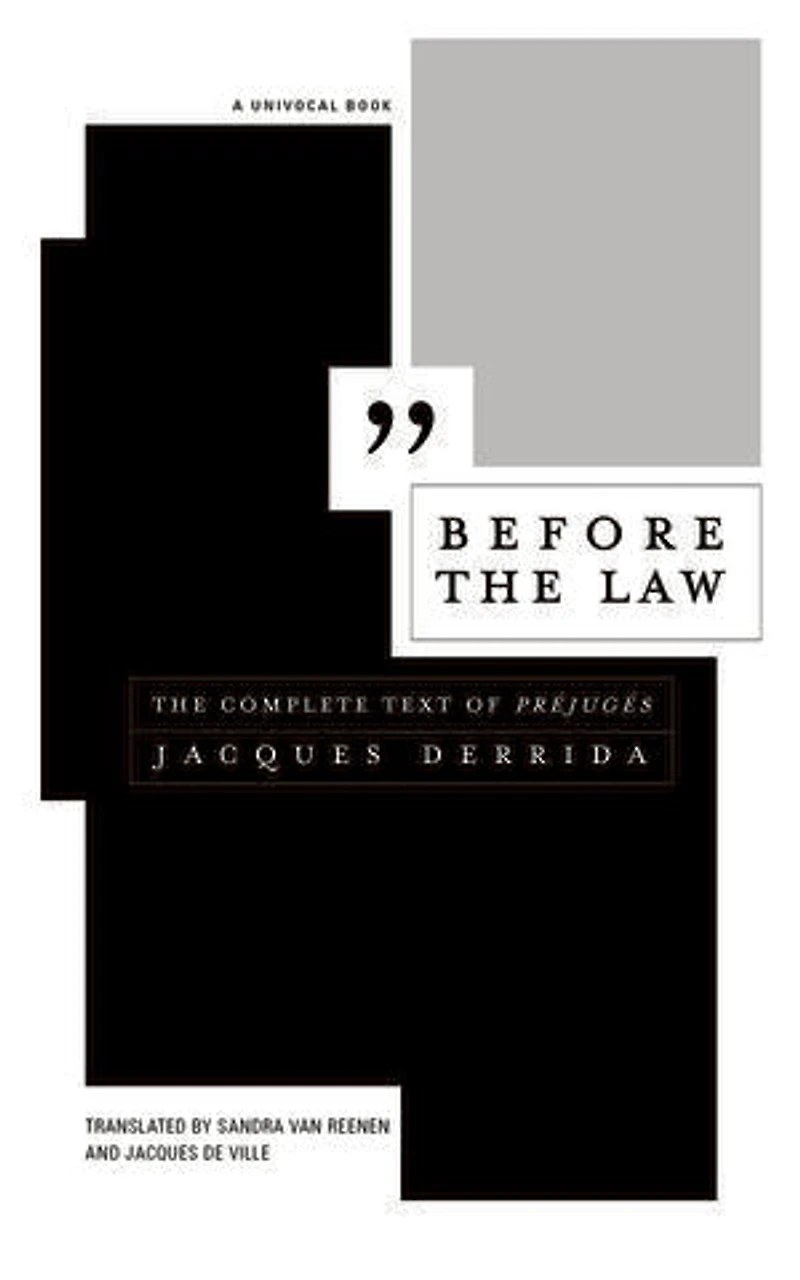
Before The Law: Complete Text of Préjugés in Grande Prairie, AB
Current price: $24.49
Original price: $30.54
Coles
Before The Law: Complete Text of Préjugés in Grande Prairie, AB
Current price: $24.49
Original price: $30.54
Loading Inventory...
Size: Kobo eBook
*Product information and pricing may vary - to confirm current pricing, availability, shipping, and return information please contact Coles. In the event of a pricing discrepancy, the retailer's price will apply.
Thinking judgment in relation to the work of Jean-Franois Lyotard
"How to judge-Jean-Franois Lyotard?" It is from this initial question that one of France's most heralded philosophers of the twentieth century begins his essay on the origin of the law, of judgment, and the work of his colleague Jean-Franois Lyotard. If Jacques Derrida begins with the term prjugs , it is in part because of its impossibility to be rendered properly in other languages and also contain all its meanings: to pre -judge, to judge before judging, to hold prejudices, to know "how to judge," and more still, to be already prejudged oneself.
Striving to contain that which comes before the law, that is in front of the law and also prior to it, how to judge Jean-Franois Lyotard then becomes perhaps a beneficial attempt for Derrida to explore humanity's rapport with judgment, origins, and naming. For how does one come to judge the author of the Differend ? How does one abstain from judgment to accept the term prjugs as suspending judgment and at once as taking into account the impossibility of speaking before the law, prior to naming or judging? If this task indeed seems insurmountable, it is the site where Lyotard's work itself is played out. Hence this sincere and intriguing essay presented by Jacques Derrida, published here for the first time in English.
Thinking judgment in relation to the work of Jean-Franois Lyotard
"How to judge-Jean-Franois Lyotard?" It is from this initial question that one of France's most heralded philosophers of the twentieth century begins his essay on the origin of the law, of judgment, and the work of his colleague Jean-Franois Lyotard. If Jacques Derrida begins with the term prjugs , it is in part because of its impossibility to be rendered properly in other languages and also contain all its meanings: to pre -judge, to judge before judging, to hold prejudices, to know "how to judge," and more still, to be already prejudged oneself.
Striving to contain that which comes before the law, that is in front of the law and also prior to it, how to judge Jean-Franois Lyotard then becomes perhaps a beneficial attempt for Derrida to explore humanity's rapport with judgment, origins, and naming. For how does one come to judge the author of the Differend ? How does one abstain from judgment to accept the term prjugs as suspending judgment and at once as taking into account the impossibility of speaking before the law, prior to naming or judging? If this task indeed seems insurmountable, it is the site where Lyotard's work itself is played out. Hence this sincere and intriguing essay presented by Jacques Derrida, published here for the first time in English.
You May Also Like











Find at Prairie Mall in Grande Prairie, AB
Visit at Prairie Mall in Grande Prairie, AB