


Gifting Made Simple
Give the Gift of ChoiceClick below to purchase a Prairie Mall eGift Card that can be used at participating retailers at Prairie Mall.Buy Gift CardHome
BASIC Microcomputing and Biostatistics: How to Program Use Your Microcomputer for Data Analysis the Physical Life Sciences, Including Medicine
Coles
Loading Inventory...
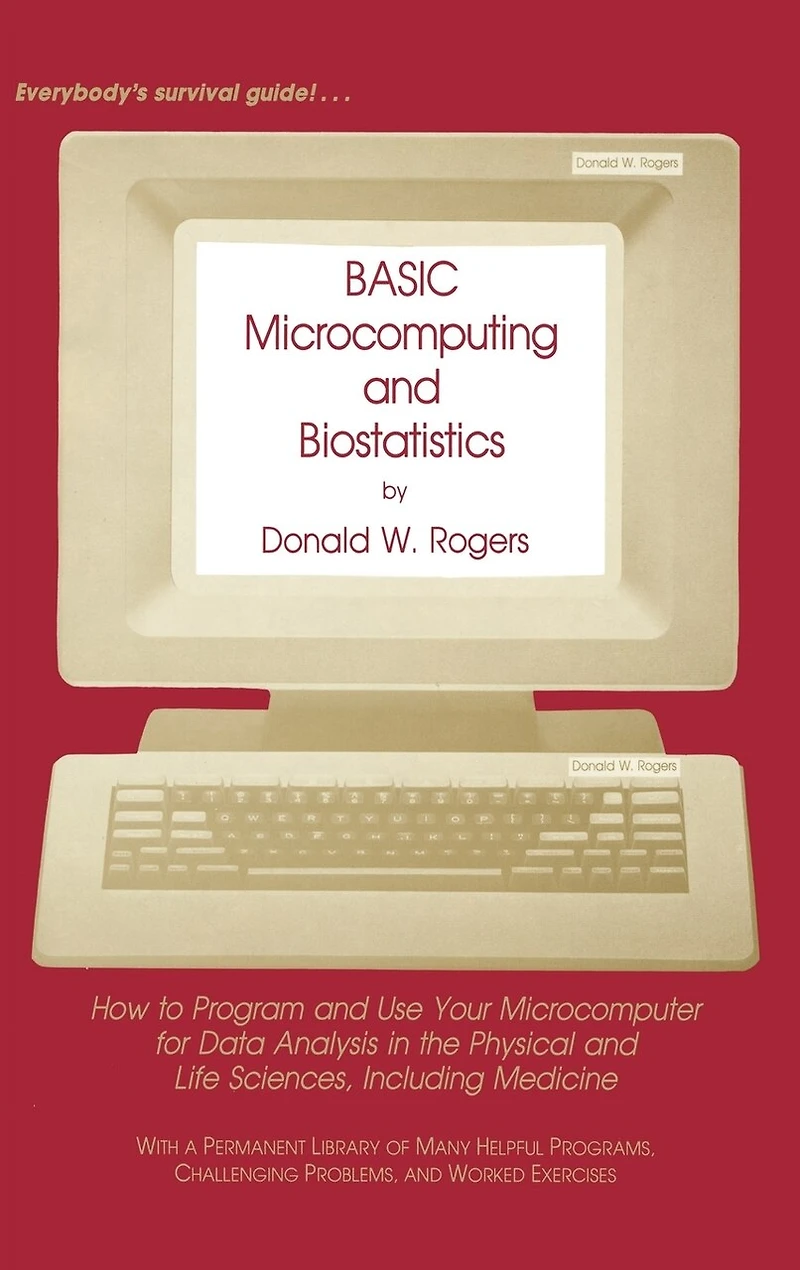
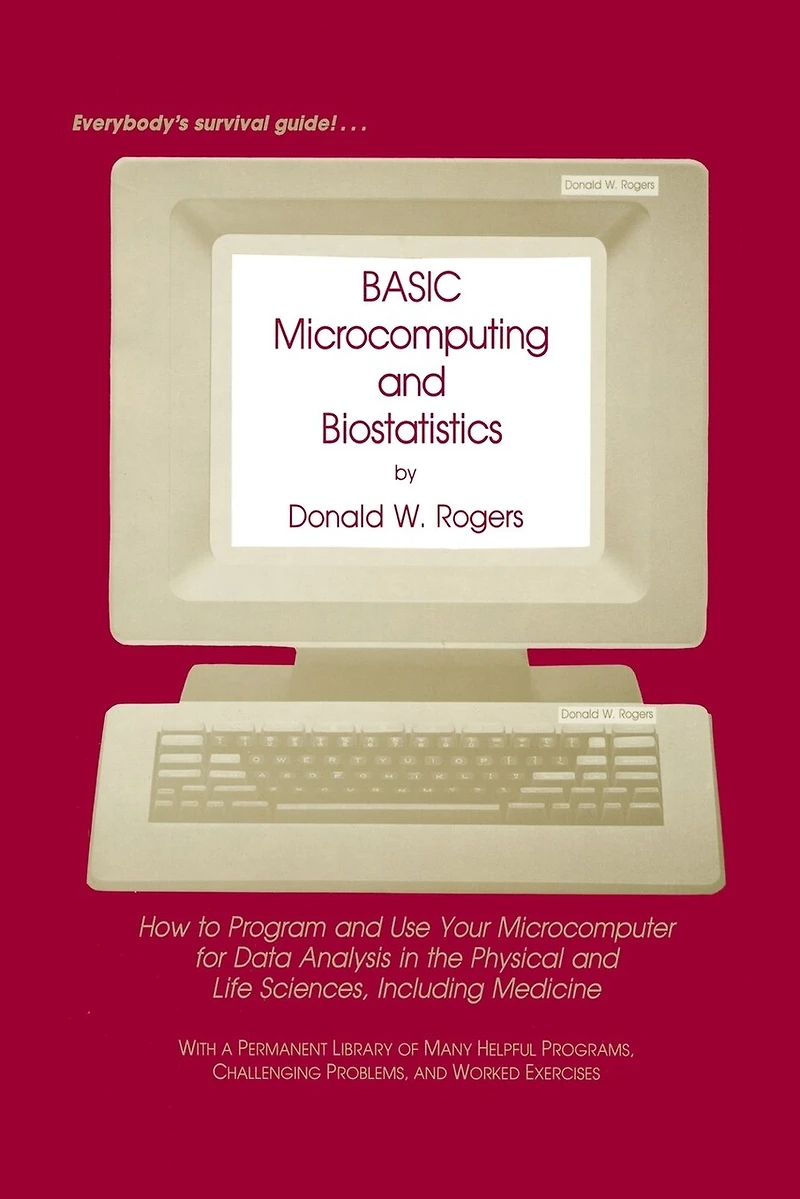
BASIC Microcomputing and Biostatistics: How to Program Use Your Microcomputer for Data Analysis the Physical Life Sciences, Including Medicine in Grande Prairie, AB
Current price: $142.95
Coles
BASIC Microcomputing and Biostatistics: How to Program Use Your Microcomputer for Data Analysis the Physical Life Sciences, Including Medicine in Grande Prairie, AB
Current price: $142.95
Loading Inventory...
Size: Hardcover
*Product information and pricing may vary - to confirm current pricing, availability, shipping, and return information please contact Coles. In the event of a pricing discrepancy, the retailer's price will apply.
BASIC Microcomputing and Biostatistics is designed as the first practical "how to" guide to both computer programming in BASIC and the statis- tical data processing techniques needed to analyze experimental, clinical, and other numerical data. It provides a small vocabulary of essential com- puter statements and shows how they are used to solve problems in the bio- logical, physical, and medical sciences. No mathematical background be- yond algebra and an inkling of the principles of calculus is assumed. All more advanced mathematical techniques are developed from "scratch" before they are used. The computing language is BASIC, a high-level lan- guage that is easy to learn and widely available using time-sharing com- puter systems and personal microcomputers. The strategy of the book is to present computer programming at the outset and to use it throughout. BASIC is developed in a way reminiscent of graded readers used in human languages; the first programs are so sim- ple that they can be read almost without an introduction to the language. Each program thereafter contains new vocabulary and one or more con- cepts, explained in the text, not used in the previous ones. By gradual stages, the reader can progress from programs that do nothing more than count from one to ten to sophisticated programs for nonlinear curve fitting, matrix algebra, and multiple regression. There are 33 working programs and, except for the introductory ones, each performs a useful function in everyday data processing problems encountered by the experimentalist in many diverse fields.
BASIC Microcomputing and Biostatistics is designed as the first practical "how to" guide to both computer programming in BASIC and the statis- tical data processing techniques needed to analyze experimental, clinical, and other numerical data. It provides a small vocabulary of essential com- puter statements and shows how they are used to solve problems in the bio- logical, physical, and medical sciences. No mathematical background be- yond algebra and an inkling of the principles of calculus is assumed. All more advanced mathematical techniques are developed from "scratch" before they are used. The computing language is BASIC, a high-level lan- guage that is easy to learn and widely available using time-sharing com- puter systems and personal microcomputers. The strategy of the book is to present computer programming at the outset and to use it throughout. BASIC is developed in a way reminiscent of graded readers used in human languages; the first programs are so sim- ple that they can be read almost without an introduction to the language. Each program thereafter contains new vocabulary and one or more con- cepts, explained in the text, not used in the previous ones. By gradual stages, the reader can progress from programs that do nothing more than count from one to ten to sophisticated programs for nonlinear curve fitting, matrix algebra, and multiple regression. There are 33 working programs and, except for the introductory ones, each performs a useful function in everyday data processing problems encountered by the experimentalist in many diverse fields.
You May Also Like











Find at Prairie Mall in Grande Prairie, AB
Visit at Prairie Mall in Grande Prairie, AB