


Gifting Made Simple
Give the Gift of ChoiceClick below to purchase a Prairie Mall eGift Card that can be used at participating retailers at Prairie Mall.Buy Gift CardHome
Artificial Intelligence and International Economic Law: Disruption, Regulation, Reconfiguration
Coles
Loading Inventory...
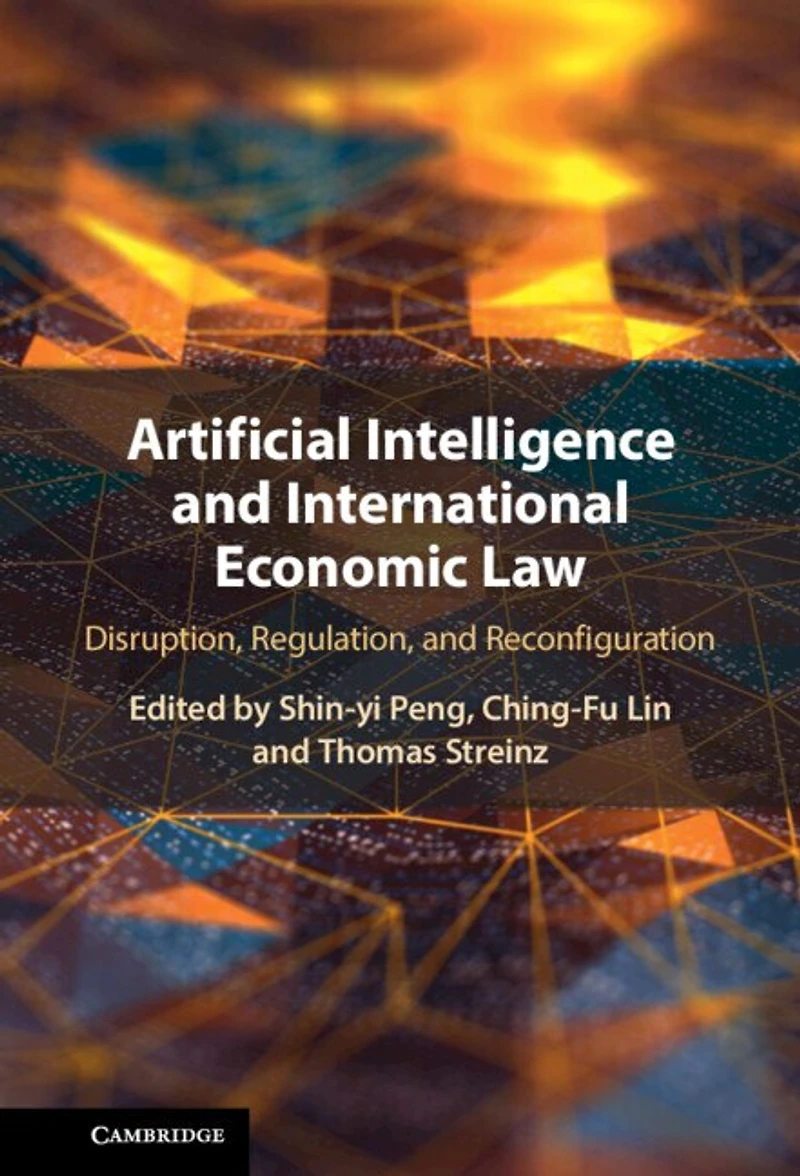
Artificial Intelligence and International Economic Law: Disruption, Regulation, Reconfiguration in Grande Prairie, AB
Current price: $166.95
Coles
Artificial Intelligence and International Economic Law: Disruption, Regulation, Reconfiguration in Grande Prairie, AB
Current price: $166.95
Loading Inventory...
Size: Hardcover
*Product information and pricing may vary - to confirm current pricing, availability, shipping, and return information please contact Coles. In the event of a pricing discrepancy, the retailer's price will apply.
Artificial intelligence (AI) technologies are transforming economies, societies, and geopolitics. Enabled by the exponential increase of data that is collected, transmitted, and processed transnationally, these changes have important implications for international economic law (IEL). This volume examines the dynamic interplay between AI and IEL by addressing an array of critical new questions, including: How to conceptualize, categorize, and analyze AI for purposes of IEL? How is AI affecting established concepts and rubrics of IEL? Is there a need to reconfigure IEL, and if so, how? Contributors also respond to other cross-cutting issues, including digital inequality, data protection, algorithms and ethics, the regulation of AI-use cases (autonomous vehicles), and systemic shifts in e-commerce (digital trade) and industrial production (fourth industrial revolution). This title is also available as Open Access on Cambridge Core.
Artificial intelligence (AI) technologies are transforming economies, societies, and geopolitics. Enabled by the exponential increase of data that is collected, transmitted, and processed transnationally, these changes have important implications for international economic law (IEL). This volume examines the dynamic interplay between AI and IEL by addressing an array of critical new questions, including: How to conceptualize, categorize, and analyze AI for purposes of IEL? How is AI affecting established concepts and rubrics of IEL? Is there a need to reconfigure IEL, and if so, how? Contributors also respond to other cross-cutting issues, including digital inequality, data protection, algorithms and ethics, the regulation of AI-use cases (autonomous vehicles), and systemic shifts in e-commerce (digital trade) and industrial production (fourth industrial revolution). This title is also available as Open Access on Cambridge Core.
You May Also Like








Find at Prairie Mall in Grande Prairie, AB
Visit at Prairie Mall in Grande Prairie, AB