


Gifting Made Simple
Give the Gift of ChoiceClick below to purchase a Prairie Mall eGift Card that can be used at participating retailers at Prairie Mall.Buy Gift CardHome
Applications of Theoretical Methods Vibrational Spectroscopy: Quantum/Classical Mixed Approach
Coles
Loading Inventory...
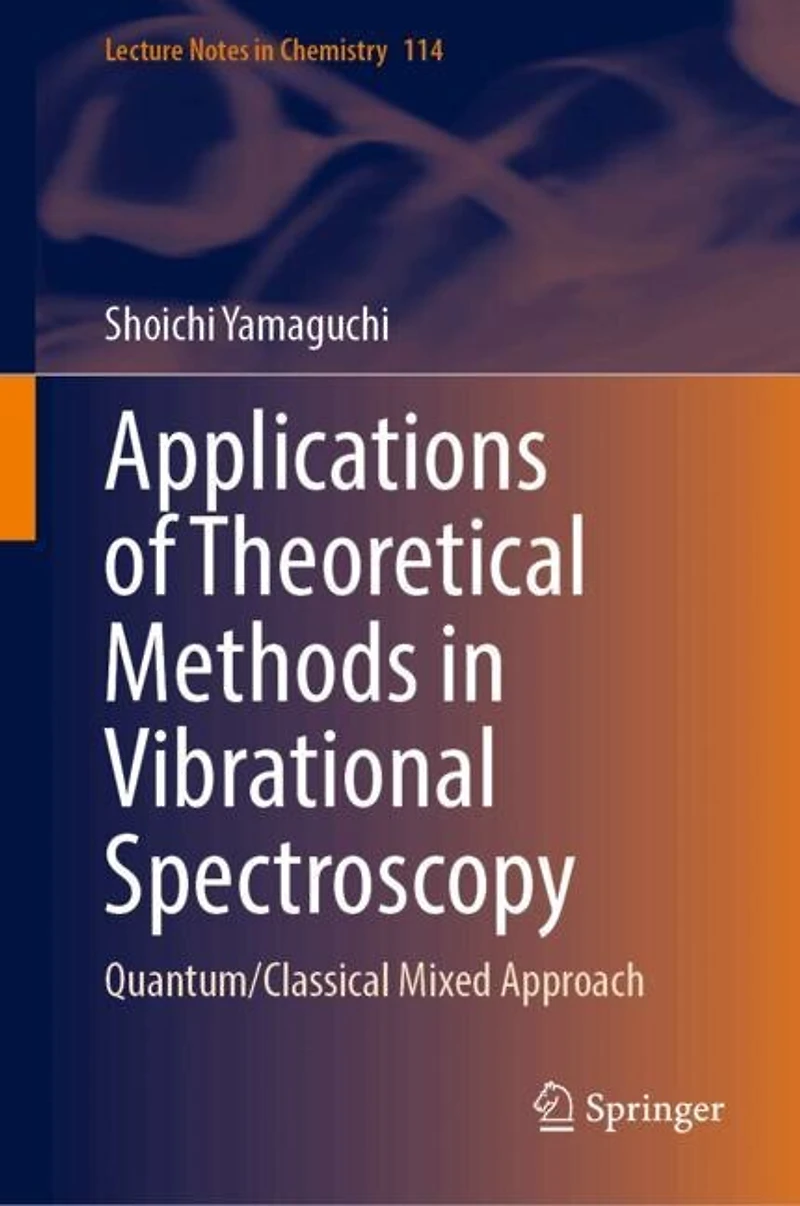
Applications of Theoretical Methods Vibrational Spectroscopy: Quantum/Classical Mixed Approach in Grande Prairie, AB
Current price: $291.95
Coles
Applications of Theoretical Methods Vibrational Spectroscopy: Quantum/Classical Mixed Approach in Grande Prairie, AB
Current price: $291.95
Loading Inventory...
Size: Hardcover
*Product information and pricing may vary - to confirm current pricing, availability, shipping, and return information please contact Coles. In the event of a pricing discrepancy, the retailer's price will apply.
This book provides unique introduction for experimentalists to theoretically calculate vibrational (IR, Raman, SFG) spectra of molecules in liquid and solid phases. Vibrational spectroscopy is the most popular and valuable tool for scientists to obtain physicochemical insight into complex molecular systems. Although standard softwares of quantum chemistry calculations routinely provide predictions of spectra, this book describes dynamic aspects and spectroscopic accuracy enough to compare our experimental data directly to computations, that lack in the softwares. The quantum/classical mixed approach presented in this book allows researchers including graduate students of chemistry and physics to extract microscopic information of structure and dynamics from their vibrational spectroscopic experimental data with no help from theoreticians.
This book provides unique introduction for experimentalists to theoretically calculate vibrational (IR, Raman, SFG) spectra of molecules in liquid and solid phases. Vibrational spectroscopy is the most popular and valuable tool for scientists to obtain physicochemical insight into complex molecular systems. Although standard softwares of quantum chemistry calculations routinely provide predictions of spectra, this book describes dynamic aspects and spectroscopic accuracy enough to compare our experimental data directly to computations, that lack in the softwares. The quantum/classical mixed approach presented in this book allows researchers including graduate students of chemistry and physics to extract microscopic information of structure and dynamics from their vibrational spectroscopic experimental data with no help from theoreticians.
You May Also Like










Find at Prairie Mall in Grande Prairie, AB
Visit at Prairie Mall in Grande Prairie, AB