


Gifting Made Simple
Give the Gift of ChoiceClick below to purchase a Prairie Mall eGift Card that can be used at participating retailers at Prairie Mall.Buy Gift CardHome
Apples to Apples: A Taxonomy of Networks in Public Management and Policy
Coles
Loading Inventory...
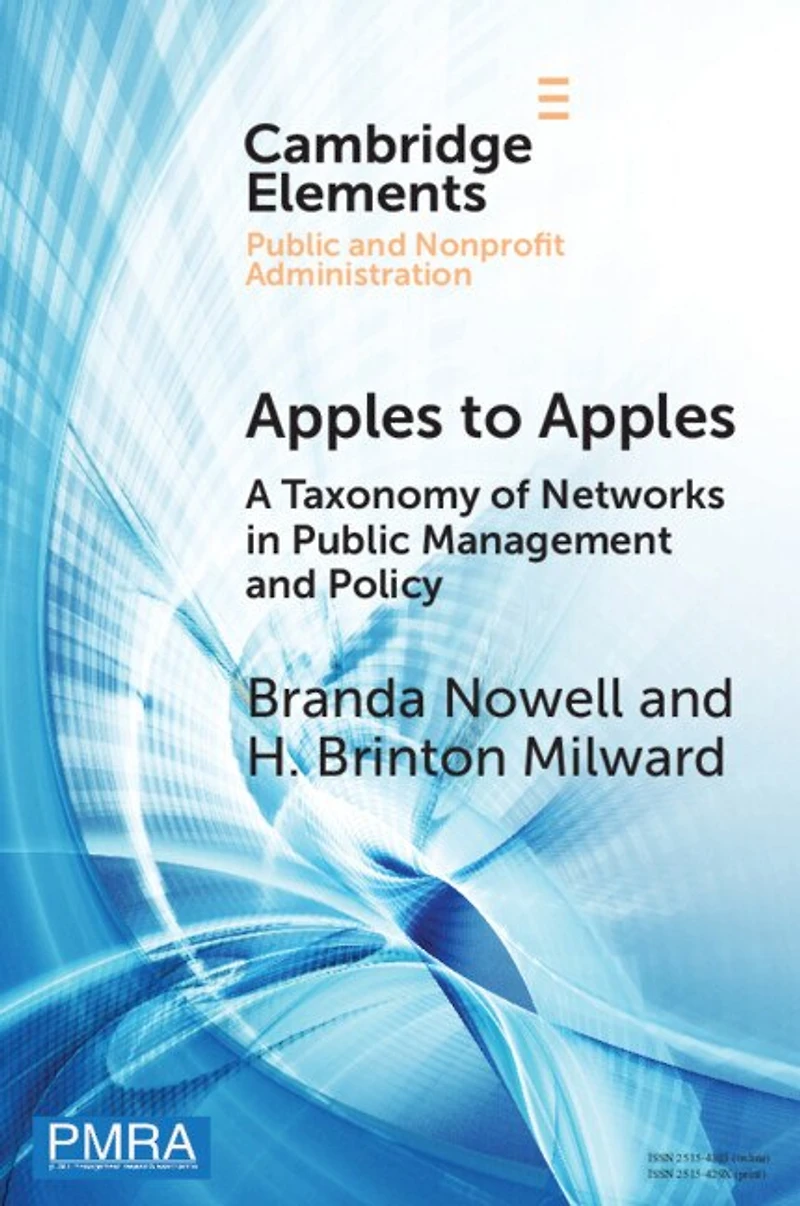
Apples to Apples: A Taxonomy of Networks in Public Management and Policy in Grande Prairie, AB
Current price: $29.54
Coles
Apples to Apples: A Taxonomy of Networks in Public Management and Policy in Grande Prairie, AB
Current price: $29.54
Loading Inventory...
Size: Paperback
*Product information and pricing may vary - to confirm current pricing, availability, shipping, and return information please contact Coles. In the event of a pricing discrepancy, the retailer's price will apply.
Interest in networks in the fields of public management and policy has grown to encompass a wide array of phenomena. However, we lack a stable and empirically verifiable taxonomy for delineating one network class from another. The authors propose all networks and multi-organizational collaborative entities can be sorted into three taxonomic classes: structural-oriented, system-oriented, and purpose-oriented. This Element reviews the intellectual disciplinary histories that have informed our understanding of each of the three classes of networks. It then offers a taxonomic description of each of the three classes of networks. Finally, it provides a field guide for empirically classifying networks. The authors hope is the taxonomy presented will serve as a tool to allow the field to quicken the pace of learning both within and across classes. When we are able to compare apples to apples and avoid inadvertent comparison of apples and oranges, we all get smarter faster.
Interest in networks in the fields of public management and policy has grown to encompass a wide array of phenomena. However, we lack a stable and empirically verifiable taxonomy for delineating one network class from another. The authors propose all networks and multi-organizational collaborative entities can be sorted into three taxonomic classes: structural-oriented, system-oriented, and purpose-oriented. This Element reviews the intellectual disciplinary histories that have informed our understanding of each of the three classes of networks. It then offers a taxonomic description of each of the three classes of networks. Finally, it provides a field guide for empirically classifying networks. The authors hope is the taxonomy presented will serve as a tool to allow the field to quicken the pace of learning both within and across classes. When we are able to compare apples to apples and avoid inadvertent comparison of apples and oranges, we all get smarter faster.
You May Also Like


















Find at Prairie Mall in Grande Prairie, AB
Visit at Prairie Mall in Grande Prairie, AB