


Gifting Made Simple
Give the Gift of ChoiceClick below to purchase a Prairie Mall eGift Card that can be used at participating retailers at Prairie Mall.Buy Gift CardHome
Ancient Libraries and Renaissance Humanism: The De bibliothecis of Justus Lipsius
Coles
Loading Inventory...
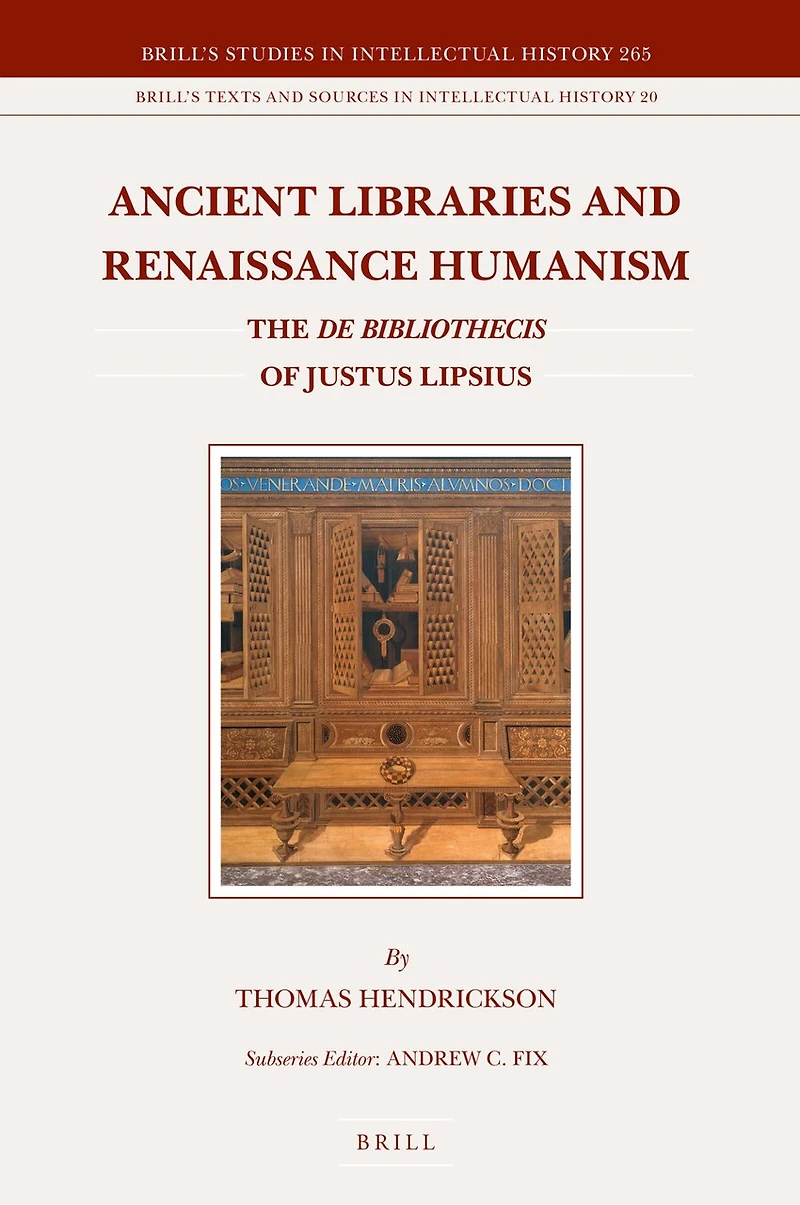
Ancient Libraries and Renaissance Humanism: The De bibliothecis of Justus Lipsius in Grande Prairie, AB
Current price: $236.99
Coles
Ancient Libraries and Renaissance Humanism: The De bibliothecis of Justus Lipsius in Grande Prairie, AB
Current price: $236.99
Loading Inventory...
Size: Hardcover
*Product information and pricing may vary - to confirm current pricing, availability, shipping, and return information please contact Coles. In the event of a pricing discrepancy, the retailer's price will apply.
Winner of the 2018 Josef IJsewijn Prize for Best Book on a Neo-Latin Topic
Although many humanists, from Petrarch to Fulvio Orsini, had written briefly about library history, the De bibliothecis of Justus Lipsius was the first self-contained monograph on the topic. The De bibliothecis proved to be a seminal achievement, both in redefining the scope of library history and in articulating a vision of a public, secular, research institution for the humanities. It was repeatedly reprinted and translated, plagiarized and epitomized. Through the end of the nineteenth century, scholars turned to it as the ultimate foundation for any discussion of library history. In Ancient Libraries and Renaissance Humanism , Hendrickson presents a critical edition of Lipsius’s work with introductory studies, a Latin text, English translation, and a substantial historical commentary.
Winner of the 2018 Josef IJsewijn Prize for Best Book on a Neo-Latin Topic
Although many humanists, from Petrarch to Fulvio Orsini, had written briefly about library history, the De bibliothecis of Justus Lipsius was the first self-contained monograph on the topic. The De bibliothecis proved to be a seminal achievement, both in redefining the scope of library history and in articulating a vision of a public, secular, research institution for the humanities. It was repeatedly reprinted and translated, plagiarized and epitomized. Through the end of the nineteenth century, scholars turned to it as the ultimate foundation for any discussion of library history. In Ancient Libraries and Renaissance Humanism , Hendrickson presents a critical edition of Lipsius’s work with introductory studies, a Latin text, English translation, and a substantial historical commentary.
You May Also Like











Find at Prairie Mall in Grande Prairie, AB
Visit at Prairie Mall in Grande Prairie, AB