


Gifting Made Simple
Give the Gift of ChoiceClick below to purchase a Prairie Mall eGift Card that can be used at participating retailers at Prairie Mall.Buy Gift CardHome
Analyzing Complex Adaptive Systems: Basic Quantitative Approach
Coles
Loading Inventory...
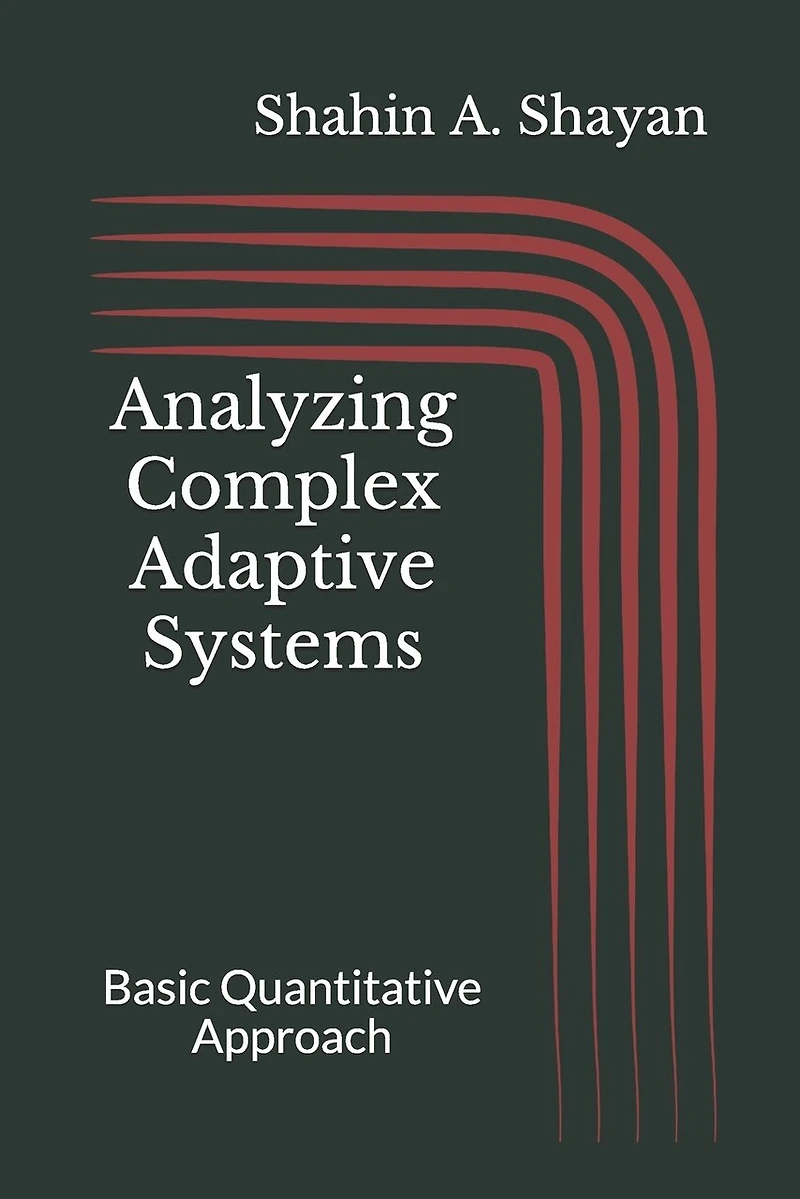
Analyzing Complex Adaptive Systems: Basic Quantitative Approach in Grande Prairie, AB
Current price: $32.50
Coles
Analyzing Complex Adaptive Systems: Basic Quantitative Approach in Grande Prairie, AB
Current price: $32.50
Loading Inventory...
Size: Paperback
*Product information and pricing may vary - to confirm current pricing, availability, shipping, and return information please contact Coles. In the event of a pricing discrepancy, the retailer's price will apply.
Cognitive learning systems with many parts, pieces, elements, or agents that can choose to interact dynamically in nonlinear fashions would be considered Complex Adaptive. These systems show highly nonlinear, emergent, resilient, robust, and continuously adaptive behaviors in response to perturbations and shocks from their environments. They evolve through time, are dynamic, and can change their internal and external interactions or structures. These systems can evolve by random mutation, self-organization transforming their internal agent-agent interactions based on their environments. This book is an introductory view on how to quantify specific properties of Complex Adaptive Systems. It should be helpful for practitioners interested in Complex Systems that have been exposed to qualitative and quantitative modeling concepts with a basic knowledge of statistics, calculus, differential equations, network, and system theory.
Cognitive learning systems with many parts, pieces, elements, or agents that can choose to interact dynamically in nonlinear fashions would be considered Complex Adaptive. These systems show highly nonlinear, emergent, resilient, robust, and continuously adaptive behaviors in response to perturbations and shocks from their environments. They evolve through time, are dynamic, and can change their internal and external interactions or structures. These systems can evolve by random mutation, self-organization transforming their internal agent-agent interactions based on their environments. This book is an introductory view on how to quantify specific properties of Complex Adaptive Systems. It should be helpful for practitioners interested in Complex Systems that have been exposed to qualitative and quantitative modeling concepts with a basic knowledge of statistics, calculus, differential equations, network, and system theory.
You May Also Like












Find at Prairie Mall in Grande Prairie, AB
Visit at Prairie Mall in Grande Prairie, AB