


Gifting Made Simple
Give the Gift of ChoiceClick below to purchase a Prairie Mall eGift Card that can be used at participating retailers at Prairie Mall.Buy Gift CardHome
An introduction to theoretical history
Coles
Loading Inventory...
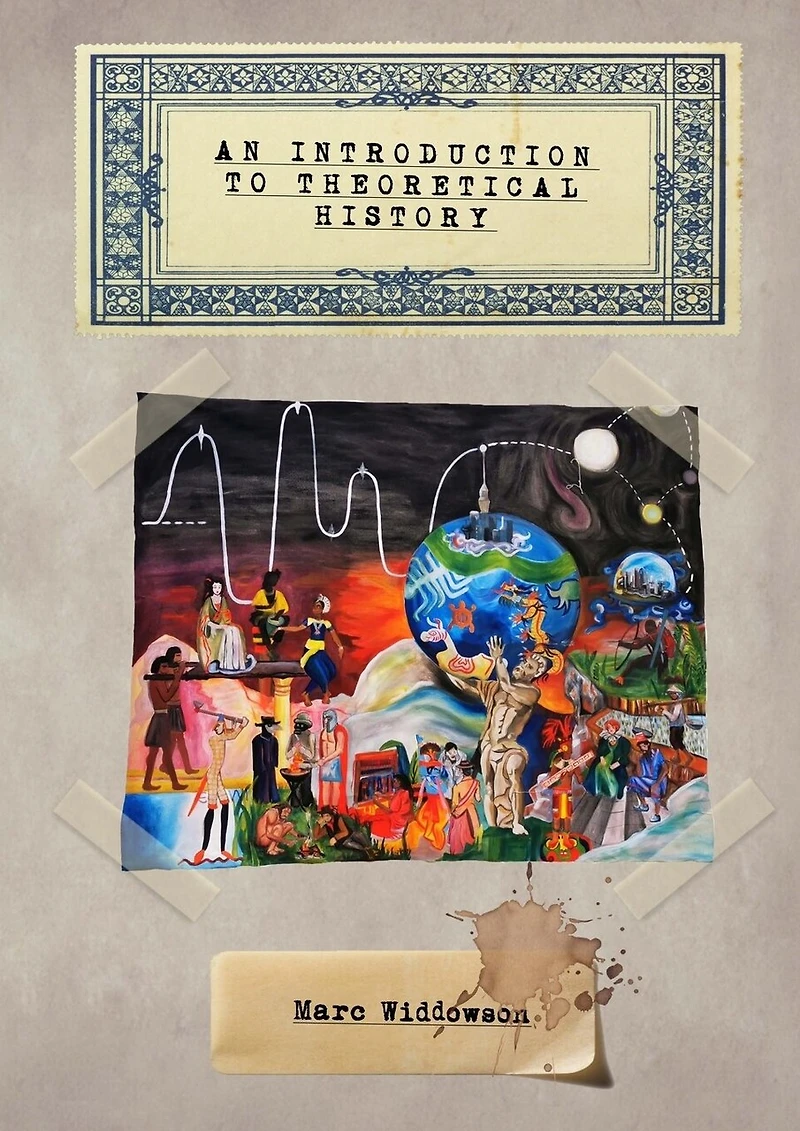
An introduction to theoretical history in Grande Prairie, AB
Current price: $117.00
Coles
An introduction to theoretical history in Grande Prairie, AB
Current price: $117.00
Loading Inventory...
Size: Paperback
*Product information and pricing may vary - to confirm current pricing, availability, shipping, and return information please contact Coles. In the event of a pricing discrepancy, the retailer's price will apply.
The last few decades have seen the emergence of theoretical history as an academic discipline characterised by conferences, journals, and an international community of researchers. It is about a scientific search for patterns in history, using quantitative data and formal, often mathematical models to understand the past, interpret the present and shape the future. This book is a comprehensive survey of the new discipline's themes and participants, including its early roots. The first two chapters define the scope of theoretical history and present some background knowledge and assumptions. This is followed by a review of mathematical methods, covering topics like calculus, network theory, statistics, and time-series analysis. Three chapters cover respectively socio-cultural, economic-technological, and military-political processes in history. Cities and urbanism, historical cycles such as in war and the economy, and the impact of the environment on social change also each have their own chapter. The final chapter provides a guide to data sources. There is an index and bibliography.
The last few decades have seen the emergence of theoretical history as an academic discipline characterised by conferences, journals, and an international community of researchers. It is about a scientific search for patterns in history, using quantitative data and formal, often mathematical models to understand the past, interpret the present and shape the future. This book is a comprehensive survey of the new discipline's themes and participants, including its early roots. The first two chapters define the scope of theoretical history and present some background knowledge and assumptions. This is followed by a review of mathematical methods, covering topics like calculus, network theory, statistics, and time-series analysis. Three chapters cover respectively socio-cultural, economic-technological, and military-political processes in history. Cities and urbanism, historical cycles such as in war and the economy, and the impact of the environment on social change also each have their own chapter. The final chapter provides a guide to data sources. There is an index and bibliography.
You May Also Like















Find at Prairie Mall in Grande Prairie, AB
Visit at Prairie Mall in Grande Prairie, AB