


Gifting Made Simple
Give the Gift of ChoiceClick below to purchase a Prairie Mall eGift Card that can be used at participating retailers at Prairie Mall.Buy Gift CardHome
An Introduction to Gravity
Coles
Loading Inventory...
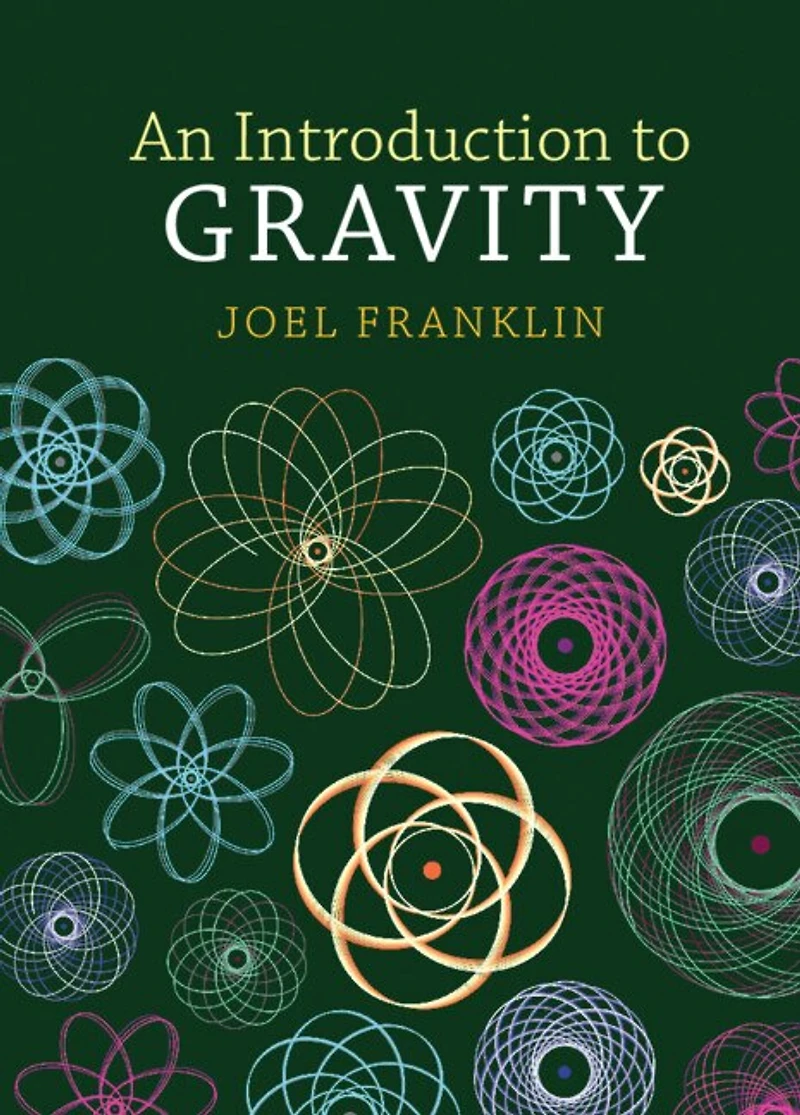
An Introduction to Gravity in Grande Prairie, AB
Current price: $84.02
Coles
An Introduction to Gravity in Grande Prairie, AB
Current price: $84.02
Loading Inventory...
Size: Hardcover
*Product information and pricing may vary - to confirm current pricing, availability, shipping, and return information please contact Coles. In the event of a pricing discrepancy, the retailer's price will apply.
Einstein's theory of gravity can be difficult to introduce at the undergraduate level, or for self-study. One way to ease its introduction is to construct intermediate theories between the previous successful theory of gravity, Newton's, and our modern theory, Einstein's general relativity. This textbook bridges the gap by merging Newtonian gravity and special relativity (by analogy with electricity and magnetism), a process that both builds intuition about general relativity, and indicates why it has the form that it does. This approach is used to motivate the structure of the full theory, as a nonlinear field equation governing a second rank tensor with geometric interpretation, and to understand its predictions by comparing it with the, often qualitatively correct, predictions of intermediate theories between Newton's and Einstein's. Suitable for a one-semester course at junior or senior level, this student-friendly approach builds on familiar undergraduate physics to illuminate the structure of general relativity.
Einstein's theory of gravity can be difficult to introduce at the undergraduate level, or for self-study. One way to ease its introduction is to construct intermediate theories between the previous successful theory of gravity, Newton's, and our modern theory, Einstein's general relativity. This textbook bridges the gap by merging Newtonian gravity and special relativity (by analogy with electricity and magnetism), a process that both builds intuition about general relativity, and indicates why it has the form that it does. This approach is used to motivate the structure of the full theory, as a nonlinear field equation governing a second rank tensor with geometric interpretation, and to understand its predictions by comparing it with the, often qualitatively correct, predictions of intermediate theories between Newton's and Einstein's. Suitable for a one-semester course at junior or senior level, this student-friendly approach builds on familiar undergraduate physics to illuminate the structure of general relativity.
You May Also Like










Find at Prairie Mall in Grande Prairie, AB
Visit at Prairie Mall in Grande Prairie, AB