


Gifting Made Simple
Give the Gift of ChoiceClick below to purchase a Prairie Mall eGift Card that can be used at participating retailers at Prairie Mall.Buy Gift CardHome
An Interdisciplinary Introduction to Image Processing by Steven L. Tanimoto, Hardcover | Indigo Chapters
Coles
Loading Inventory...
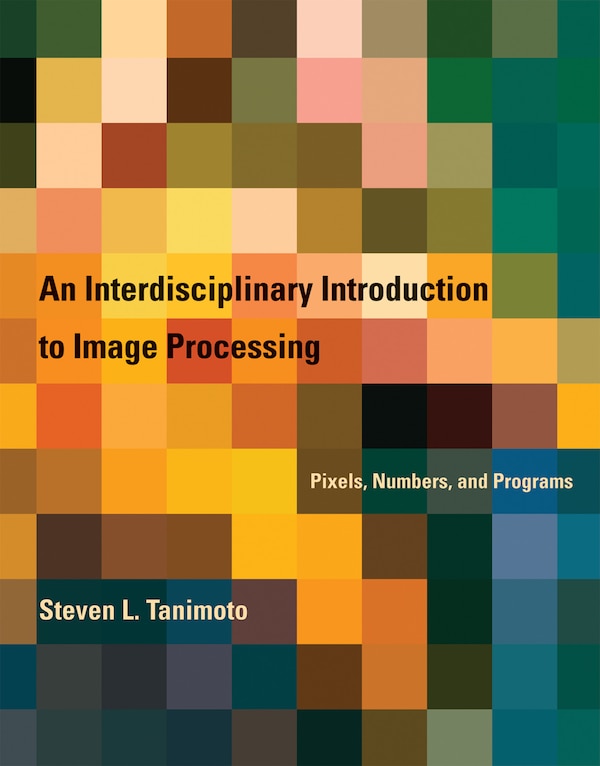
An Interdisciplinary Introduction to Image Processing by Steven L. Tanimoto, Hardcover | Indigo Chapters
By Steven L. Tanimoto
Current price: $79.00
Coles
An Interdisciplinary Introduction to Image Processing by Steven L. Tanimoto, Hardcover | Indigo Chapters
By Steven L. Tanimoto
Current price: $79.00
Loading Inventory...
Size: 1.2 x 9.25 x 2.325
*Product information may vary - to confirm product availability, pricing, shipping and return information please contact Coles
Basic principles of image processing and programming explained without college-level mathematics. This book explores image processing from several perspectives: the creative, the theoretical (mainly mathematical), and the programmatical. It explains the basic principles of image processing, drawing on key concepts and techniques from mathematics, psychology of perception, computer science, and art, and introduces computer programming as a way to get more control over image processing operations. It does so without requiring college-level mathematics or prior programming experience. The content is supported by PixelMath, a freely available software program that helps the reader understand images as both visual and mathematical objects. The first part of the book covers such topics as digital image representation, sampling, brightness and contrast, color models, geometric transformations, synthesizing images, stereograms, photomosaics, and fractals. The second part of the book introduces computer programming using an open-source version of the easy-to-learn Python language. It covers the basics of image analysis and pattern recognition, including edge detection, convolution, thresholding, contour representation, and K-nearest-neighbor classification. A chapter on computational photography explores such subjects as high-dynamic-range imaging, autofocusing, and methods for automatically inpainting to fill gaps or remove unwanted objects in a scene. Applications described include the design and implementation of an image-based game. The PixelMath software provides a transparent view of digital images by allowing the user to view the RGB values of pixels by zooming in on an image. PixelMath provides three interfaces: the pixel calculator; the formula page, an advanced extension of the calculator; and the Python window. | An Interdisciplinary Introduction to Image Processing by Steven L. Tanimoto, Hardcover | Indigo Chapters
Basic principles of image processing and programming explained without college-level mathematics. This book explores image processing from several perspectives: the creative, the theoretical (mainly mathematical), and the programmatical. It explains the basic principles of image processing, drawing on key concepts and techniques from mathematics, psychology of perception, computer science, and art, and introduces computer programming as a way to get more control over image processing operations. It does so without requiring college-level mathematics or prior programming experience. The content is supported by PixelMath, a freely available software program that helps the reader understand images as both visual and mathematical objects. The first part of the book covers such topics as digital image representation, sampling, brightness and contrast, color models, geometric transformations, synthesizing images, stereograms, photomosaics, and fractals. The second part of the book introduces computer programming using an open-source version of the easy-to-learn Python language. It covers the basics of image analysis and pattern recognition, including edge detection, convolution, thresholding, contour representation, and K-nearest-neighbor classification. A chapter on computational photography explores such subjects as high-dynamic-range imaging, autofocusing, and methods for automatically inpainting to fill gaps or remove unwanted objects in a scene. Applications described include the design and implementation of an image-based game. The PixelMath software provides a transparent view of digital images by allowing the user to view the RGB values of pixels by zooming in on an image. PixelMath provides three interfaces: the pixel calculator; the formula page, an advanced extension of the calculator; and the Python window. | An Interdisciplinary Introduction to Image Processing by Steven L. Tanimoto, Hardcover | Indigo Chapters
You May Also Like











More About Coles at Prairie Mall
11801 100 St #104, Grande Prairie, AB T8V 3Y2, Canada
Find Coles at Prairie Mall in Grande Prairie, AB
Visit Coles at Prairie Mall in Grande Prairie, AB