


Gifting Made Simple
Give the Gift of ChoiceClick below to purchase a Prairie Mall eGift Card that can be used at participating retailers at Prairie Mall.Buy Gift CardHome
An Exploration of Formulaic Language Chinese University Students' Written Texts
Coles
Loading Inventory...
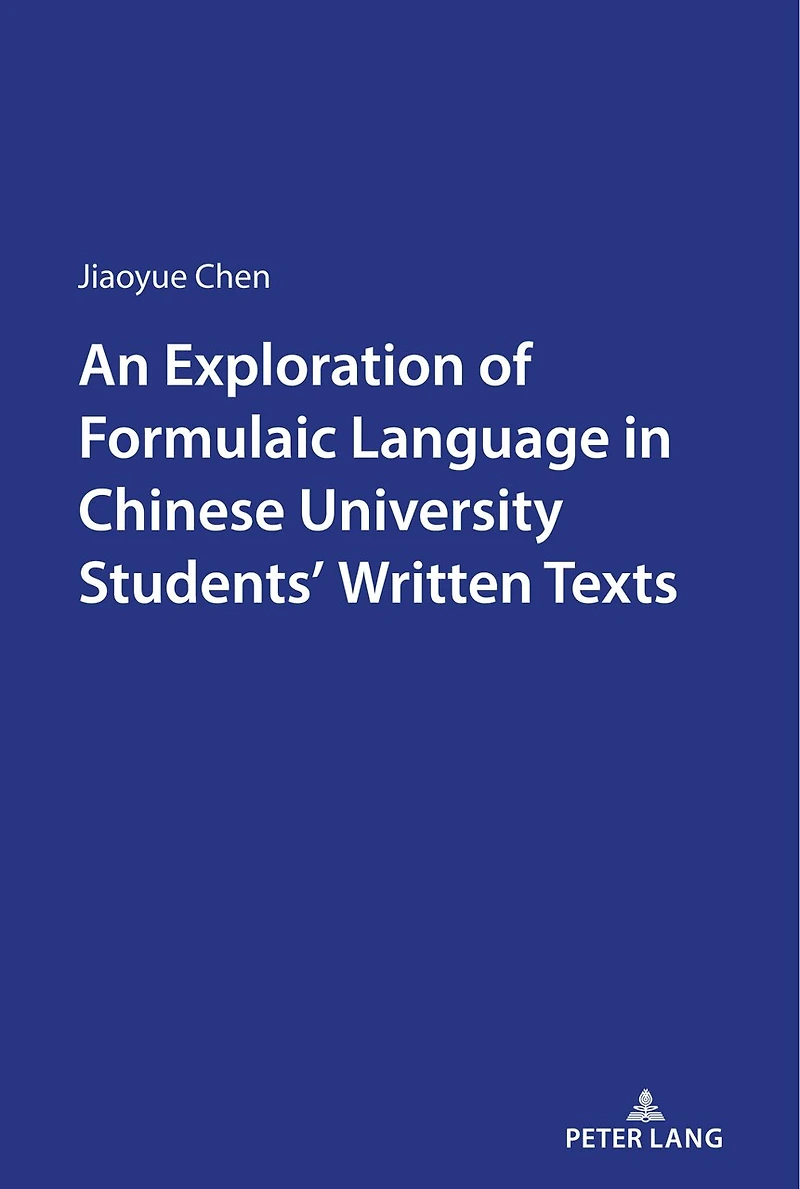
An Exploration of Formulaic Language Chinese University Students' Written Texts in Grande Prairie, AB
Current price: $146.65
Coles
An Exploration of Formulaic Language Chinese University Students' Written Texts in Grande Prairie, AB
Current price: $146.65
Loading Inventory...
Size: Hardcover
*Product information and pricing may vary - to confirm current pricing, availability, shipping, and return information please contact Coles. In the event of a pricing discrepancy, the retailer's price will apply.
This is a descriptive study, based on PhD research, that aims to find out what sorts of formulaic language are used by Chinese learners of English, and what the learners think about the concept, learning, use and teaching formulaic language in the EFL context. The author does this by analyzing texts written by two groups of Chinese EFL learners (83 first-year college students and 73 third-year college students) and interviews with 12 focal participants (6 from each group). The main findings are that formulaic language did occur in the learners’ output, and that there was a measure of correspondence between the ‘strings’ that the students identified for themselves as holistic units, and ‘clusters’ that the researcher identified computationally as frequent. The terms core formulaic language pairs and shared formulaic language were proposed, suggesting a broader view of what is formulaic on the part of the EFL learners. This book ends with a discussion of the implications for teaching practice and the direction for future research on formulaic language in the EFL context.
This is a descriptive study, based on PhD research, that aims to find out what sorts of formulaic language are used by Chinese learners of English, and what the learners think about the concept, learning, use and teaching formulaic language in the EFL context. The author does this by analyzing texts written by two groups of Chinese EFL learners (83 first-year college students and 73 third-year college students) and interviews with 12 focal participants (6 from each group). The main findings are that formulaic language did occur in the learners’ output, and that there was a measure of correspondence between the ‘strings’ that the students identified for themselves as holistic units, and ‘clusters’ that the researcher identified computationally as frequent. The terms core formulaic language pairs and shared formulaic language were proposed, suggesting a broader view of what is formulaic on the part of the EFL learners. This book ends with a discussion of the implications for teaching practice and the direction for future research on formulaic language in the EFL context.
You May Also Like










Find at Prairie Mall in Grande Prairie, AB
Visit at Prairie Mall in Grande Prairie, AB