


Gifting Made Simple
Give the Gift of ChoiceClick below to purchase a Prairie Mall eGift Card that can be used at participating retailers at Prairie Mall.Buy Gift CardHome
American Christian Programmed Quaker Ecclesiology: A Foundational Model for Future Empirical and Confessional Approaches
Coles
Loading Inventory...
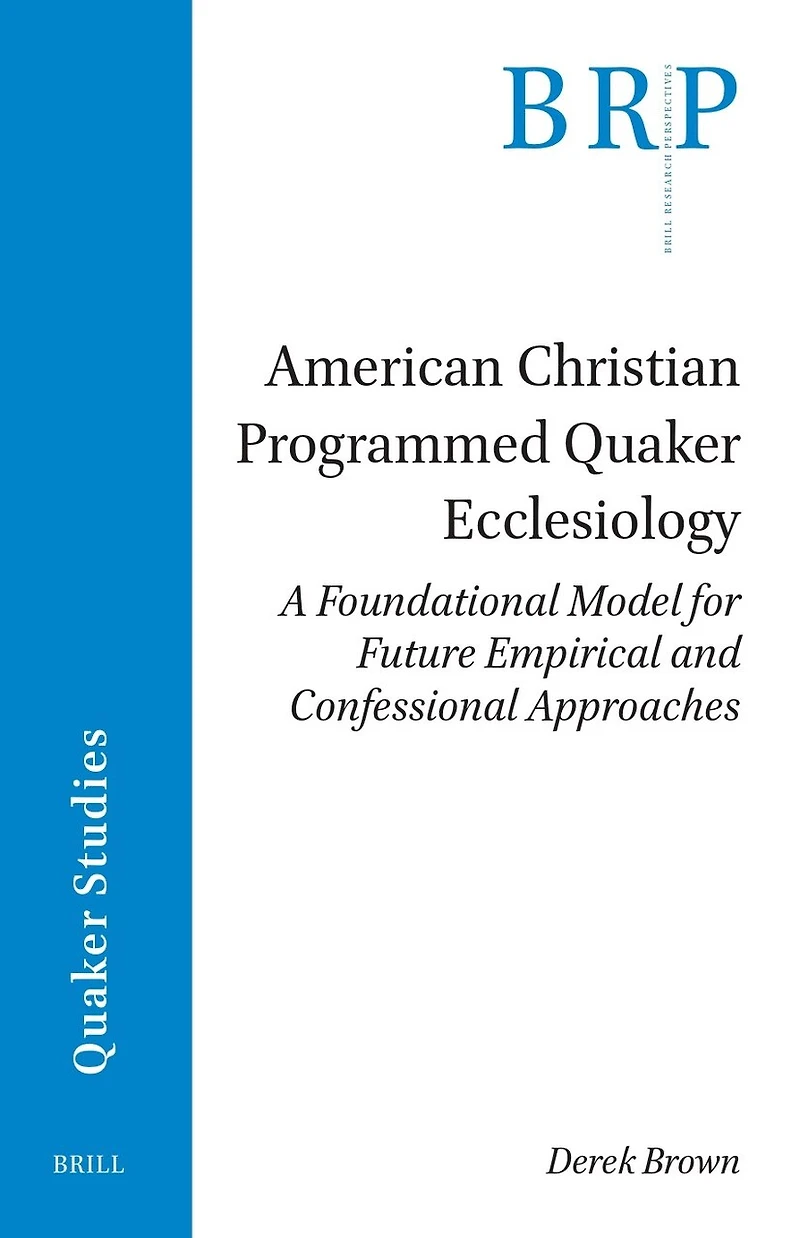
American Christian Programmed Quaker Ecclesiology: A Foundational Model for Future Empirical and Confessional Approaches in Grande Prairie, AB
Current price: $109.99
Coles
American Christian Programmed Quaker Ecclesiology: A Foundational Model for Future Empirical and Confessional Approaches in Grande Prairie, AB
Current price: $109.99
Loading Inventory...
Size: Paperback
*Product information and pricing may vary - to confirm current pricing, availability, shipping, and return information please contact Coles. In the event of a pricing discrepancy, the retailer's price will apply.
In American Christian Programmed Quaker Ecclesiology , Derek Brown argues that American Christian Programmed Quakerism has inherited a practical and pragmatic ecclesiology at the expense of an ontological understanding of the church. Inspired by the work of Gerben Heitink, Brown proposes a normative, deductive, ontological ecclesiology based on the biblical concept of koinonia , which would act as a 'foundational' model for future confessional, empirical, and practical efforts. To help form the proposed ecclesiology, Brown explores the ecclesiological views of George Fox and Robert Barclay, the adoption of the pastoral system, and the emergence of the Evangelical Friends Church. The ecclesiological writings of Miroslav Volf, Wolfhart Pannenberg, Hans Küng, Jennifer Buck, and C. Wess Daniels are also surveyed.
In American Christian Programmed Quaker Ecclesiology , Derek Brown argues that American Christian Programmed Quakerism has inherited a practical and pragmatic ecclesiology at the expense of an ontological understanding of the church. Inspired by the work of Gerben Heitink, Brown proposes a normative, deductive, ontological ecclesiology based on the biblical concept of koinonia , which would act as a 'foundational' model for future confessional, empirical, and practical efforts. To help form the proposed ecclesiology, Brown explores the ecclesiological views of George Fox and Robert Barclay, the adoption of the pastoral system, and the emergence of the Evangelical Friends Church. The ecclesiological writings of Miroslav Volf, Wolfhart Pannenberg, Hans Küng, Jennifer Buck, and C. Wess Daniels are also surveyed.
You May Also Like


















Find at Prairie Mall in Grande Prairie, AB
Visit at Prairie Mall in Grande Prairie, AB