


Gifting Made Simple
Give the Gift of ChoiceClick below to purchase a Prairie Mall eGift Card that can be used at participating retailers at Prairie Mall.Buy Gift CardHome
Altered Egos: Authority in American Autobiography
Coles
Loading Inventory...
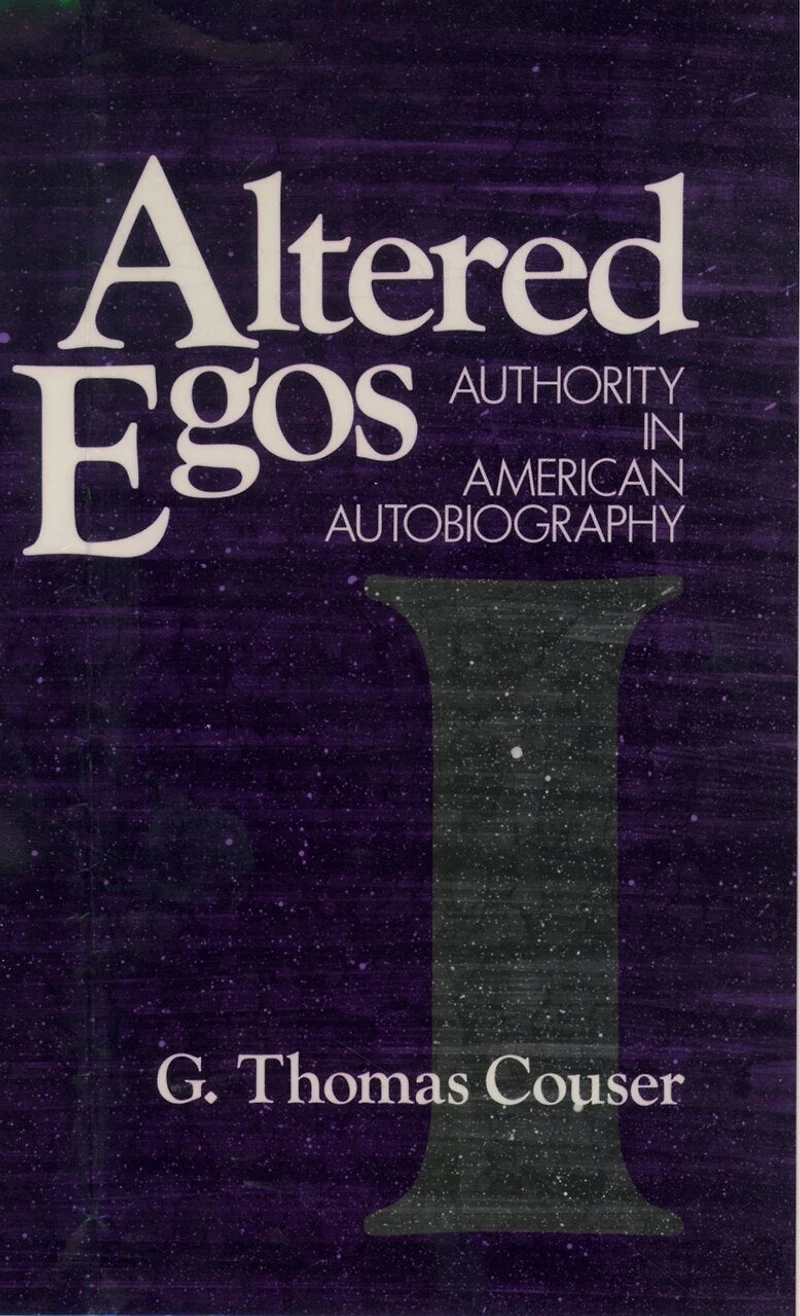
Altered Egos: Authority in American Autobiography in Grande Prairie, AB
Current price: $159.50
Coles
Altered Egos: Authority in American Autobiography in Grande Prairie, AB
Current price: $159.50
Loading Inventory...
Size: Hardcover
*Product information and pricing may vary - to confirm current pricing, availability, shipping, and return information please contact Coles. In the event of a pricing discrepancy, the retailer's price will apply.
This work explores the "authority" of autobiography in several related senses: first, the idea that autobiography is authoritative writing because it is presumably verifiable; second, the idea that one''s life is one''s exclusive textual domain; third, the idea that, because of the apparent
congruence between the implicit ideology of the genre and that of the nation, autobiography has a special prestige in America. Aware of the recent critiques of the notion of autobiography as issuing from, determined by, or referring to a pre-existing self, Couser examines the ways in which the
authority of particular texts is called into question--for example, because they involve pseudonymity (Mark Twain), the revision of a presumably spontaneous form (Mary Chesnut''s Civil War "diaries"), bilingual authorship (Richard Rodriguez and Maxine Hong Kingston), collaborative production (Black
Elk), or outright fraud (Clifford Irving''s "autobiography" of Howard Hughes). Couser examines both the way in which canonical autobiographers may playfully and purposely undermine their own narrative authority and the way in which minority writers'' control of their lives may be compromised.
Autobiography, then, is portrayed here as an arena in which individuals struggle for self-possession and self-expression against the constraints of language, genre, and society.
This work explores the "authority" of autobiography in several related senses: first, the idea that autobiography is authoritative writing because it is presumably verifiable; second, the idea that one''s life is one''s exclusive textual domain; third, the idea that, because of the apparent
congruence between the implicit ideology of the genre and that of the nation, autobiography has a special prestige in America. Aware of the recent critiques of the notion of autobiography as issuing from, determined by, or referring to a pre-existing self, Couser examines the ways in which the
authority of particular texts is called into question--for example, because they involve pseudonymity (Mark Twain), the revision of a presumably spontaneous form (Mary Chesnut''s Civil War "diaries"), bilingual authorship (Richard Rodriguez and Maxine Hong Kingston), collaborative production (Black
Elk), or outright fraud (Clifford Irving''s "autobiography" of Howard Hughes). Couser examines both the way in which canonical autobiographers may playfully and purposely undermine their own narrative authority and the way in which minority writers'' control of their lives may be compromised.
Autobiography, then, is portrayed here as an arena in which individuals struggle for self-possession and self-expression against the constraints of language, genre, and society.
You May Also Like









Find at Prairie Mall in Grande Prairie, AB
Visit at Prairie Mall in Grande Prairie, AB