


Gifting Made Simple
Give the Gift of ChoiceClick below to purchase a Prairie Mall eGift Card that can be used at participating retailers at Prairie Mall.Buy Gift CardHome
Alphabet of Movements of The Human Body
Coles
Loading Inventory...
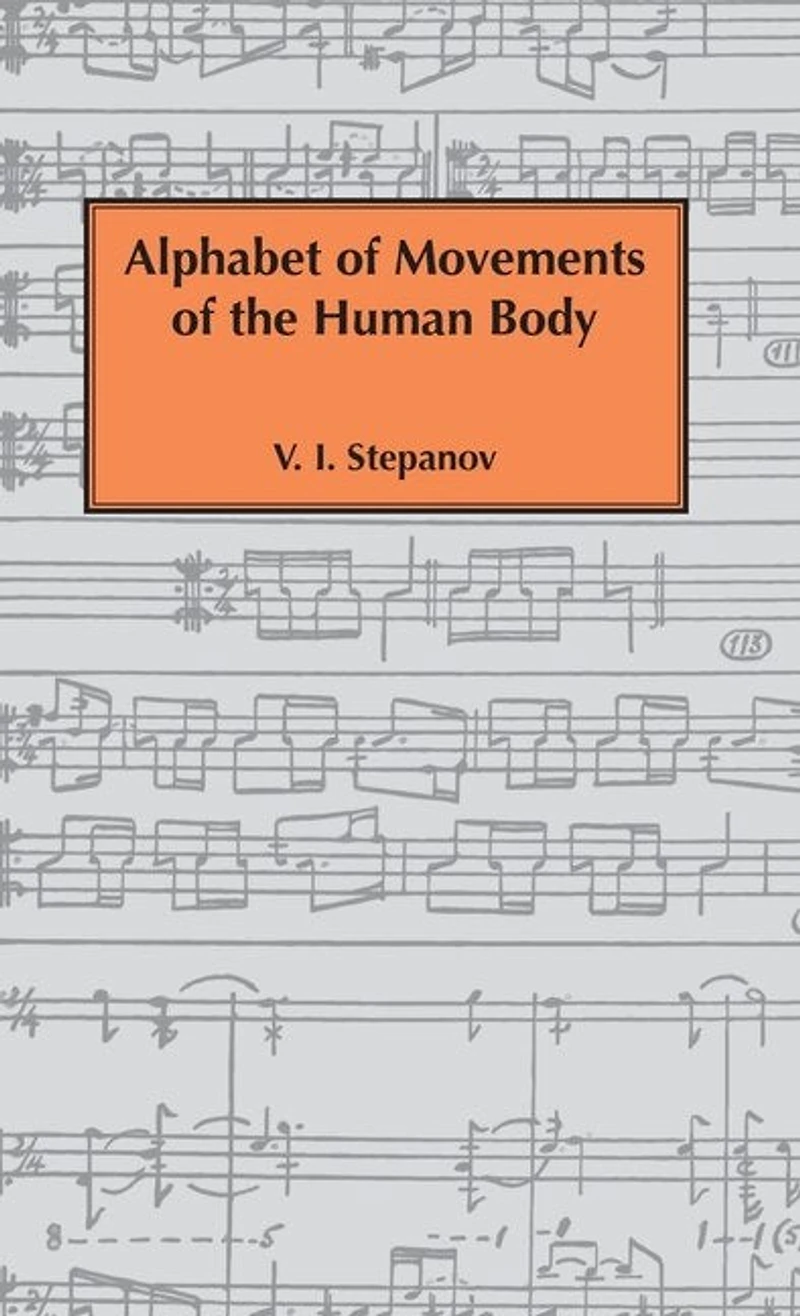
Alphabet of Movements of The Human Body in Grande Prairie, AB
Current price: $16.00
Coles
Alphabet of Movements of The Human Body in Grande Prairie, AB
Current price: $16.00
Loading Inventory...
Size: Hardcover
*Product information and pricing may vary - to confirm current pricing, availability, shipping, and return information please contact Coles. In the event of a pricing discrepancy, the retailer's price will apply.
The problem of recording movements of the human body is
almost as old as the art of dancing: it has been said that the
ancient Egyptians had a system of notation, but there is no
real evidence to prove that this was so.
The present system was developed by the Russian dancer
Vladimir Ivanovich Stepanov at the end of the 19th century.
It is based on existing music notation, and although basic
is certainly practical: one has only to read the official
testimonial, signed by such people as Petipa and Johanssen,
to realise this. Lessons in the system were given at the
Imperial Ballet Schools, and many ballets of the period
were notated in it.
Stepanov's book is no more than a skeleton key, showing
the general principles of his system and their application,
yet even as it stands it can be used to decipher old notations
- it was by means of notations made in Stepanov's system
that Nicolai Sergeyev was able to reproduce The Sleeping
Princess for Diaghilev, and other ballets for the Sadler's
Wells Ballet and International Ballet. More recently, other
hands have used the system to revive ballets long thought
to have been irrevocably lost.
The problem of recording movements of the human body is
almost as old as the art of dancing: it has been said that the
ancient Egyptians had a system of notation, but there is no
real evidence to prove that this was so.
The present system was developed by the Russian dancer
Vladimir Ivanovich Stepanov at the end of the 19th century.
It is based on existing music notation, and although basic
is certainly practical: one has only to read the official
testimonial, signed by such people as Petipa and Johanssen,
to realise this. Lessons in the system were given at the
Imperial Ballet Schools, and many ballets of the period
were notated in it.
Stepanov's book is no more than a skeleton key, showing
the general principles of his system and their application,
yet even as it stands it can be used to decipher old notations
- it was by means of notations made in Stepanov's system
that Nicolai Sergeyev was able to reproduce The Sleeping
Princess for Diaghilev, and other ballets for the Sadler's
Wells Ballet and International Ballet. More recently, other
hands have used the system to revive ballets long thought
to have been irrevocably lost.
You May Also Like















Find at Prairie Mall in Grande Prairie, AB
Visit at Prairie Mall in Grande Prairie, AB