


Gifting Made Simple
Give the Gift of ChoiceClick below to purchase a Prairie Mall eGift Card that can be used at participating retailers at Prairie Mall.Buy Gift CardHome
Alienage Jurisdiction of US-Federal Courts
Coles
Loading Inventory...
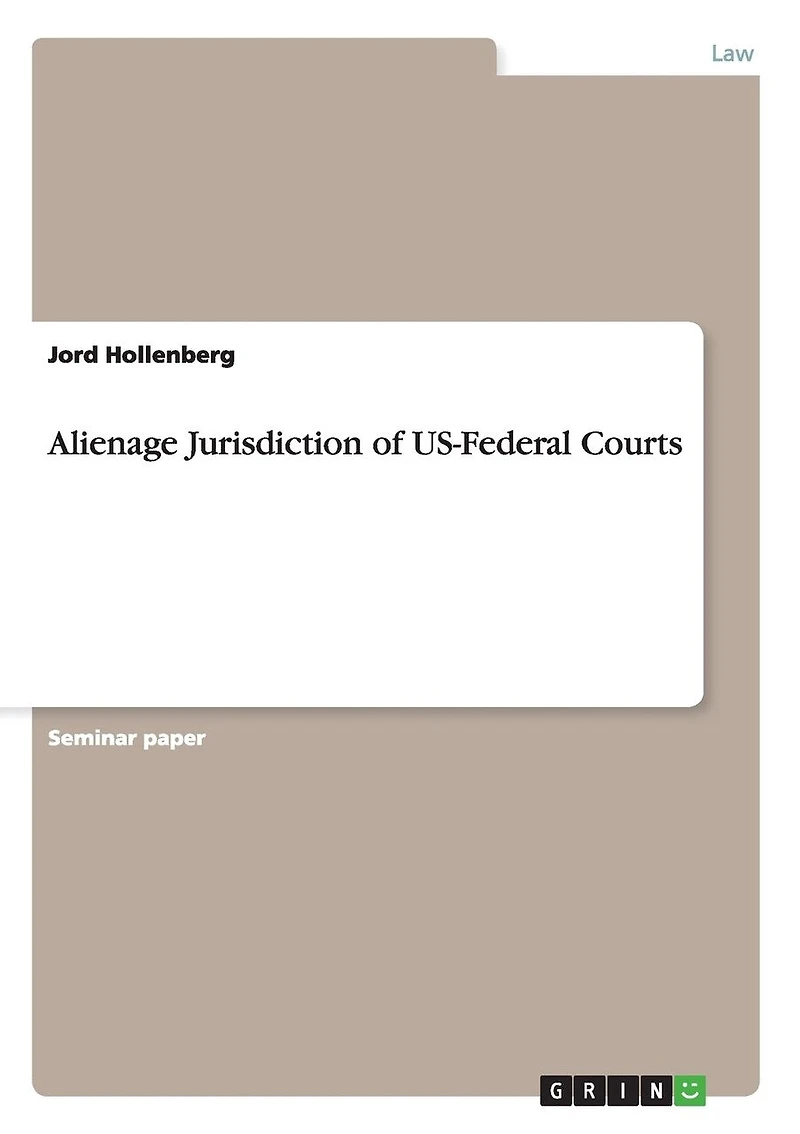
Alienage Jurisdiction of US-Federal Courts in Grande Prairie, AB
Current price: $33.50
Coles
Alienage Jurisdiction of US-Federal Courts in Grande Prairie, AB
Current price: $33.50
Loading Inventory...
Size: Paperback
*Product information and pricing may vary - to confirm current pricing, availability, shipping, and return information please contact Coles. In the event of a pricing discrepancy, the retailer's price will apply.
Seminar paper from the year 2004 in the subject Law - Comparative Legal Systems, Comparative Law, grade: B+; 15 Punkte, Suffolk University Law School (International Law), course: International Business Transactions, language: English, abstract: The founders of the United States recognized the desirability of providing aliens access to the federal courts and they expressly granted aliens the right to have their cases heard in the federal courts when they drafted the Constitution. As the Constitution in Art III, § 2 put it: "The judicial power shall extend . . . to Controversies . . . between a State, or the Cit izens thereof, and foreign States, Citizens or Subjects." In explaining why federal subject matter jurisdiction should extend to cases involving aliens, Alexander Hamilton reasoned "an unjust sentence against a foreigner ... would ... if unredressed, be an aggression upon his sovereign, as well as one which violated the stipulations in a treaty or the general laws of nations." At the same time, disputes involving aliens were thought likely to involve legal and other issues of national importance, which federal courts were deemed best able to decide." Although there are few records of the Constitutional Convention relating to the subject of the judiciary, it is generally accepted that the decision to establish a federal forum for cases involving aliens arose from two related concerns. The first concern was that state and local judges were likely to be swayed by local prejudices against foreigners and that aliens would therefore have difficulty obtaining a fair trial in state or local courts. The second, and perhaps more compelling, concern was that foreign nations might take offense if the affairs of their citizens in the United States were not treated at the national level. Allowing aliens access to the federal courts in which the judges were not accountable to the local citizenry appeared to be the best way of overcoming these problems.
Seminar paper from the year 2004 in the subject Law - Comparative Legal Systems, Comparative Law, grade: B+; 15 Punkte, Suffolk University Law School (International Law), course: International Business Transactions, language: English, abstract: The founders of the United States recognized the desirability of providing aliens access to the federal courts and they expressly granted aliens the right to have their cases heard in the federal courts when they drafted the Constitution. As the Constitution in Art III, § 2 put it: "The judicial power shall extend . . . to Controversies . . . between a State, or the Cit izens thereof, and foreign States, Citizens or Subjects." In explaining why federal subject matter jurisdiction should extend to cases involving aliens, Alexander Hamilton reasoned "an unjust sentence against a foreigner ... would ... if unredressed, be an aggression upon his sovereign, as well as one which violated the stipulations in a treaty or the general laws of nations." At the same time, disputes involving aliens were thought likely to involve legal and other issues of national importance, which federal courts were deemed best able to decide." Although there are few records of the Constitutional Convention relating to the subject of the judiciary, it is generally accepted that the decision to establish a federal forum for cases involving aliens arose from two related concerns. The first concern was that state and local judges were likely to be swayed by local prejudices against foreigners and that aliens would therefore have difficulty obtaining a fair trial in state or local courts. The second, and perhaps more compelling, concern was that foreign nations might take offense if the affairs of their citizens in the United States were not treated at the national level. Allowing aliens access to the federal courts in which the judges were not accountable to the local citizenry appeared to be the best way of overcoming these problems.
You May Also Like









Find at Prairie Mall in Grande Prairie, AB
Visit at Prairie Mall in Grande Prairie, AB