


Gifting Made Simple
Give the Gift of ChoiceClick below to purchase a Prairie Mall eGift Card that can be used at participating retailers at Prairie Mall.Buy Gift CardHome
Algorithmic Identity: How the Invention of the Credit Score Financialized Human Trust
Coles
Loading Inventory...
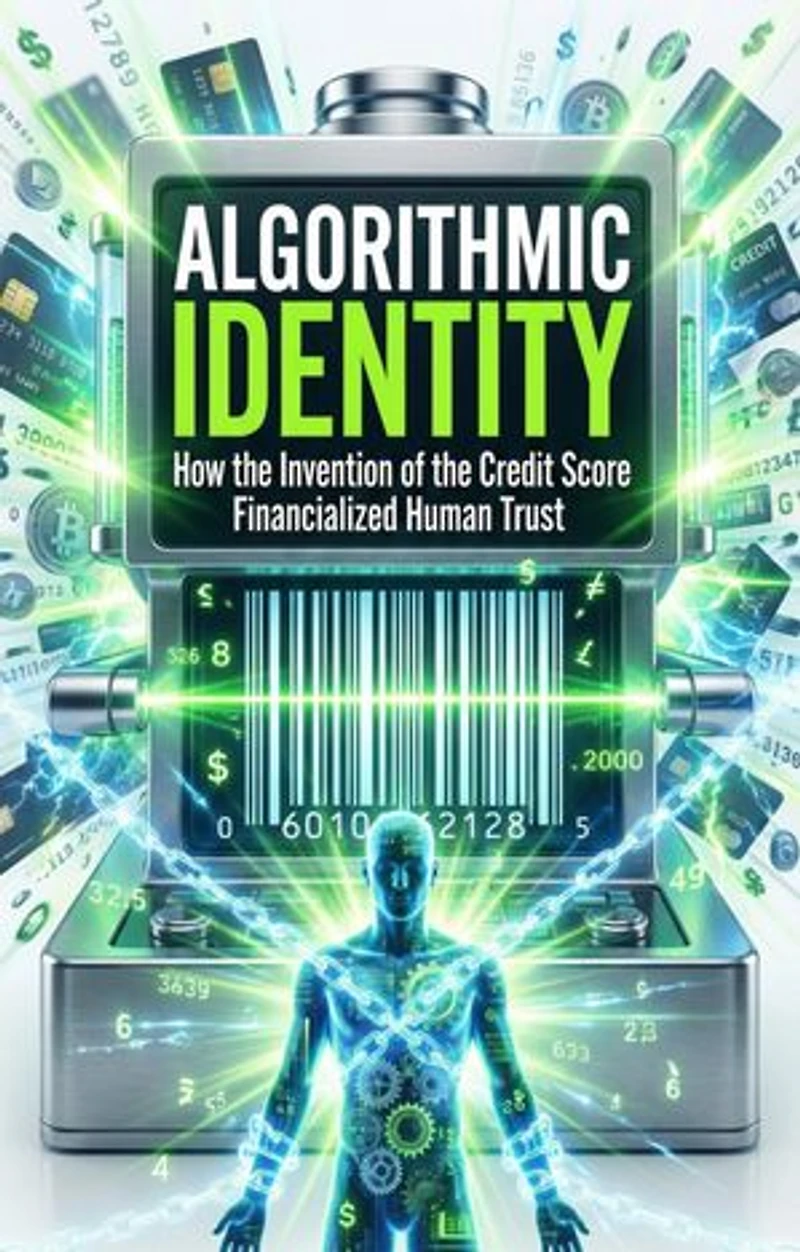
Algorithmic Identity: How the Invention of the Credit Score Financialized Human Trust in Grande Prairie, AB
Current price: $32.99
Coles
Algorithmic Identity: How the Invention of the Credit Score Financialized Human Trust in Grande Prairie, AB
Current price: $32.99
Loading Inventory...
Size: Kobo eBook
*Product information and pricing may vary - to confirm current pricing, availability, shipping, and return information please contact Coles. In the event of a pricing discrepancy, the retailer's price will apply.
Before 1989, your financial reputation was largely determined by a personal conversation with your local bank manager. They judged your character, your family standing, and your handshake. Then, the Fair Isaac Corporation (FICO) introduced a mathematical algorithm that converted human reliability into a single three-digit number. In doing so, they fundamentally altered the structure of modern society. The credit score was marketed as an objective, unbiased tool to democratize lending. However, it quickly morphed into a pervasive mechanism of social control. Today, that three-digit number dictates not just your ability to buy a house, but whether you can secure a job, rent an apartment, or even establish a relationship. We have outsourced our judgment of moral and financial character to an opaque mathematical formula that punishes poverty and rewards debt accumulation. This profound economic history traces the rise of algorithmic trust. It exposes the hidden biases embedded in credit reporting agencies and warns of the dangerous implications of living in a world where your entire worth as a citizen is reduced to a proprietary corporate statistic.
Before 1989, your financial reputation was largely determined by a personal conversation with your local bank manager. They judged your character, your family standing, and your handshake. Then, the Fair Isaac Corporation (FICO) introduced a mathematical algorithm that converted human reliability into a single three-digit number. In doing so, they fundamentally altered the structure of modern society. The credit score was marketed as an objective, unbiased tool to democratize lending. However, it quickly morphed into a pervasive mechanism of social control. Today, that three-digit number dictates not just your ability to buy a house, but whether you can secure a job, rent an apartment, or even establish a relationship. We have outsourced our judgment of moral and financial character to an opaque mathematical formula that punishes poverty and rewards debt accumulation. This profound economic history traces the rise of algorithmic trust. It exposes the hidden biases embedded in credit reporting agencies and warns of the dangerous implications of living in a world where your entire worth as a citizen is reduced to a proprietary corporate statistic.
You May Also Like















Find at Prairie Mall in Grande Prairie, AB
Visit at Prairie Mall in Grande Prairie, AB