


Gifting Made Simple
Give the Gift of ChoiceClick below to purchase a Prairie Mall eGift Card that can be used at participating retailers at Prairie Mall.Buy Gift CardHome
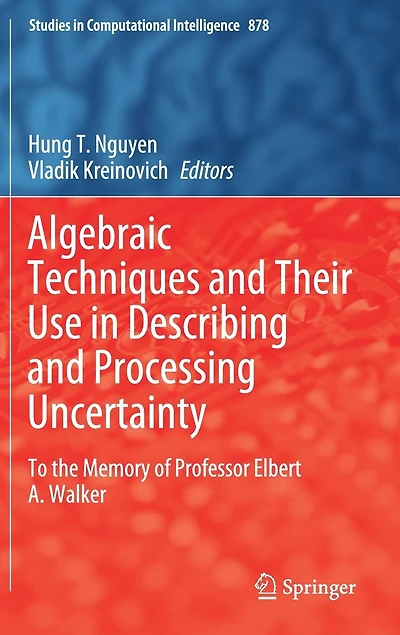
Algebraic Techniques and Their Use in Describing and Processing Uncertainty: To the Memory of Professor Elbert A. Walker
Coles
Loading Inventory...
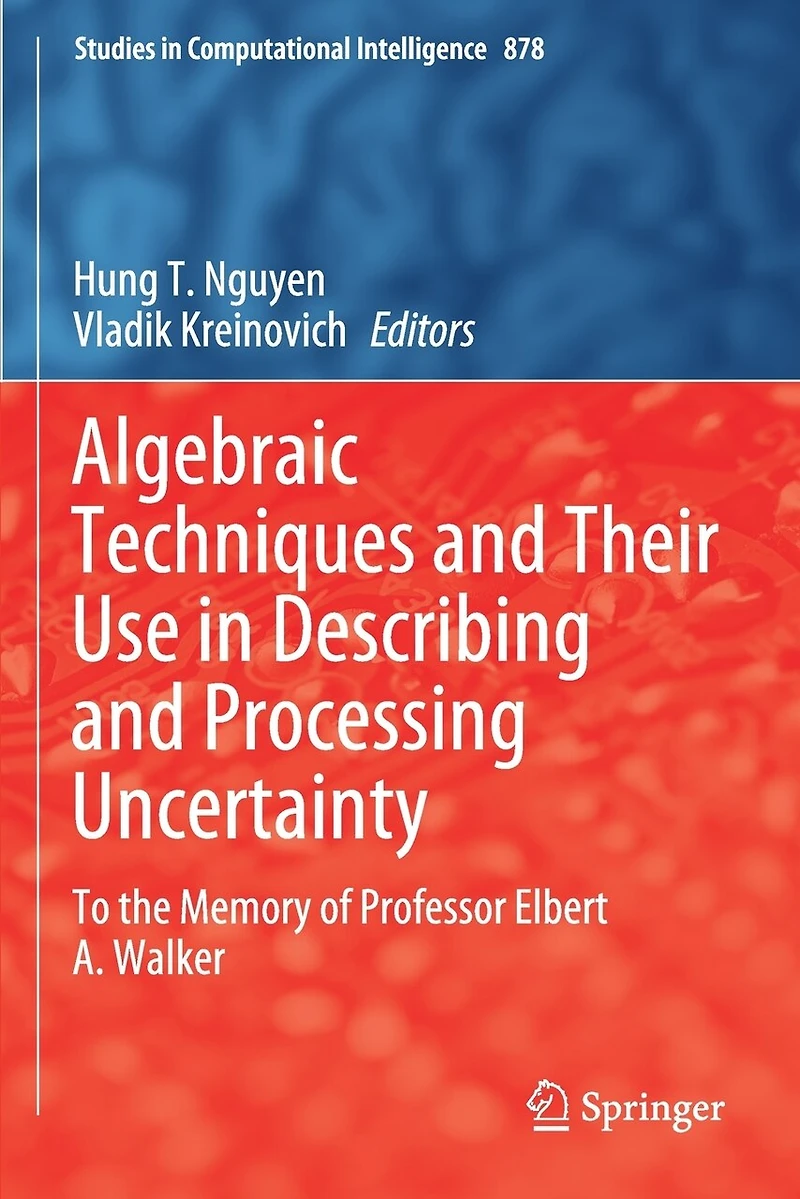
Algebraic Techniques and Their Use in Describing and Processing Uncertainty: To the Memory of Professor Elbert A. Walker in Grande Prairie, AB
Current price: $160.95
Coles
Algebraic Techniques and Their Use in Describing and Processing Uncertainty: To the Memory of Professor Elbert A. Walker in Grande Prairie, AB
Current price: $160.95
Loading Inventory...
Size: Paperback
*Product information and pricing may vary - to confirm current pricing, availability, shipping, and return information please contact Coles. In the event of a pricing discrepancy, the retailer's price will apply.
This book discusses heuristic methods - methods lacking a solid theoretical justification - which are ubiquitous in numerous application areas, and explains techniques that can make heuristic methods more reliable. Focusing on algebraic techniques, i.e., those that use only a few specific features of a situation, it describes various state-of-the-art applications, ranging from fuzzy methods for dealing with imprecision to general optimization methods and quantum-based methods for analyzing economic phenomena. The book also includes recent results from leading researchers, which could (and hopefully will) provide the basis for future applications. As such, it is a valuable resource for mathematicians interested in potential applications of their algebraic results and ideas, as well as for application specialists wanting to discover how algebraic techniques can help in their domains.
This book discusses heuristic methods - methods lacking a solid theoretical justification - which are ubiquitous in numerous application areas, and explains techniques that can make heuristic methods more reliable. Focusing on algebraic techniques, i.e., those that use only a few specific features of a situation, it describes various state-of-the-art applications, ranging from fuzzy methods for dealing with imprecision to general optimization methods and quantum-based methods for analyzing economic phenomena. The book also includes recent results from leading researchers, which could (and hopefully will) provide the basis for future applications. As such, it is a valuable resource for mathematicians interested in potential applications of their algebraic results and ideas, as well as for application specialists wanting to discover how algebraic techniques can help in their domains.
You May Also Like















Find at Prairie Mall in Grande Prairie, AB
Visit at Prairie Mall in Grande Prairie, AB