


Gifting Made Simple
Give the Gift of ChoiceClick below to purchase a Prairie Mall eGift Card that can be used at participating retailers at Prairie Mall.Buy Gift CardHome
After Godel: Platonism and Rationalism Mathematics Logic
Coles
Loading Inventory...
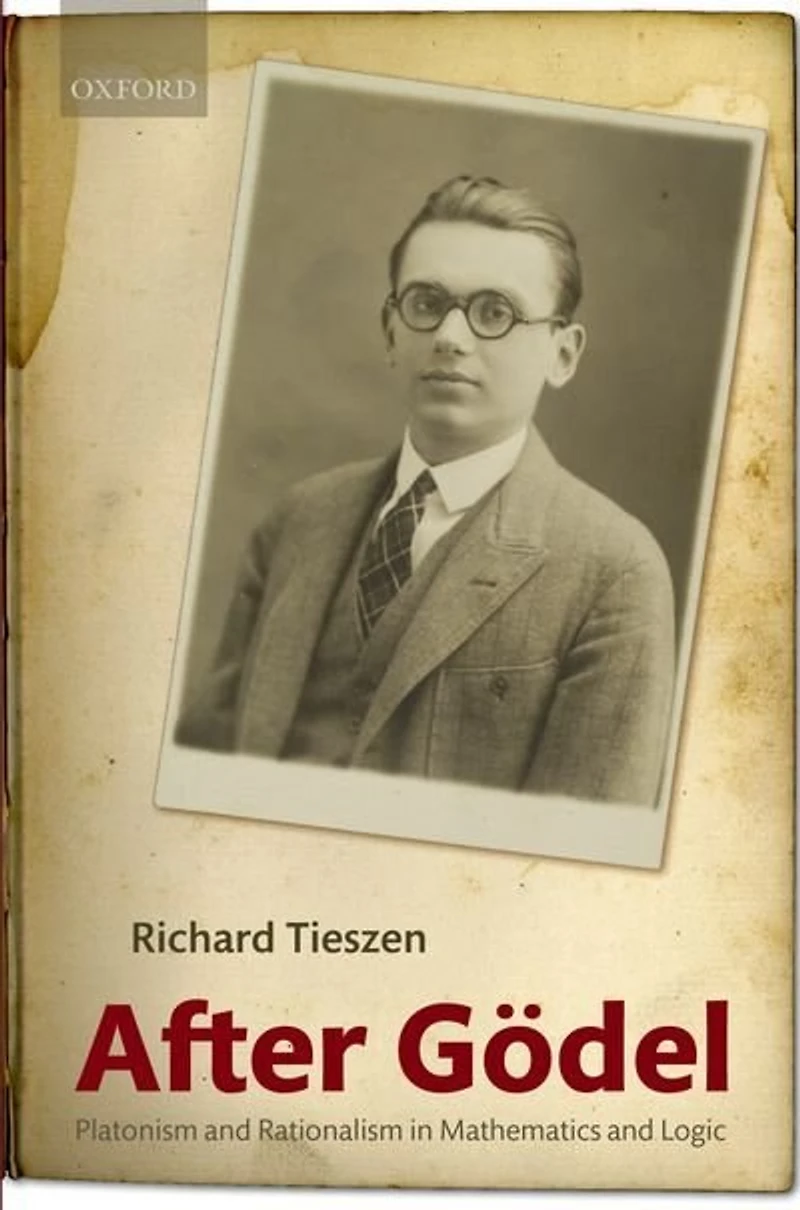
After Godel: Platonism and Rationalism Mathematics Logic in Grande Prairie, AB
Current price: $84.00
Coles
After Godel: Platonism and Rationalism Mathematics Logic in Grande Prairie, AB
Current price: $84.00
Loading Inventory...
Size: Hardcover
*Product information and pricing may vary - to confirm current pricing, availability, shipping, and return information please contact Coles. In the event of a pricing discrepancy, the retailer's price will apply.
Richard Tieszen presents an analysis, development, and defense of a number of central ideas in Kurt Gödel's writings on the philosophy and foundations of mathematics and logic. Tieszen structures the argument around Gödel's three philosophical heroes - Plato, Leibniz, and Husserl - and his engagement with Kant, and supplements close readings of Gödel's texts on foundations with materials from Gödel's Nachlass and from Hao Wang's discussions with Gödel.
As well as providing discussions of Gödel's views on the philosophical significance of his technical results on completeness, incompleteness, undecidability, consistency proofs, speed-up theorems, and independence proofs, Tieszen furnishes a detailed analysis of Gödel's critique of Hilbert and Carnap, and of his subsequent turn to Husserl's transcendental philosophy in 1959. On this basis, a new type of platonic rationalism that requires rational intuition, called "constituted platonism", is developed and defended. Tieszen shows how constituted platonism addresses the problem of the objectivity of mathematics and of the knowledge of abstract mathematical objects. Finally, he considers the implications of this position for the claim that human minds ("monads") are machines, and discusses the issues of pragmatic holism and rationalism.
Richard Tieszen presents an analysis, development, and defense of a number of central ideas in Kurt Gödel's writings on the philosophy and foundations of mathematics and logic. Tieszen structures the argument around Gödel's three philosophical heroes - Plato, Leibniz, and Husserl - and his engagement with Kant, and supplements close readings of Gödel's texts on foundations with materials from Gödel's Nachlass and from Hao Wang's discussions with Gödel.
As well as providing discussions of Gödel's views on the philosophical significance of his technical results on completeness, incompleteness, undecidability, consistency proofs, speed-up theorems, and independence proofs, Tieszen furnishes a detailed analysis of Gödel's critique of Hilbert and Carnap, and of his subsequent turn to Husserl's transcendental philosophy in 1959. On this basis, a new type of platonic rationalism that requires rational intuition, called "constituted platonism", is developed and defended. Tieszen shows how constituted platonism addresses the problem of the objectivity of mathematics and of the knowledge of abstract mathematical objects. Finally, he considers the implications of this position for the claim that human minds ("monads") are machines, and discusses the issues of pragmatic holism and rationalism.
You May Also Like








Find at Prairie Mall in Grande Prairie, AB
Visit at Prairie Mall in Grande Prairie, AB