


Gifting Made Simple
Give the Gift of ChoiceClick below to purchase a Prairie Mall eGift Card that can be used at participating retailers at Prairie Mall.Buy Gift CardHome
Advances Cross-National Comparison: A European Working Book for Demographic and Socio-Economic Variables
Coles
Loading Inventory...
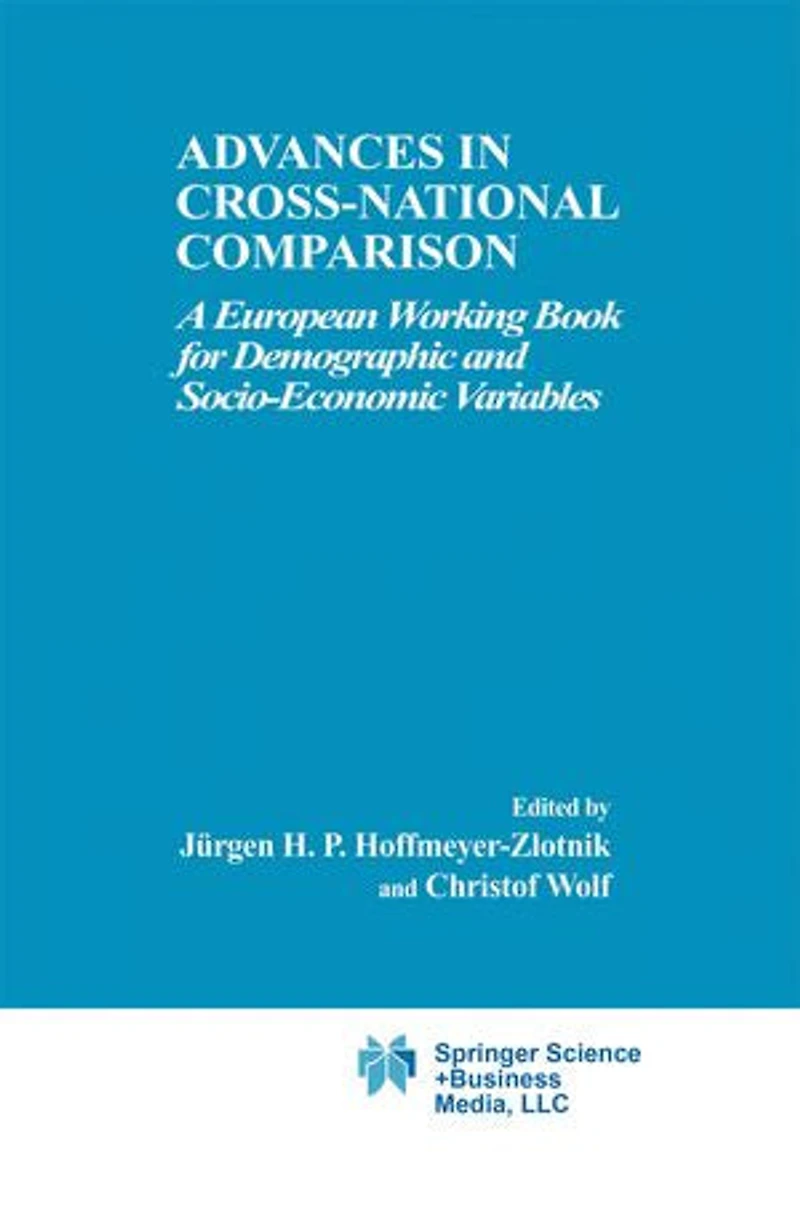
Advances Cross-National Comparison: A European Working Book for Demographic and Socio-Economic Variables in Grande Prairie, AB
Current price: $180.69
Original price: $225.75
Coles
Advances Cross-National Comparison: A European Working Book for Demographic and Socio-Economic Variables in Grande Prairie, AB
Current price: $180.69
Original price: $225.75
Loading Inventory...
Size: Kobo eBook
*Product information and pricing may vary - to confirm current pricing, availability, shipping, and return information please contact Coles. In the event of a pricing discrepancy, the retailer's price will apply.
The book consists of five parts and a concluding chapter. Part 1 covers general problems and presents solutions for the harmonisation of data from different national and/or cultural contexts. In the second part EUROSTAT and ESOMAR present their established standard instruments. Tested instruments each covering one variable (i.e. occupation, education) are presented in the third part. The fourth part again includes suggested tools for the harmonisation of single variables for which standardised instruments are not yet available (i.e. age, religion, ethnicity, household, family, income). The last part presents selected empirical analyses demonstrating the use and fruitfulness of instruments presented before. This book is mainly written for two groups. First, researchers and practitioners involved in comparative research in Europe. Second, researchers working with data of the statistical offices of European countries and data from institutions of the European Union.
The book consists of five parts and a concluding chapter. Part 1 covers general problems and presents solutions for the harmonisation of data from different national and/or cultural contexts. In the second part EUROSTAT and ESOMAR present their established standard instruments. Tested instruments each covering one variable (i.e. occupation, education) are presented in the third part. The fourth part again includes suggested tools for the harmonisation of single variables for which standardised instruments are not yet available (i.e. age, religion, ethnicity, household, family, income). The last part presents selected empirical analyses demonstrating the use and fruitfulness of instruments presented before. This book is mainly written for two groups. First, researchers and practitioners involved in comparative research in Europe. Second, researchers working with data of the statistical offices of European countries and data from institutions of the European Union.
You May Also Like
















Find at Prairie Mall in Grande Prairie, AB
Visit at Prairie Mall in Grande Prairie, AB