


Gifting Made Simple
Give the Gift of ChoiceClick below to purchase a Prairie Mall eGift Card that can be used at participating retailers at Prairie Mall.Buy Gift CardHome
Advanced Calculus for Economics and Finance: Theory Methods
Coles
Loading Inventory...
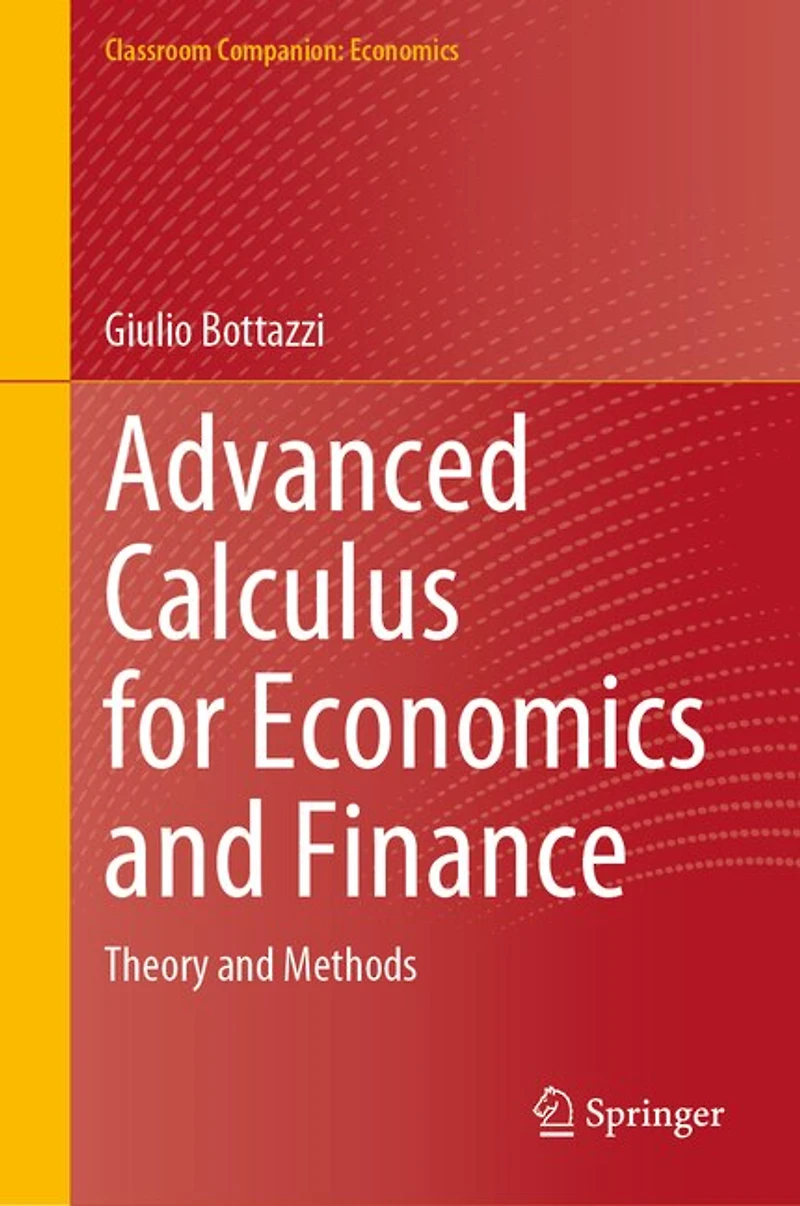
Advanced Calculus for Economics and Finance: Theory Methods in Grande Prairie, AB
Current price: $131.50
Coles
Advanced Calculus for Economics and Finance: Theory Methods in Grande Prairie, AB
Current price: $131.50
Loading Inventory...
Size: Hardcover
*Product information and pricing may vary - to confirm current pricing, availability, shipping, and return information please contact Coles. In the event of a pricing discrepancy, the retailer's price will apply.
This textbook provides a comprehensive introduction to mathematical calculus. Written for advanced undergraduate and graduate students, it teaches the fundamental mathematical concepts, methods and tools required for various areas of economics and the social sciences, such as optimization and measure theory. The reader will be introduced to topological, metric and normed spaces, learning about numerical sequences, series, and differential and integral calculus. These concepts are introduced using the axiomatic approach as a tool for logical reasoning, consistency, and formalization of ideas. The book follows a theorem-proving approach, stressing the limitations of applying the different theorems, while providing thought-provoking counter-examples. Each chapter features exercises that facilitate learning and allow students to apply and test important concepts and tools.
This textbook provides a comprehensive introduction to mathematical calculus. Written for advanced undergraduate and graduate students, it teaches the fundamental mathematical concepts, methods and tools required for various areas of economics and the social sciences, such as optimization and measure theory. The reader will be introduced to topological, metric and normed spaces, learning about numerical sequences, series, and differential and integral calculus. These concepts are introduced using the axiomatic approach as a tool for logical reasoning, consistency, and formalization of ideas. The book follows a theorem-proving approach, stressing the limitations of applying the different theorems, while providing thought-provoking counter-examples. Each chapter features exercises that facilitate learning and allow students to apply and test important concepts and tools.
You May Also Like









Find at Prairie Mall in Grande Prairie, AB
Visit at Prairie Mall in Grande Prairie, AB